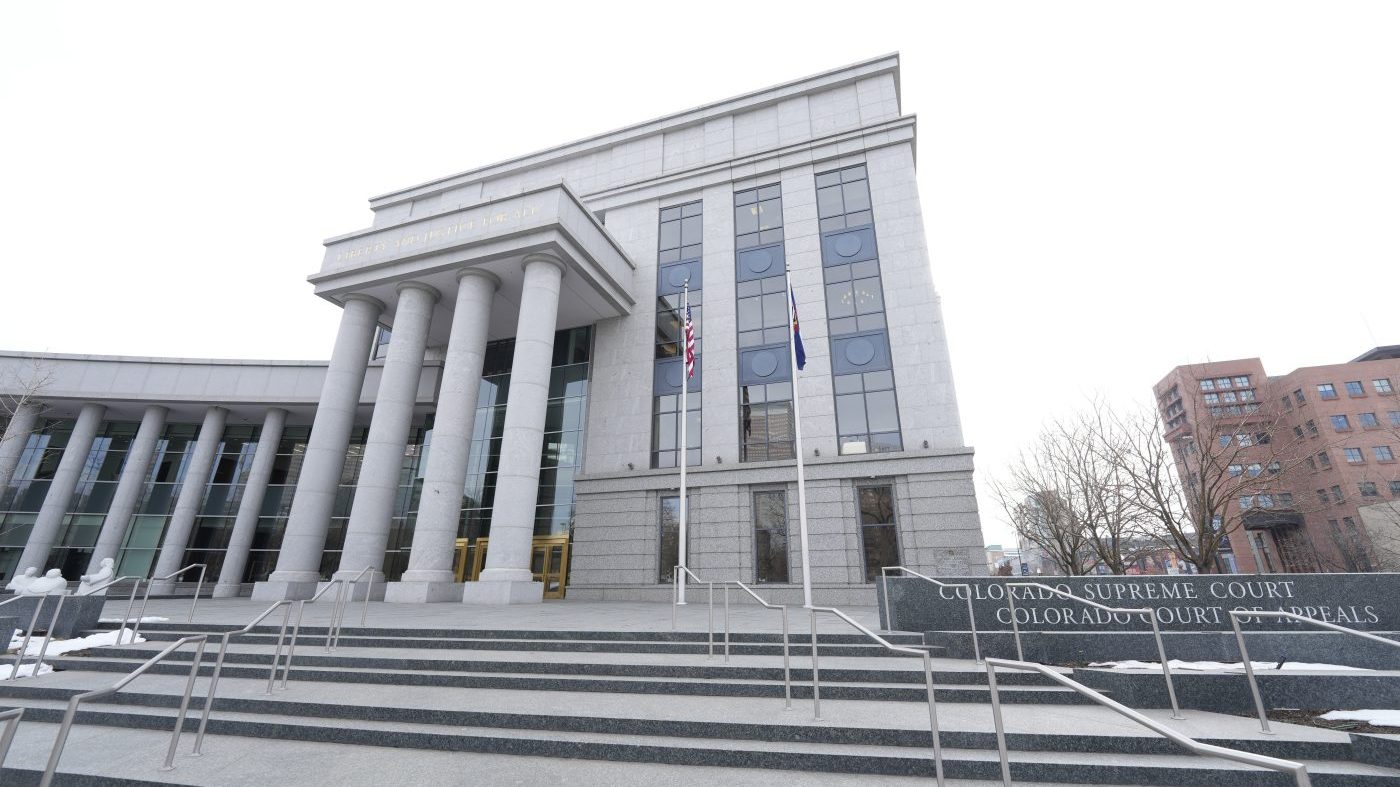
The Colorado Supreme Court on Monday dealt a significant blow to Democratic redistricting efforts, tossing out two sets of ballot measures that would have redrawn congressional maps mid-decade. The court ruled that the proposals violated the state constitution's requirement that ballot initiatives focus on a single subject.
The Democratic-aligned group Coloradans for a Level Playing Field had pushed for initiatives that would allow mid-decade redistricting and adopt new congressional district maps for the 2028 and 2030 election cycles. The group argued that the two measures were interdependent, but the court rejected that logic.

Chief Justice Monica M. Márquez wrote in one opinion: “We conclude that these are distinct and separate subjects.” She added that “temporarily allowing mid-decade redistricting is not merely the means to implement or effectuate the Initiatives’ central purpose of adopting a specific new congressional district map for the 2028 and 2030 election cycles.”
The group had originally submitted four versions of the initiative for the November ballot. One version would have bypassed the state's independent redistricting commission to allow mid-decade changes and establish temporary maps in a single measure. Two others split the effort into separate parts, but the court rejected those as well under the same single-subject rule.
Justice Richard Gabriel authored the unanimous opinion on those measures, writing: “Accordingly, we conclude that Initiative #241, Initiative #242, and Initiative #328 all contain multiple subjects and, thus, the Title Board lacked jurisdiction to set titles for any of them.” He warned that allowing such “interlocking measures” would permit an “end run around the single subject requirement.”
The proposed maps would have favored Democrats by potentially adding three seats to their House majority. This battle is part of a broader national fight over redistricting, which intensified after Republicans redrew maps in Texas and Democrats responded in California. The Colorado ruling follows a similar decision in Virginia that blocked Democrats' redistricting efforts there. Meanwhile, redistricting changes in California were approved last November.
The decision is the latest in a series of state and federal court rulings shaping the political landscape. In other recent legal developments, the Supreme Court has expanded presidential removal authority, a move that could affect independent commissions like those overseeing redistricting. Additionally, the Court upheld states' rights to count mail ballots post-election day, a ruling with implications for election administration.
For now, Colorado Democrats will have to look for other avenues to gain a congressional edge, as the state's independent redistricting commission remains the sole authority for map drawing until the next census.