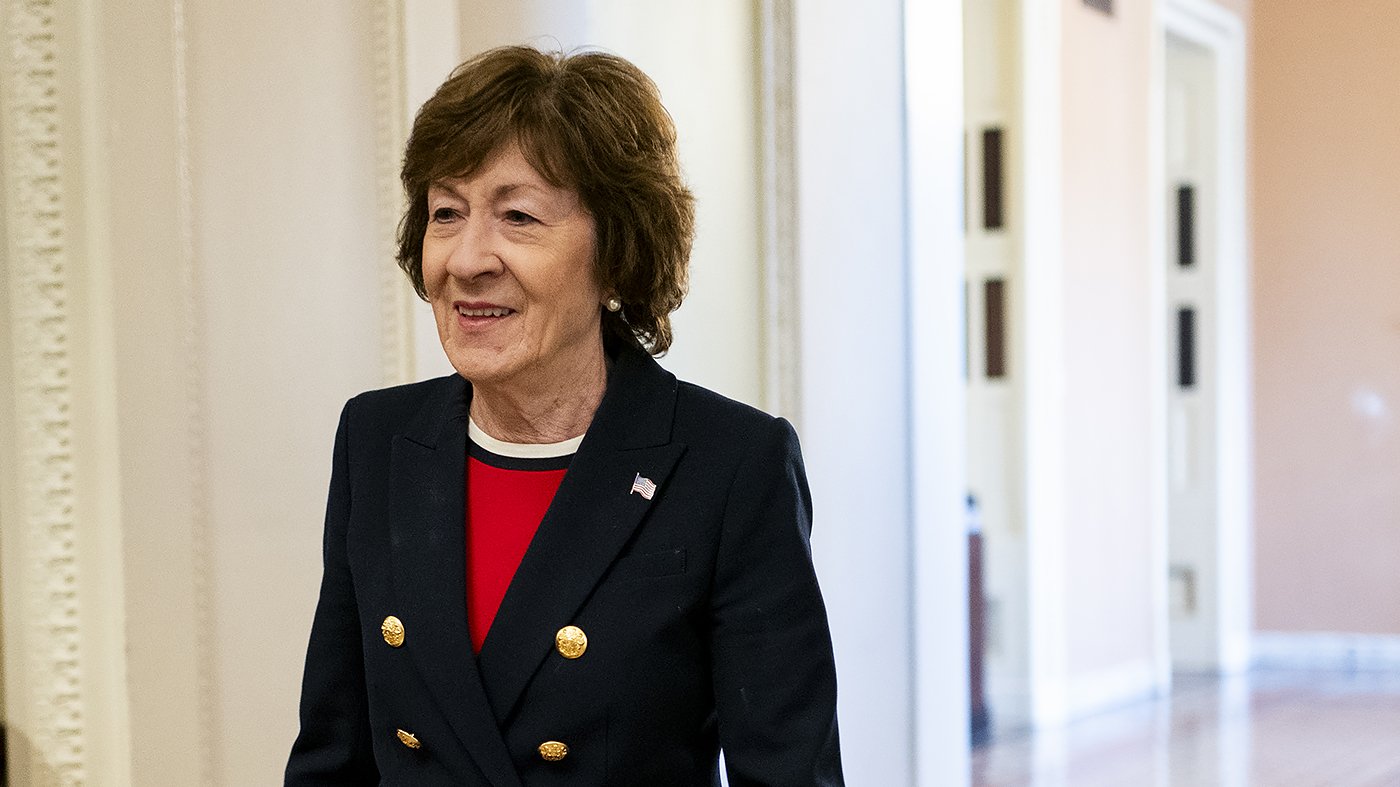
Sen. Susan Collins (R-Maine) once again broke ranks with her party’s leadership on Thursday, casting a surprise vote in favor of a Democratic amendment aimed at investigating insurance companies that deny or delay medical care to patients. The amendment, offered by Sen. Jon Ossoff (D-Ga.), would have redirected the $70 billion budget reconciliation package to the Judiciary Committee for a probe into insurer practices.
The motion failed by a narrow 47-50 margin, but Collins’ support—alongside two other Republicans in April—underscores growing bipartisan frustration with health insurers’ role in patient care. This time, however, Collins stood alone among her GOP colleagues; Sens. Dan Sullivan (R-Alaska) and Josh Hawley (R-Mo.), who backed a similar measure in April, voted against it on Thursday.

Ossoff’s Push for Accountability
On the Senate floor, Ossoff made an impassioned case for the amendment, urging colleagues to “ban insurance companies from denying or delaying medically necessary health care to Americans.” He highlighted the story of a constituent with multiple myeloma, a rare blood cancer, who had to fight her insurer for coverage of essential treatment.
“Across America, insurance companies continue to deny and delay medically necessary health care,” Ossoff said, framing the issue as a matter of patient rights and corporate accountability.
The amendment was a revival of a similar proposal Ossoff introduced in April during debate on the Senate budget resolution. That earlier version would have created a procedural point of order against any reconciliation bill that failed to address insurer denials. Both attempts have drawn attention to a growing push in Congress to tackle medical debt and insurer abuses.
Political Calculus for Collins
Collins, facing a tough reelection bid in 2026, has increasingly positioned herself as a moderate willing to cross party lines. Her vote on Thursday aligns with her earlier support for Ossoff’s April amendment and comes amid uncertainty about her electoral prospects in a state that has trended Democratic. The move also distances her from President Trump, who has clashed with other prominent Collins figures, including CNN’s Kaitlan Collins, over gender-based attacks.
Had Ossoff’s motion succeeded, it would have effectively killed the budget reconciliation bill, which funds Immigration and Customs Enforcement (ICE) and Border Patrol through 2029. That outcome would have been a major blow to Republican priorities on border security, a key issue for Trump and the GOP base.
Broader Implications
The vote highlights a persistent divide within the GOP over healthcare policy. While many Republicans have focused on deregulation and market-based solutions, a vocal minority—including Collins and, at times, Hawley—has pushed for more aggressive oversight of insurance companies. The issue resonates with voters who have faced denied claims or lengthy appeals, a concern that extends to recent debates over Medicaid work requirements.
For now, the reconciliation bill remains on track, but the episode signals that insurer accountability will continue to be a flashpoint in Congress. Ossoff has vowed to keep pressing the issue, and Collins’ vote suggests she may be a key swing vote in future healthcare battles.