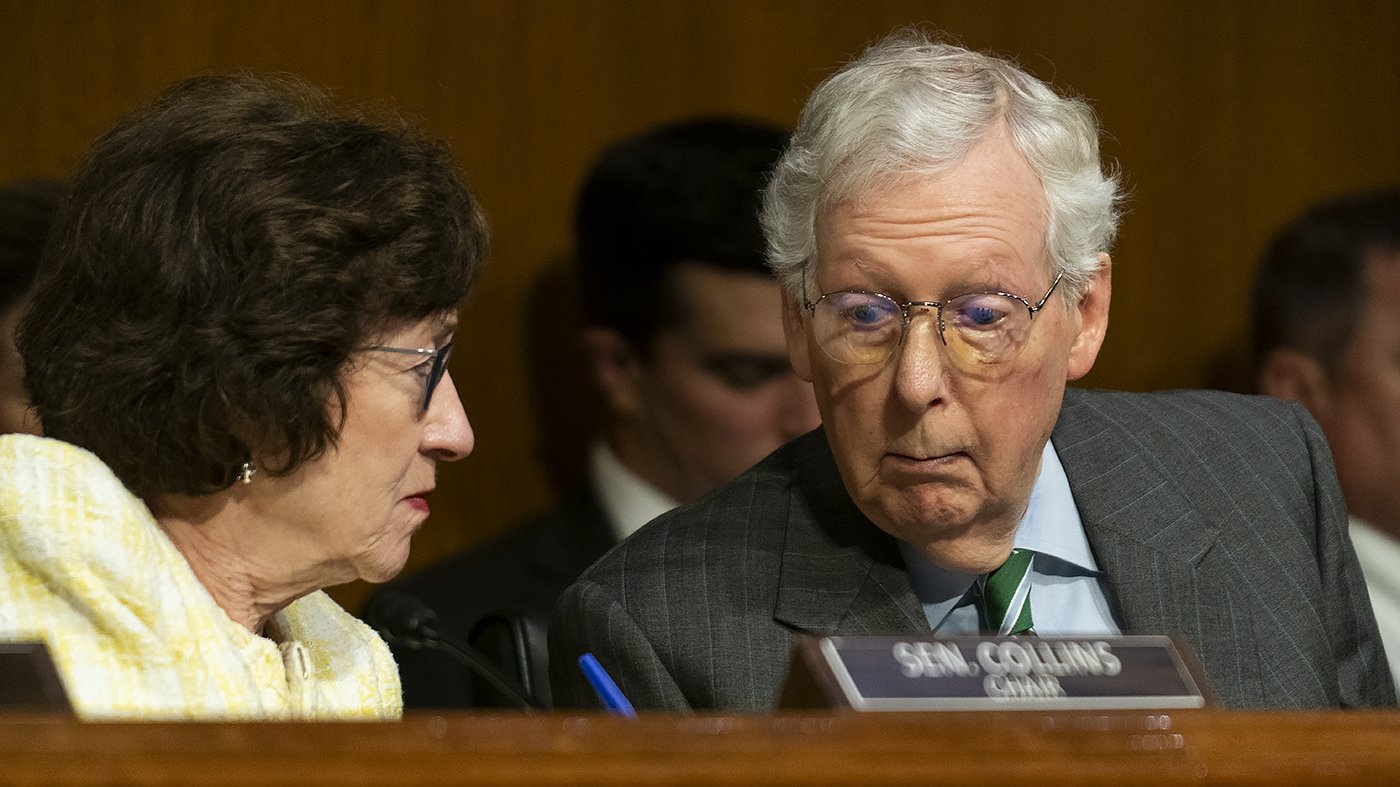
Two senior Republican senators effectively killed the prospect of a third reconciliation bill on Tuesday, warning the White House and Pentagon not to count on the special budget tool to fill defense funding gaps. Senate Appropriations Committee Chair Susan Collins (R-Maine) and Defense Subcommittee Chair Mitch McConnell (R-Ky.) both dismissed the idea during a hearing on the Air Force's fiscal year 2026 budget request.
Reconciliation allows the majority party to bypass the Senate filibuster and pass legislation with a simple 50-vote majority, but it is a cumbersome process that Collins has long resisted in favor of regular appropriations. During the hearing, Collins pressed Air Force Secretary Troy Meink on why the administration had submitted a low base budget request for certain programs, expecting to supplement it with funds from a third reconciliation package.
“I would just suggest that it is taking a terrible risk and creates instability when you’re counting on a third reconciliation bill for the bulk of the money rather than doing base funding through the defense appropriations bill,” Collins said.
McConnell, who is retiring at the end of the year but remains a key GOP figure on defense spending, was even more definitive. “I think it’s safe to conclude there will not be another reconciliation bill, so it’s really not an option,” he said. Collins quickly agreed: “I agree with that assessment.”
The White House has formally requested that about $350 million—roughly a quarter of its total spending ask—be funded through reconciliation. Appropriators also expected a supplemental request to cover costs from the ongoing Iran military conflict, but the administration has yet to deliver one. The uncertainty has frustrated lawmakers who warn it could undermine military readiness.
Republican leaders have already muscled through two reconciliation bills since taking the majority, the most recent a “skinny” package funding Immigration and Customs Enforcement and the Border Patrol. Some members are pushing for a third focused on affordability and reducing fraud in social programs, but Collins and McConnell’s remarks suggest the window is closing.
Collins has often crossed party lines on key issues—she recently supported a probe into insurer denials—but her skepticism of reconciliation is rooted in a preference for bipartisan appropriations. The exchange Tuesday underscores a broader tension within the GOP over budget strategy and the limits of reconciliation as a governing tool.
The administration’s reliance on reconciliation for defense funding now appears increasingly precarious, leaving Pentagon planners and appropriators to scramble for alternative paths. As Collins put it, betting on a third bill is a gamble the Pentagon cannot afford.