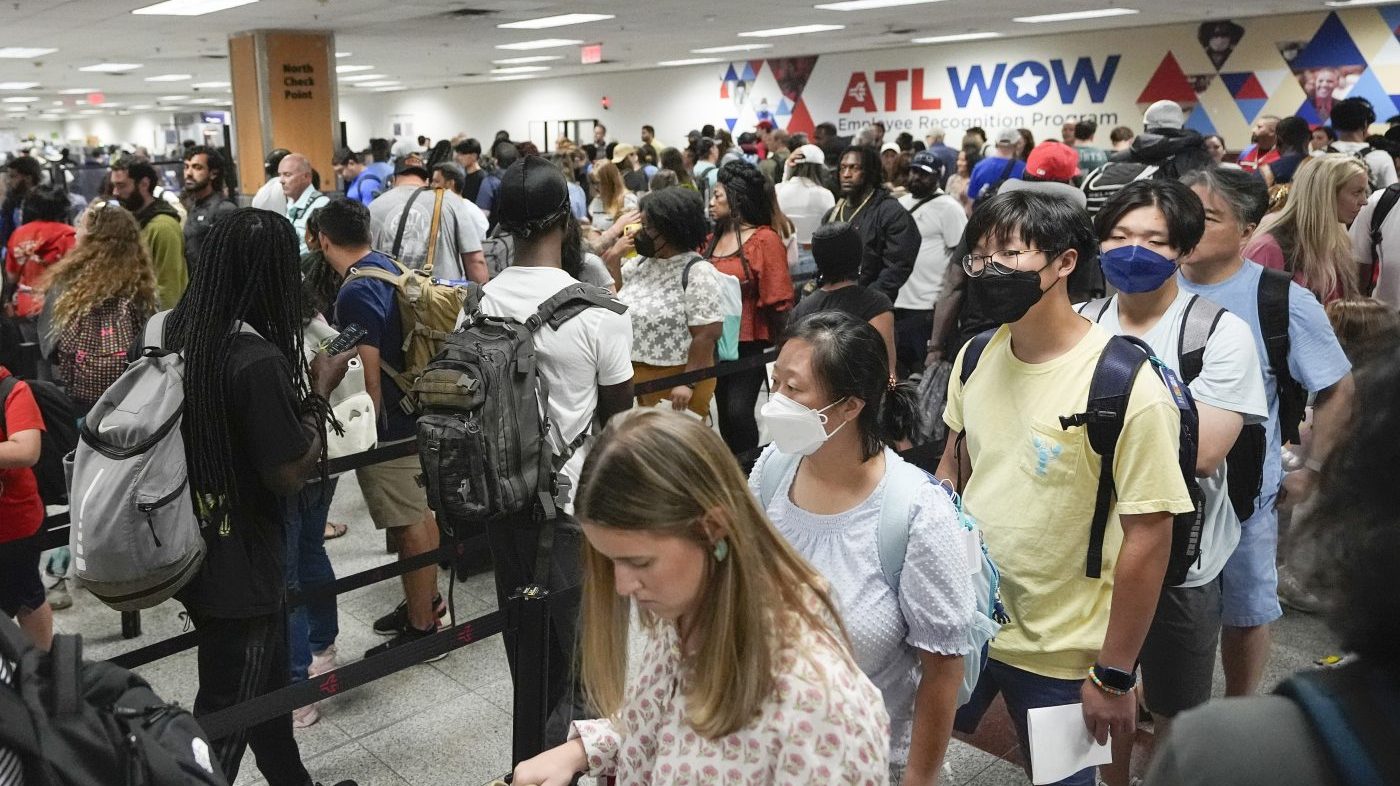
The Centers for Disease Control and Prevention (CDC) has added Hartsfield-Jackson Atlanta International Airport—the world's busiest—to its list of enhanced Ebola screening locations for travelers arriving from Congo, Uganda, and South Sudan. The move, announced Thursday, comes as the federal government ramps up its emergency public health response to contain the spread of the virus and reduce risks from potentially exposed individuals.
This expansion builds on mandatory health screenings already in place at Washington-Dulles International Airport, which began Wednesday at 11:59 p.m. ET, and at Houston's George Bush Intercontinental Airport, set to start Tuesday at 10:59 p.m. CT. The CDC described the measures as part of a "layered public health approach" that includes overseas exit screening, airline illness reporting, and post-arrival monitoring.

The recent outbreak, caused by the Bundibugyo virus, has led to fatalities across Central and East Africa, prompting the World Health Organization to declare a public health emergency last week. Unlike other Ebola strains, this variant currently has no approved vaccine, according to the CDC.
In addition to screening, the CDC has barred lawful permanent residents and non-U.S. citizens who have traveled to Congo, South Sudan, or Uganda within the past 21 days from entering the United States. This restriction aligns with the Trump administration's broader travel policies aimed at preventing the virus from reaching American soil.
The timing of the screening expansion coincides with preparations for the FIFA World Cup, which begins June 11 and will be hosted across North America, including in Atlanta and Houston. Both cities are slated to host matches involving the Congolese national team. Andrew Giuliani, executive director of the White House Task Force for the World Cup, told ESPN that the team must isolate for 21 days in Belgium, where it is currently training, to avoid complications when entering the U.S. next month. The squad is scheduled to play Portugal in Houston on June 17 and Uzbekistan in Atlanta on June 27.
Critics have raised concerns about the effectiveness of these measures, with some public health experts arguing that screening may miss asymptomatic carriers. The Trump administration has defended its approach, citing the need for aggressive action to prevent a repeat of past outbreaks. The CDC's move also follows earlier reports of travel ban violations, including a Detroit-bound flight that was diverted to Montreal due to Ebola-related issues.
As the outbreak continues to evolve, the administration faces pressure to balance public health precautions with international travel and sporting events. The addition of Atlanta to the screening list underscores the government's focus on high-traffic hubs as a key line of defense.