For years, Canadian leaders have paid lip service to diversifying trade beyond the United States, but geography has always reasserted its dominance. Now, Prime Minister Mark Carney appears to be executing a far more sophisticated strategy: using the current rupture with Washington to build durable relationships elsewhere, without severing the North American bond.
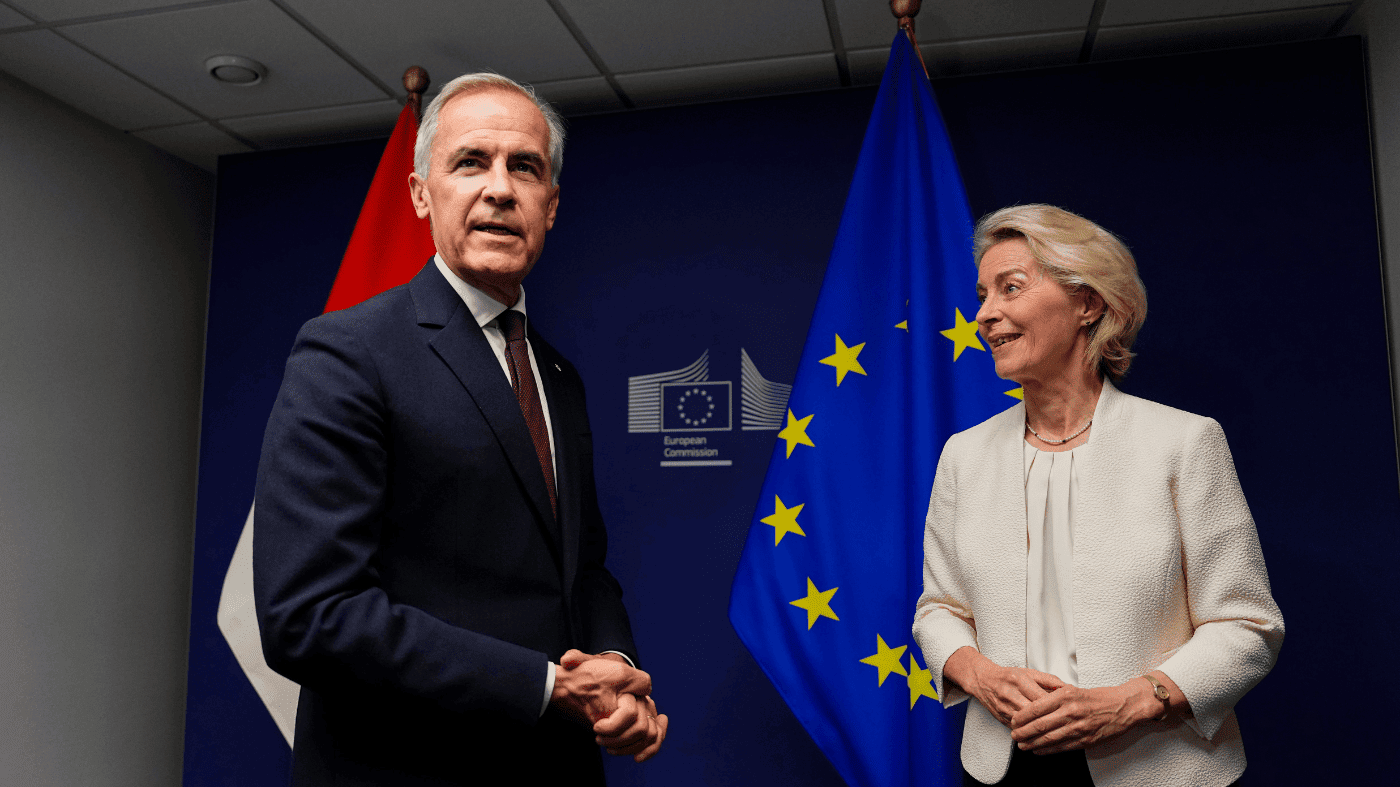
The most concrete progress is with Europe. Ottawa and Brussels have formalized a strategic partnership covering energy, critical minerals, technology, digital infrastructure, security, and defense. Canada has also become the first non-European participant in the EU's SAFE defense initiative. This week, European Commission President Ursula von der Leyen told the European Parliament she wants Canada to be the EU's first “associate member”—a status that doesn't yet exist but signals a deep convergence of interests. Europe needs reliable suppliers of energy, critical minerals, and trusted tech partners; Canada has all three.
Looking west, Canada is already a member of the Comprehensive and Progressive Agreement for Trans-Pacific Partnership, giving it preferential access to key Indo-Pacific economies. It is negotiating a trade pact with ASEAN and has been strengthening bilateral ties. For instance, Canada and Japan recently announced a comprehensive strategic partnership covering energy, critical minerals, defense, semiconductors, batteries, and AI. Japan brings capital and technology; Canada brings resources. Similar complementarity exists with South Korea, with expanded cooperation in LNG, critical minerals, and defense procurement. British Columbia is emerging as Canada's Pacific gateway, with new energy infrastructure and expanded port capacity.
Neither Europe nor Asia can replace the U.S. market, but that's not the point. The strategic question is whether Canada can position itself at the intersection of three of the world's most important economic regions—North America, Europe, and Asia. Canada is already deeply integrated with the U.S., has preferential access to Europe, and is part of the leading trans-Pacific trade pact. Its Arctic coastline adds strategic weight. Add vast resources, clean electricity, strong financial institutions, and growing AI strengths, and Canada could become a pivotal economy where the interests of all three regions converge.
This vision doesn't mean becoming a transshipment hub or playing partners against each other. Rather, it's about enabling European capital to finance Canadian energy and digital infrastructure, Japanese and Korean investment to build critical-mineral supply chains, and Canadian resources to flow both east and west. Crucially, Canada remains a key part of the North American economy—which makes it more, not less, valuable to Europe and Asia.
Carney has set a goal of doubling non-U.S. exports over the next decade, pursuing agreements from Europe to Southeast Asia and India. There's also a political dimension: a new U.S. president takes office in January 2029, and Canada can't predict that administration's stance. But by then, Canada could approach Washington with a far more substantial strategic relationship with Europe and Asia, giving it greater leverage and resilience. As the trade war with the U.S. continues, this strategy offers Canada a way to thrive beyond merely surviving the current dispute.
For decades, Canada viewed its proximity to an economic superpower as destiny. But geography offers more than one path: Canada borders the U.S., but it also faces Europe across the Atlantic, Asia across the Pacific, and an increasingly important Arctic to the north. The question is whether Ottawa can seize that potential.