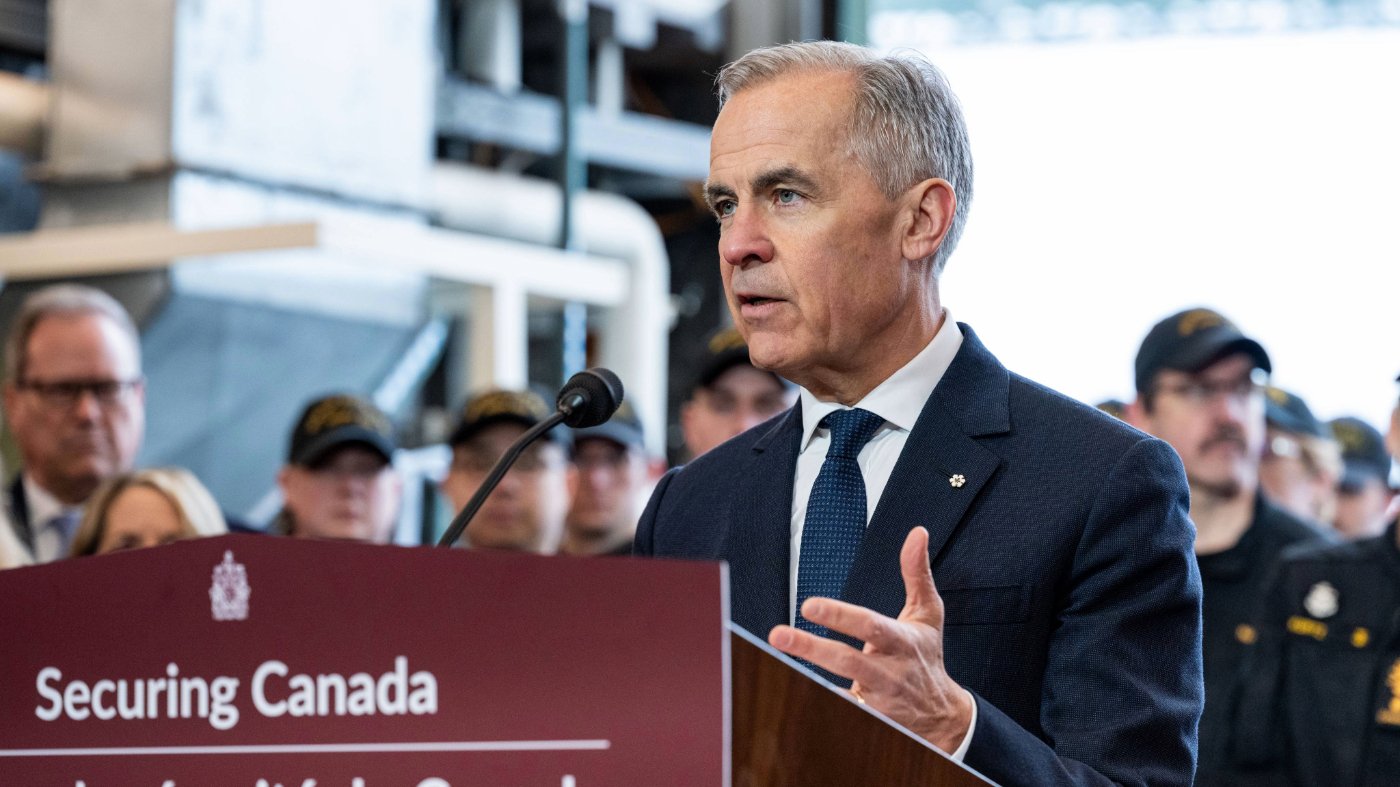
Prime Minister Mark Carney recently declared that Canada has achieved NATO's benchmark of spending 2% of its Gross Domestic Product on defense, marking the country's highest level of military investment relative to its economy since the Cold War's end. The announcement, made aboard a naval vessel in Halifax, fulfills a decade-old pledge that had drawn consistent criticism from allies, particularly the United States, where lawmakers from both parties had labeled Canada's previous efforts as inadequate.
However, a closer examination reveals significant caveats. The reported $63 billion figure encompasses a broad range of government expenditures, including veterans' benefits and coast guard operations, which have limited direct impact on combat readiness. While this accounting aligns with NATO's flexible guidelines, it creates a substantial gap between the financial tally and the tangible military power Canada can deploy. The distinction is crucial for an alliance facing renewed threats.
Procurement Paralysis Undermines Spending Milestone
The core issue lies in Canada's chronically slow defense acquisition system. Despite the increased budget, the military continues to wait for essential equipment. The country operates aging, second-hand submarines purchased in the 1990s and has only just begun work on a long-delayed warship replacement program, with the first vessel not expected until the 2030s. While contracts for F-35 fighter jets and P-8 maritime patrol aircraft are signed, deliveries are years away, and the Carney government has placed the full fighter order under review.
Conservative defense critic James Bezan emphasized that increased spending only matters if it yields usable equipment for personnel. The institutional dysfunction plaguing Canadian defense procurement persists, and a newly established Defense Investment Agency has yet to prove it can accelerate the process. For U.S. officials, particularly those monitoring the progress of shared continental defense projects, these delays are a pressing concern.
The Long Road to 5% and Arctic Sovereignty at Stake
Having reached the 2% target, Ottawa is now committed to the alliance's more ambitious goal of 5% by 2035—a figure that would require annual defense spending of approximately $150 billion. A recent report from the CD Howe Institute concluded the federal government has no credible plan to reach this level, a fact underscored by the absence of a multi-year defense spending projection in the latest budget. Carney has acknowledged that difficult fiscal trade-offs lie ahead and that public support is not guaranteed.
The strategic imperative is most acute in the Arctic. Canada has framed a $32 billion NORAD modernization effort as a move toward sovereign defense capability, reducing reliance on American support. This shift is a response to years of Russian military buildup in its Arctic territories and China's self-declared status as a "near-Arctic power," despite having no Arctic coastline. The northern approaches to North America are now contested spaces.
This changing landscape is not lost on Washington. Former President Donald Trump's past rhetoric on the region signals that Ottawa can no longer base its defense planning on assumptions of unconditional U.S. partnership. An ally that asserts Arctic sovereignty but lacks the consistent presence and modern equipment to enforce it risks having its claims challenged not just by adversaries but by its closest ally as well. The necessary sensors, infrastructure, and forces remain years from deployment.
The fundamental question for policymakers, therefore, is whether Canada's spending surge will translate into real, deployable military power or remain a collection of promises and contracts. The strategic environment, marked by global tensions, will not pause for Canada's procurement system to catch up. As one analyst noted, Canada has earned one cheer for meeting the financial target; the second cheer awaits the arrival of functional submarines and other delayed capabilities.