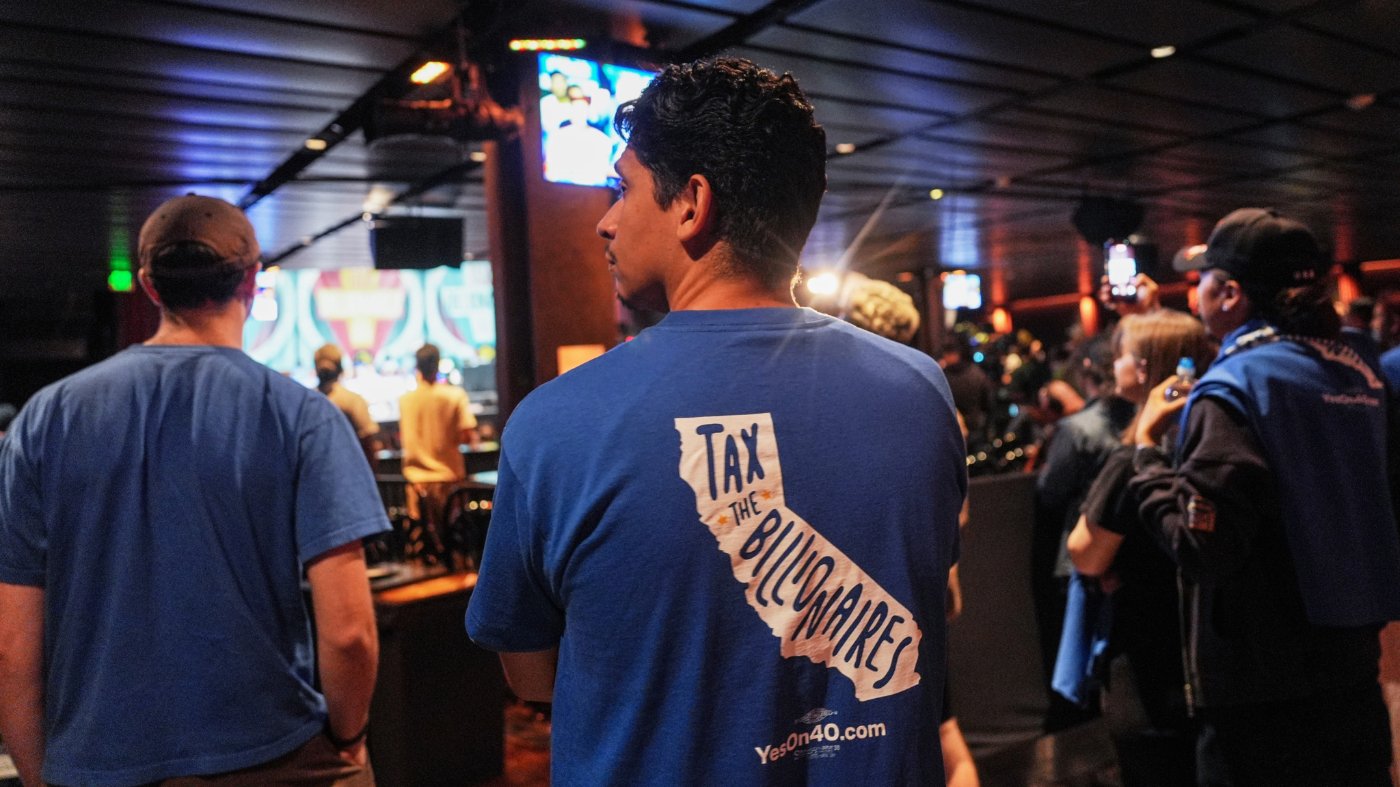
California's Proposition 40, which would have imposed a one-time 5% wealth tax on the state's billionaires, went down in defeat even as Democrats swept the state—a result that underscores the deep political and economic currents running against such measures.
The battle was not without its costs. According to a Hoover Institution study, more than a quarter of those targeted by the tax—including Google co-founders Larry Page and Sergey Brin—left the state rather than face the levy. This marks the second major wave of billionaire departures from California; the first, around 2021, saw at least 20% of the state's billionaire wealth flee, including fortunes of Elon Musk and Larry Ellison. That earlier exodus, my analysis shows, was tied to an estimated $100 billion in lost economic output between 2021 and 2024, along with reduced employment and tax revenue.
The lesson is a classic one: the mere prospect of a tax can trigger real economic damage. Investors and business owners don't wait for legislation to pass before adjusting their plans. They anticipate, hedge, and move—taking jobs and investments with them. In the end, California may have lost a significant share of its billionaire wealth without collecting a single dollar from the proposed levy.
The political price tag was equally steep. Opponents of Proposition 40 reportedly spent nearly $380 million, while supporters spent about $100 million. Combined with spending on other ballot measures, the 2024 cycle saw close to $800 million in total campaign outlays—the most expensive in state history. Those resources could have funded research, created jobs, or supported other productive ventures; instead, they were consumed in a fight over a tax that never materialized.
Money, however, doesn't guarantee victory. As recent elections in Texas showed, even massive spending by billionaires like Musk can fall short. The opposition to Proposition 40 was bolstered by internal divisions among its would-be supporters. Governor Gavin Newsom, a Democrat, opposed the measure, arguing that a federal wealth tax would be a better approach to prevent capital flight. But that argument is flawed: a national tax would simply shift the problem abroad. Wealthy Americans have already shown a willingness to renounce citizenship to avoid taxes, and a federal levy would likely accelerate that trend.
More fundamentally, Proposition 40's design sowed the seeds of its own defeat. The measure allocated 90% of its revenue to healthcare, leaving just 10% for education and other priorities. The initiative was backed by the Service Employees International Union-United Healthcare Workers West, while the California Teachers Association stayed on the sidelines. This is a stark illustration of the uncomfortable reality of redistribution: the fight is not just about who pays, but also about who gets paid.
Once the money enters government coffers, competing interests begin jockeying for their share. If healthcare unions get a bigger slice, less remains for education, infrastructure, or other needs. That tug-of-war can fracture coalitions that might otherwise support the same policy. Redistribution, in practice, becomes a contest over which group gets the lion's share of taxpayers' money.
The California experience offers a cautionary tale for any national wealth tax proposal. It encouraged capital flight, consumed enormous resources, and exposed the political infighting that erupts when interest groups fight over a new revenue stream. There are no good reasons to repeat this experiment at the federal level.