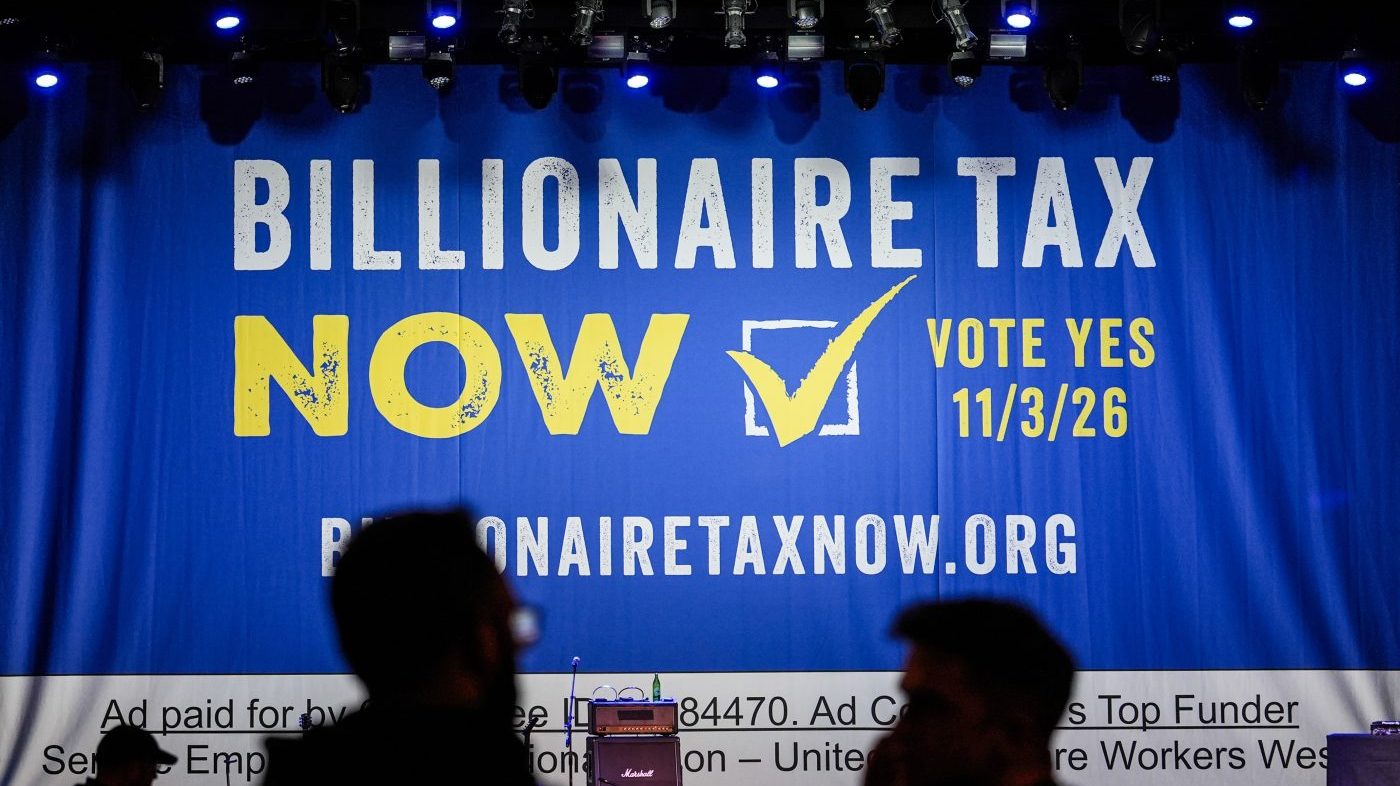
A proposed one-time levy on the state’s wealthiest residents has cleared the threshold to appear on California’s November ballot, setting up a high-stakes political battle that pits progressive activists against a coalition of wary Democrats and business leaders.
Secretary of State Shirley Weber announced Wednesday that the Billionaire Tax Act—officially designated as a ballot measure—had gathered more than enough valid signatures to qualify. The measure, which would impose a 5% surcharge on billionaires’ assets, is set to be certified on June 25 for the midterm election. Proponents submitted over 962,000 signatures, well above the 874,641 required by state law.
The initiative, championed by Senator Bernie Sanders (I-Vt.), would funnel 90% of the revenue into healthcare programs and the remaining 10% into food assistance or education initiatives. Sanders, who won California’s Democratic primary in 2020, has long argued that the ultra-wealthy must shoulder more of the tax burden. “Enough is never enough,” he told supporters at a Los Angeles rally in February, accusing billionaires of hoarding wealth while low-income families lose access to health coverage.
But the measure has fractured the state’s Democratic establishment. Governor Gavin Newsom opposes the plan, warning that a unilateral state tax could drive billionaires—particularly those in Silicon Valley—to relocate. “There is no question in my mind” the measure will be defeated, Newsom told The New York Times earlier this year. His chief of staff, Nathan Barankin, predicted the opposition would be framed as a grassroots rejection, not a billionaire-led effort: “It’s going to be Planned Parenthood, doctors, teachers and labor killed it.”
Google co-founder Sergey Brin has also voiced concerns, arguing the tax would undermine California businesses and force leaders to flee the state. The internal Democratic rift mirrors broader debates in other states over how aggressively to tax the rich without triggering an exodus of capital and talent. In a related context, Trump’s California fraud claims have already complicated the gubernatorial race, adding another layer of political turbulence.
The measure has drawn strong support from the Service Employees International Union-United Healthcare Workers West, one of California’s largest labor unions. Union chief of staff Suzanne Jimenez argued that federal healthcare cuts have already strained hospitals to “skeleton crews,” making the tax necessary to keep emergency rooms open. “Most Californians and most billionaires recognize how reasonable and necessary this proposal is,” she told the Los Angeles Times in April.
Newsom and his allies have been quietly negotiating with liberal groups to find a path that would prevent the measure from reaching the ballot, according to the Times. Meanwhile, the broader political landscape in California remains volatile, with vote-count delays fueling fraud claims and sparking reform pushes. If the billionaire tax does make it to the ballot, it will test whether voters prioritize progressive taxation or fear of driving away the state’s economic engine.