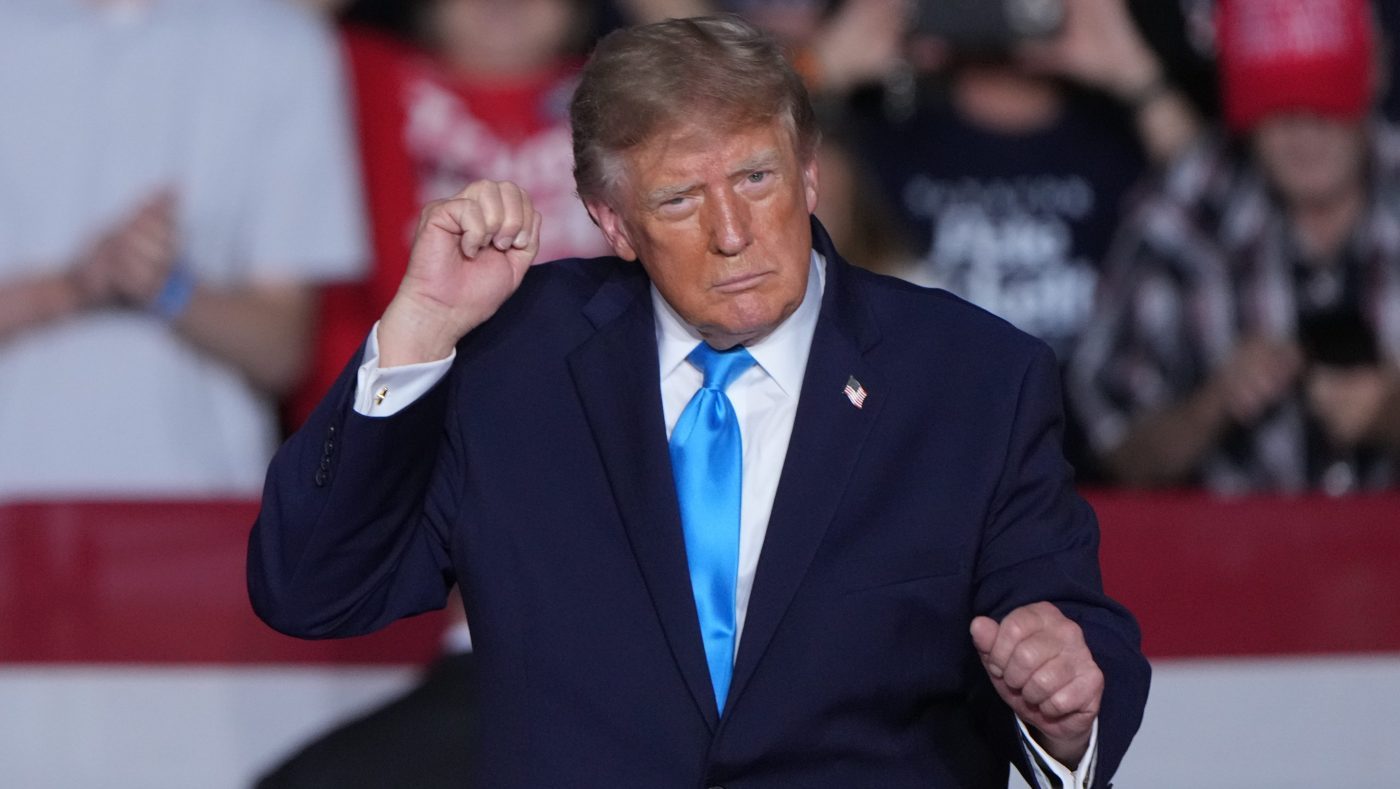
President Trump is facing sharp criticism from California leaders after he suggested during a campaign rally in Nebraska on Monday night that Iran could "take out" Los Angeles or San Diego. The remark, delivered at a political event in Omaha, drew immediate rebuke from Governor Gavin Newsom, a Democrat, who labeled the president's language "deranged and dangerous."
Newsom, a frequent adversary of the administration, took to social media to condemn the threat assessment, arguing that the president's rhetoric undermines national security and inflames tensions with Tehran. Other California officials, including members of the state's congressional delegation, echoed similar sentiments, accusing Trump of using a volatile international situation for electoral gain.
Tuesday's schedule finds the president in Baltimore, where he is set to visit Tradepoint Atlantic, a sprawling industrial site, and speak at an event hosted by Anduril Industries, a defense technology company. The visit underscores the administration's focus on military innovation and manufacturing, though it comes amid a contentious political climate.
The Iran comment is not an isolated incident. Trump has repeatedly used inflammatory language about foreign adversaries during campaign stops, a strategy that has energized his base but alarmed critics who warn it could escalate conflicts. This latest episode adds to a pattern of provocative statements that have drawn bipartisan concern.
Meanwhile, the midterm election season is intensifying, with key debates scheduled for Tuesday night. In Maine, Senate candidates are set to clash, while Iowa's gubernatorial hopefuls will also take the stage. These contests are seen as bellwethers for the political landscape ahead of the November elections, where Republicans are hoping to capitalize on voter dissatisfaction with the economy and Biden administration policies.
In a separate development, a federal appeals court in Boston is hearing arguments Tuesday in a lawsuit challenging Health and Human Services Secretary Robert F. Kennedy Jr.'s overhaul of the childhood vaccine schedule. The suit, led by the American Academy of Pediatrics and other medical organizations, contests the reduction of recommended vaccine-preventable diseases from 18 to 11, a change implemented in January. A district court judge previously sided with the plaintiffs, temporarily blocking the modifications, but the administration appealed.
The vaccine controversy is part of a broader health policy battle that has seen the Trump administration push for deregulation and alternative approaches to public health, often clashing with mainstream medical consensus. The outcome of the appeals case could have significant implications for pediatric care nationwide.
As the day unfolds, political observers are watching for further reactions to Trump's Iran remarks, particularly from national security experts and members of Congress. Some have pointed to the turnout paradox that such rhetoric may create, potentially mobilizing Democratic voters more than Republican base supporters in the upcoming midterms.
The president's approval ratings remain at record lows, and recent controversies, including the doxxing of Senator Tom Cotton over a time bill, have further strained relations with Senate Republicans. These incidents, coupled with the Iran comment, suggest a volatile political environment as the campaign season heats up.
In the coming days, the administration is expected to continue its focus on economic and defense issues, with possible executive actions on fuel costs and other policy priorities. But the fallout from Trump's latest remarks is likely to dominate headlines, as critics and supporters alike weigh in on the president's approach to foreign policy and domestic politics.