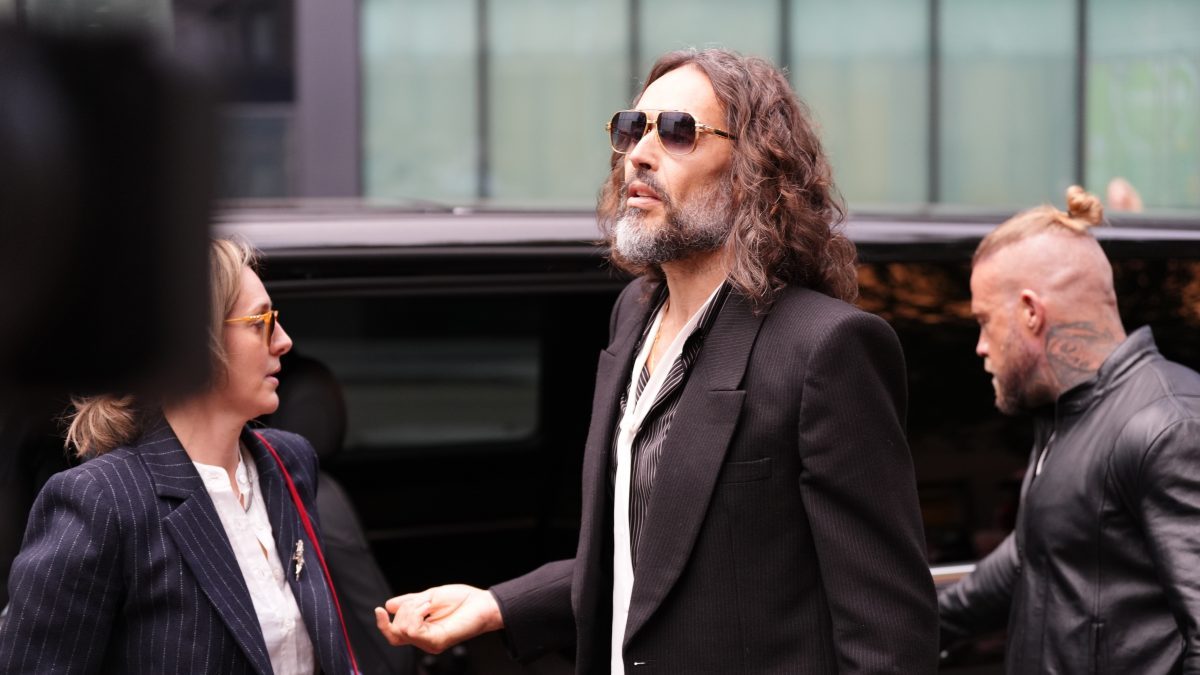
LONDON — Russell Brand was handed a 10-and-a-half-year prison sentence on Monday after a jury found him guilty of raping one woman and sexually assaulting three others, crimes that spanned the period when his comedy career was skyrocketing on the back of his self-aggrandizing tales of sexual conquest.
Judge Joel Bennathan, delivering the sentence at Southwark Crown Court, excoriated the 51-year-old entertainer, saying he had shown a “casual and arrogant disregard” for his victims. “About 20 years ago, Russell Brand, you were becoming famous,” Bennathan said. “You were clever — and in many people’s eyes, funny and charismatic. You had also become a sexual predator.”
Brand, known for his outrageous stand-up routines and erratic behavior on TV and radio, as well as his public battles with drug and alcohol addiction, showed little emotion as the sentence was read. As he was led away by court officers, he mouthed the words “we’ll be OK” to his wife, Laura, who was present in the courtroom along with his father, Ron Brand. He had been free on bail during the trial but was taken into custody immediately after the verdict last Thursday.
The conviction followed a trial in which eight men and four women on the jury weighed allegations from six accusers, with incidents dating back to 2004. Brand was acquitted of two counts of rape and one count of attempted indecent assault, but found guilty on charges involving four women.
Prosecutor Riel Karmy-Jones argued that Brand weaponized his fame to gain access to women and to convince himself he could act with impunity. “He used it to facilitate an access to women without which the offending could not have taken place,” Karmy-Jones said. “It also fed his own view that he could commit such offenses with impunity.”
The case emerged after a 2023 investigation by The Times of London and Channel 4, which aired allegations of sexual abuse and degradation. One victim, who was sexually assaulted at a birthday party in a London bar in 2004, told the court she felt like “damaged goods” and described the ordeal of watching Brand’s star rise. “For many years as his star was rising it was impossible to escape seeing him all over the media, being celebrated for his disgusting behavior against women like it was all a joke,” she said. “There were many times I felt visibly sick at the sight of him parading around thinking he can get away with anything.”
Another victim, a former fan who was anally raped at Brand’s home after meeting him backstage at a comedy show in 2009, said she felt “powerless” and feared she would not be believed. “His fame, wealth and influence created a power imbalance which made me feel powerless,” she said in a statement read by the prosecutor. She described years of anxiety, humiliation, and heavy drinking before she finally came forward.
Defense lawyer Ian Winter attempted to minimize the severity of the rape, suggesting Brand “went too far and overrode consent that had been given” during consensual sex. He also pointed to Brand’s charitable work and his efforts to help others overcome addiction, noting that his only prior conviction was for marijuana possession in 1995.
Outside the courthouse, a small group of supporters, reflecting Brand’s recent conversion to Christianity, held banners with crosses that read: “Russell Brand we stand with you. Christ was crucified for telling the truth. Russell is the truth.”
The sentencing comes amid broader national debates about sexual violence and accountability, from campus prevention efforts to criminal justice reform. Brand’s case has reignited discussions about how fame and power can shield predators, and whether the cultural climate that allowed such behavior has truly changed.