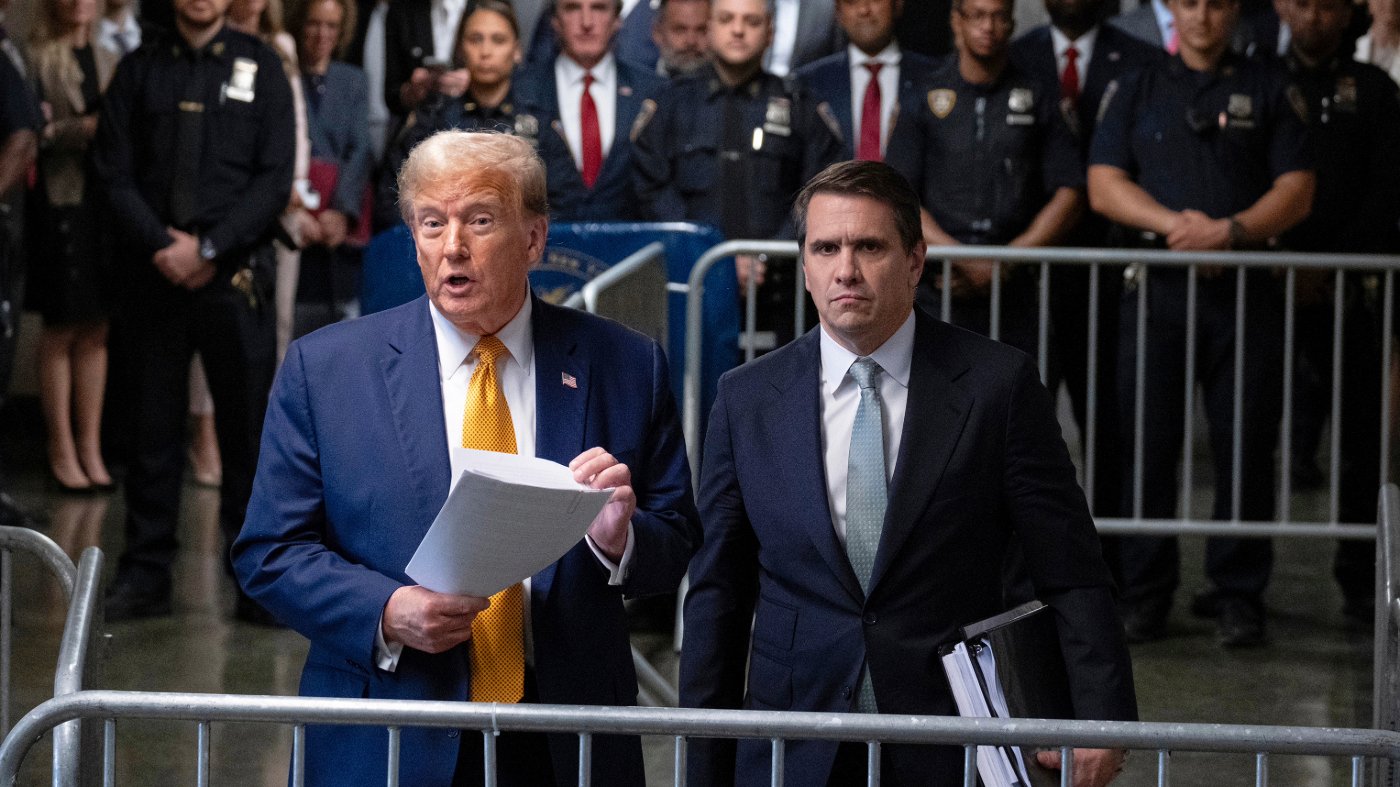
President Trump formally nominated Todd Blanche as attorney general on Monday, elevating him from acting status after Pam Bondi was ousted on April 2. But the question looming over the White House is whether Blanche can survive a Senate confirmation fight that threatens to become a political liability.
Blanche has been auditioning for the role on a full-time basis, and Trump wants an attorney general willing to bend the Justice Department to his agenda—chiefly, a retribution campaign against perceived political opponents. Blanche earned some conservative plaudits for a well-deserved indictment of the Southern Poverty Law Center, which many on the right view as a left-wing lawfare operation. However, his record also includes a controversial settlement of Trump’s lawsuit against the federal government—a deal that granted sweeping immunity to Trump and his family from future tax prosecution, while creating a nearly $1.8 billion taxpayer-funded compensation fund for alleged legal mistreatment by the government.
During a June 2 appearance before the House Appropriations Committee, Blanche testified that the administration would no longer pursue that fund. But he maintained that the immunity from tax prosecution for Trump and his family remains in force. Critics argue this amounts to a get-out-of-jail-free card, issued before any wrongdoing has been proven, and gives Trump carte blanche to enrich himself at public expense.
That blanket immunity will be a central flashpoint in Blanche’s confirmation hearing. The attorney general is not the president’s personal lawyer—even if Blanche previously served as Trump’s defense counsel in three criminal cases. The role is supposed to represent the interests of the United States, not the president’s family.
Can Blanche be confirmed? It will be tight. Trump’s recent efforts to primary Sens. Bill Cassidy (R-La.) and John Cornyn (R-Texas) have complicated the dynamics. Even if he squeaks through, the victory could prove pyrrhic, especially as the president’s approval ratings remain dismal. For a deeper look at how Trump’s Iran claims are fueling political tensions, see Schiff Blasts Trump's Iran Claims as 'Falsehood After Falsehood'.
On the intelligence front, Trump has nominated Jay Clayton as director of National Intelligence, replacing acting director Bill Pulte. Clayton, currently U.S. Attorney for the Southern District of New York and former SEC chairman, received 61 confirmation votes for his SEC role, including nine from Democrats. With no major negatives, he appears on a clear path to confirmation. This move signals a capitulation to Senate Republicans who were furious over the Pulte nomination—a man with zero intelligence experience and zero chance of confirmation. Trump, facing weak poll numbers, cannot afford a high-profile loss on either Pulte or Blanche.
Meanwhile, EPA Administrator Lee Zeldin would make a solid attorney general, according to analysts. The former New York congressman, who ran a surprisingly strong gubernatorial race in 2022 in the deep-blue state, served on the Foreign Affairs Committee and its terrorism subcommittee. Crucially, Zeldin has no connection to the controversial immunity grant to the Trump family, which feeds the perception that America works for the rich and powerful but not for ordinary citizens.
For the director of National Intelligence slot, Trump might have been better off turning to Rep. Elise Stefanik (R-N.Y.), whom he once nominated as U.N. ambassador before withdrawing her over concerns about maintaining the slim GOP House majority and the risk of losing a special election in her Canadian-border district—especially amid Trump’s inflammatory rhetoric toward Canada. After Stefanik launched an uphill campaign for New York governor, Trump refused to endorse her, proving that loyalty in Trump world is a one-way street. She later dropped her gubernatorial bid, and Trump endorsed Nassau County Executive Bruce Blakeman instead. Trump owes Stefanik, and her experience on the Armed Services and Intelligence committees makes her a solid, confirmable choice for DNI.
Trump is in a position where he needs an easy win. Stefanik for DNI and Zeldin for attorney general would have given the president two strong nominees without self-inflicted political headaches. As Kevin Igoe, former deputy chief of staff of the RNC, puts it: “In politics, as in sports, missed opportunities will cost you.” For more on how Trump’s visa restrictions are stirring controversy, see Trump Visa Restrictions Turn 2026 World Cup Into Political Flashpoint.