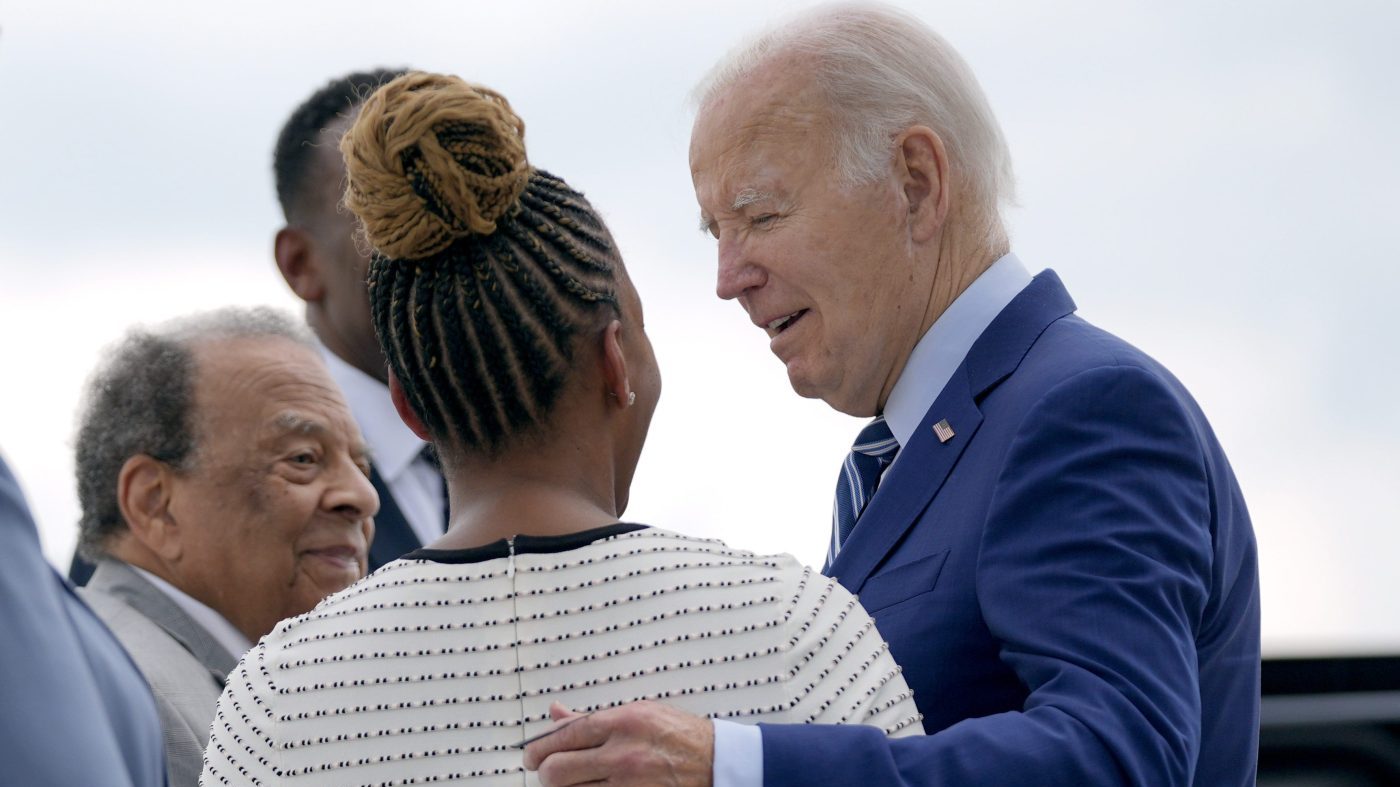
Former President Joe Biden entered the 2026 midterm fray on Friday with his first endorsement of the cycle, backing former Atlanta Mayor Keisha Lance Bottoms in the Georgia governor's race. The move signals Biden's continued influence in Democratic primaries even after leaving office amid low approval ratings.
Bottoms, who surprised many by declining to seek a second term as mayor in 2021, later served as a senior adviser in the Biden White House. In a video released Monday, Biden praised her leadership during crises, including the pandemic and a cyberattack on Atlanta's systems. "She handled the law with steady leadership," he said. "Smart, focused, gets things done. Georgia, she's ready."
The endorsement comes as Bottoms holds a commanding but not insurmountable lead in the Democratic primary. A 20/20 Insight poll from late March shows her at 32 percent, well ahead of former state labor commissioner Michael Thurmond, former Lt. Gov. Geoff Duncan—a Republican-turned-independent after the 2020 election—and former state Sen. Jason Esteves, each polling between 10 and 15 percent. However, she remains below the 50 percent threshold needed to avoid a runoff, leaving the race unsettled.
On the Republican side, the primary is a dead heat between businessman Rick Jackson and Lt. Gov. Burt Jones, the Trump-backed candidate, according to an Atlanta Journal Constitution poll. The GOP nominee will likely face Bottoms in a general election that could be a bellwether for national trends.
Biden has remained publicly active since leaving the White House in January 2025, taking sharp jabs at President Trump. In a February speech to South Carolina Democrats, he mocked Trump's lengthy State of the Union address, noting it failed to mention the anniversary of Russia's invasion of Ukraine. "Is he still talking?" Biden asked, drawing boos from the crowd. He also warned of "dark days" and threats "amplified in ways we have never seen before," urging Democrats to be "unapologetic for fighting for our country."
Biden's own approval rating had sunk to the mid-30s by the end of his term, driven by concerns over his age and fitness. Trump's second-term approval has similarly dipped as voters grow frustrated with high gas prices and the ongoing war in Iran, which has become a major liability for the GOP. Political analysts see potential parallels to the 2006 midterm backlash, with some warning that the Iran conflict could fuel a Democratic wave. Brit Hume has cautioned that Republicans could face a landslide defeat if economic and foreign policy woes persist.
Bottoms' campaign will also need to navigate the fallout from a recent Supreme Court ruling on voting rights, which the GOP has hailed as a game-changer. Republicans are celebrating the decision as a tool to reshape electoral maps, potentially complicating Democratic efforts in Georgia. Meanwhile, redistricting battles in Virginia and Florida are setting the stage for a fierce midterm showdown across multiple states.
For now, Bottoms is the clear front-runner, but the race remains fluid. Biden's endorsement could provide a boost, but it also ties her to a former president whose popularity has waned. The outcome in Georgia will offer an early test of whether Democratic voters are ready to rally behind Biden's picks—or whether the party is looking for a new direction.