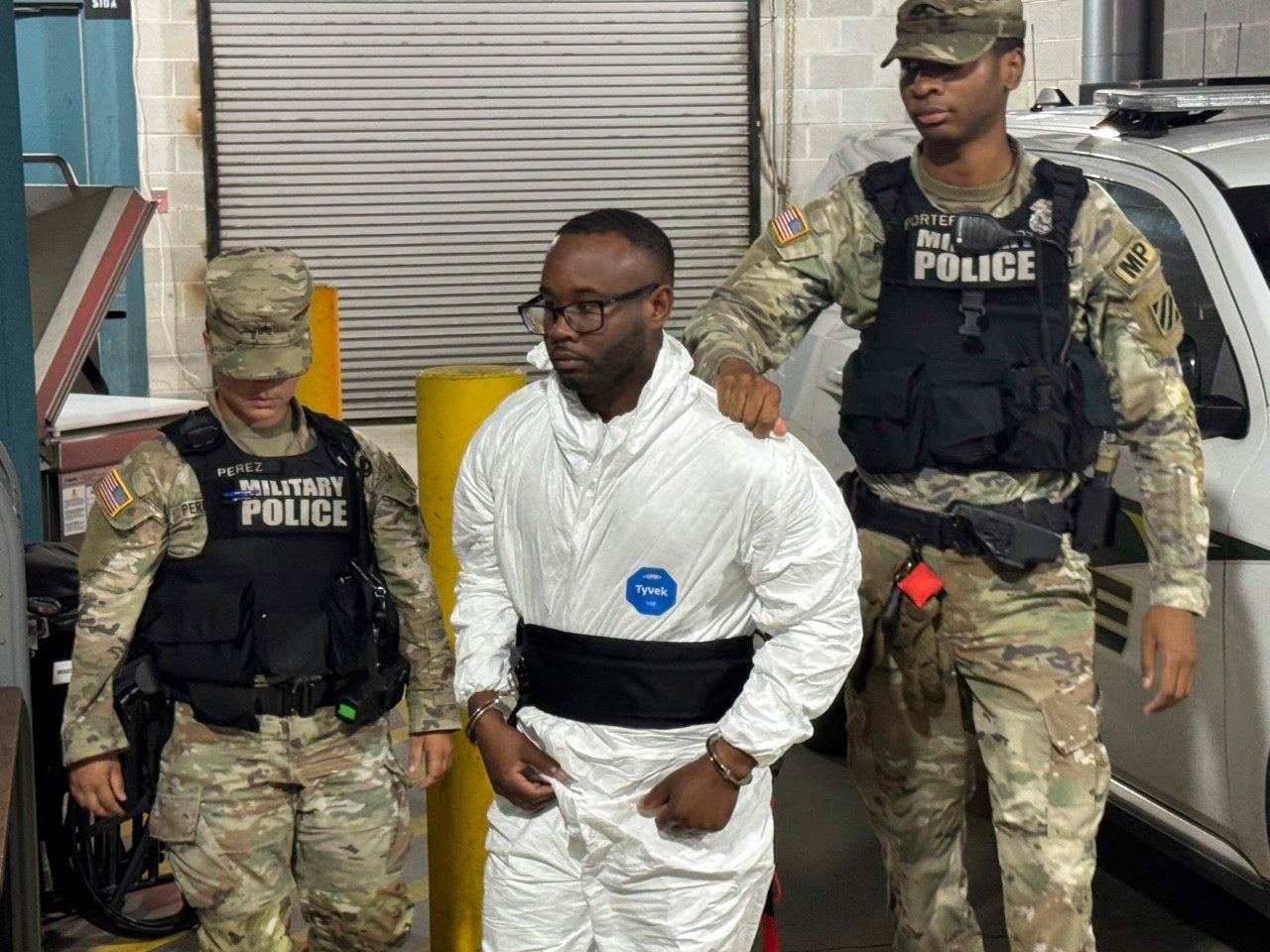
A military judge on Thursday convicted Army Sgt. Quornelius Radford of attempted murder for a shooting rampage at Fort Stewart, Georgia, that left five people wounded last summer. The verdict, delivered at the sprawling base roughly 40 miles southwest of Savannah, caps a two-day court-martial that highlighted the defendant's troubled mental state and his admitted targeting of unit leaders.
Radford, 29, a supply sergeant with the 3rd Infantry Division's 2nd Armored Brigade, opened fire with a personal handgun on August 27, 2024, according to prosecutors. Four fellow soldiers and his then-fiancé, Raekwon Smith, were struck by bullets. Smith testified that he followed Radford onto the base out of concern the soldier was suicidal, and that Radford shot him in the torso before moving to the unit's office building.

During the trial, witnesses described a methodical attack: Radford walked through two offices and a conference room, shooting four soldiers while telling others to leave. He was eventually subdued and disarmed by fellow service members before military police arrived. Dr. Morgan Williamson, a radiologist who reviewed X-rays of the victims, testified that one soldier was shot in the face, another in the chest, and others in the back and abdomen—any of which could have been fatal.
Radford had pleaded guilty in March to charges of aggravated assault and domestic violence, admitting he carried out the shootings. But he insisted he never intended to kill anyone, forcing prosecutors to pursue the more serious attempted murder charges. They argued that his military firearms training, which teaches soldiers never to shoot unless they mean to kill, contradicted his claim.
Defense attorneys countered that Radford was suicidal and fired his weapon to provoke a confrontation with police, hoping they would kill him. “Radford only wanted one person to die that day, himself,” said Lt. Col. Dylan Mack, one of his Army lawyers. The defense noted that Radford spared several people he encountered, ordering them to flee rather than opening fire.
The case unfolded against the backdrop of Georgia's political landscape, where debates over public safety and military justice often intersect. Radford, who enlisted in 2018, served as a supply sergeant in the same division that has seen high-profile deployments. Fort Stewart, the largest Army post east of the Mississippi, hosts thousands of soldiers assigned to the 3rd Infantry Division.
Radford opted for a bench trial, leaving his fate to a military judge rather than a jury of soldiers. Sentencing is scheduled for Monday. Under military law, attempted murder carries a potential penalty of life imprisonment.
The shooting has also drawn attention to mental health issues within the ranks, a topic that has sparked policy discussions in Georgia and beyond. While the state grapples with redistricting battles and primary runoffs, the Radford case underscores the personal toll of service and the legal complexities of intent in military justice.