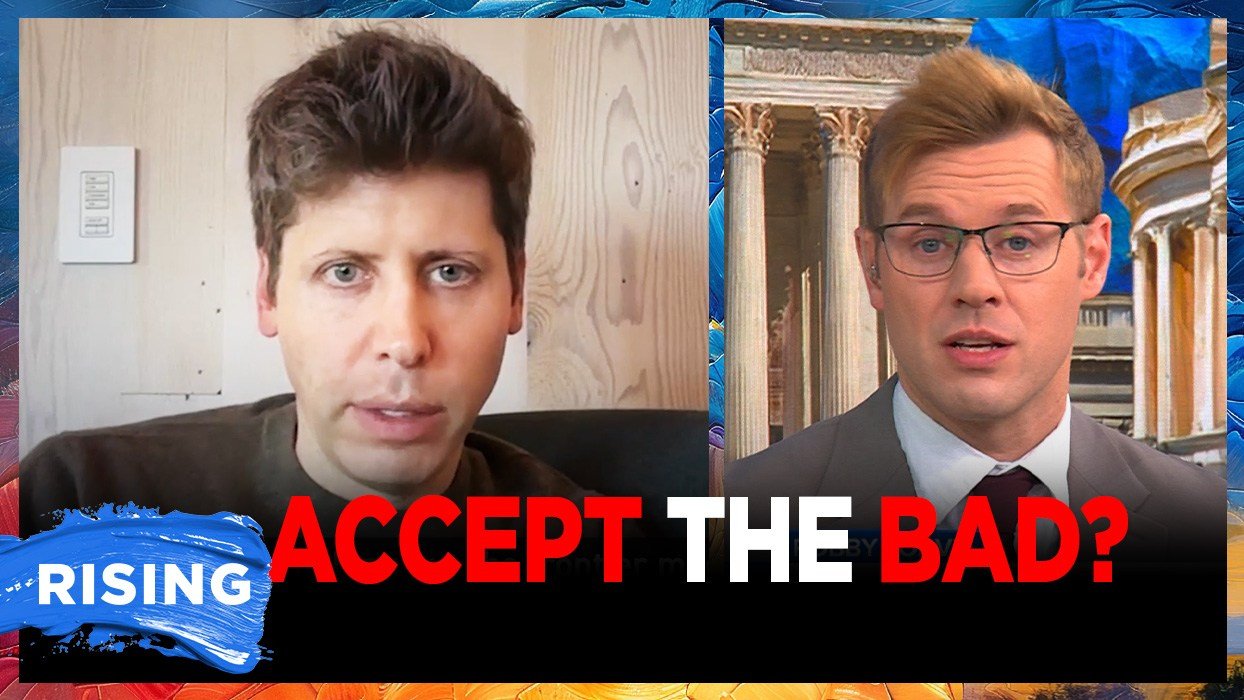
OpenAI CEO Sam Altman has sparked debate by saying that society must be willing to accept certain negative consequences from artificial intelligence in exchange for the technology's vast potential benefits. In remarks that have drawn sharp reactions, Altman argued that advancements in AI will bring improvements in health, wealth, and life expectancy, but that some harms are inevitable.
Altman's comments come as he and Anthropic CEO Dario Amodei present competing visions for AI's future. Amodei has advocated for slower, more cautious development, with explicit government oversight and even the possibility of handing control of AI to a consortium of governments. Altman, by contrast, appears more willing to let the technology evolve through market forces and litigation.

Critics have framed Altman's stance as a reckless willingness to sacrifice safety for progress. But supporters point out that society routinely accepts tradeoffs for technological advances. The automobile, for instance, causes thousands of deaths each year, yet we accept that cost because of the immense benefits of personal transportation. Similarly, driverless cars promise to save lives overall, even if they will inevitably be involved in accidents.
Altman's comments echo a broader debate about how to regulate AI. Some argue that Congress is ill-equipped to set appropriate limits and that a more organic approach, where harms are addressed through lawsuits and judicial rulings, would be more effective. The McDonald's coffee lawsuit is often cited as an example: a woman suffered severe burns, sued, and the company lowered its serving temperature—without any new legislation.
Amodei, however, believes that politicians should play a decisive role in setting boundaries for AI development. He has even suggested that AI control could be handed over to a group of governments, a prospect that alarms free-market advocates who see competition as a key driver of innovation and safety.
Altman's rhetoric has at times sounded ominous, particularly when he implies that some innocent people may be harmed. Yet his underlying point is that the net benefits of AI—such as more accurate medical diagnoses and longer, healthier lives—outweigh the risks. As he put it, we must learn to stomach some negative outcomes in exchange for vast prosperity.
This philosophical divide between Altman and Amodei is likely to shape policy debates for years to come. While Altman's approach leans on market mechanisms and tort law to address harms, Amodei's vision relies on proactive government regulation. The outcome of this clash will determine how quickly AI advances and who ultimately bears the risks.
For now, Altman's comments have reignited discussions about the ethical and practical tradeoffs of AI. Whether his willingness to accept some harms will prove wise or reckless remains to be seen, but the debate is far from over.