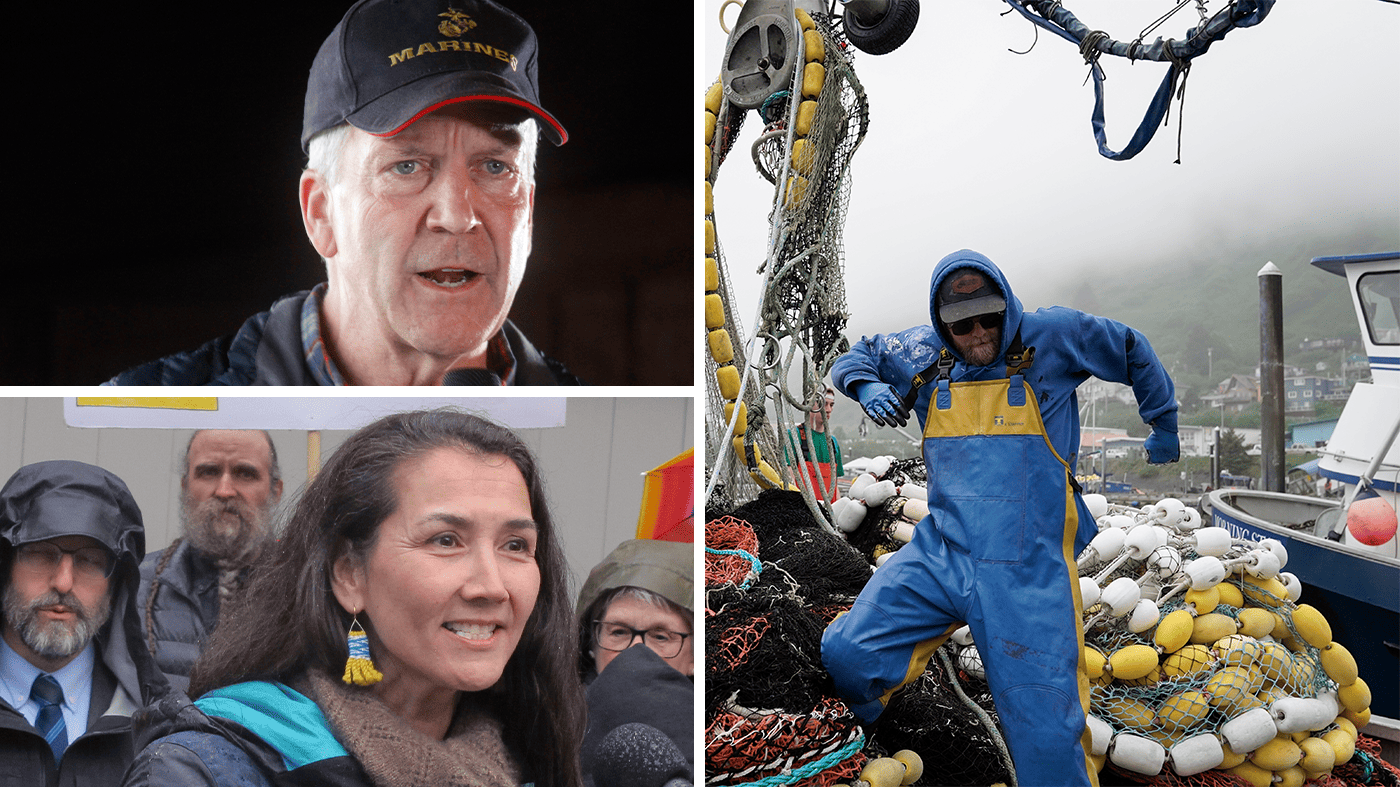
Alaska's U.S. Senate race, a top Democratic pickup opportunity, has become entangled in a fierce debate over commercial fishing methods, with the two candidates staking out sharply different positions on trawling.
Former Democratic Rep. Mary Peltola, who is challenging Republican incumbent Dan Sullivan, has made opposition to large-scale trawling a cornerstone of her campaign, echoing her long-standing "fish, family, freedom" platform. She argues that factory trawlers—vessels that harvest and process fish at sea—are depleting critical salmon, crab, and halibut stocks that sustain Alaskan communities.
"Some of the fisheries that have sustained generations of Alaskans are suffering at the hands of Lower 48 factory trawlers," Peltola said in a statement. "We're in this fight together against out-of-state corporations who export our fish and our profits while leaving our fisheries worse off."
Sullivan, meanwhile, points to his legislative record, including a recent bill aimed at reducing bycatch in pollock trawling by setting new monitoring standards and testing technologies that lessen seafloor disturbances. That measure cleared the Senate Commerce Committee last week. His campaign also highlights several fishing-related bills that became law, including efforts to clean up marine coastlines, combat illegal foreign fishing, and study declining salmon populations.
But political observers suggest Sullivan's legislative push may be a reactive move. "It's basically Sullivan conceding to fight this out on Mary Peltola's turf," said Aubrey Wieber, founder of the 907 Initiative, an Anchorage-based watchdog group that runs an anti-trawling website. Sullivan's spokesperson, Nate Adams, fired back, noting that Peltola's House record on fishing was largely rhetorical. "Mary Peltola made 'fish' part of four different campaigns in four years, but in Congress she never accomplished anything on fish other than printing it on a bumper sticker," Adams said.
The issue resonates beyond Alaska's fishing communities, mirroring broader anti-corporate sentiment seen in other battleground states. A 2025 Data for Progress poll found that 74% of likely Alaska voters support a ban on trawling, including 77% of independents and third-party voters. The debate also echoes fights over data centers and other industrial infrastructure, where voters concerned about costs and environmental impacts are turning against big corporations.
However, some state officials caution against oversimplifying the problem. Doug Vincent-Lang, commissioner of Alaska's Department of Fish and Game, wrote in the Anchorage Daily News that regulators have made progress on bycatch limits and closing areas to bottom trawling. "A picture is sometimes painted that trawling is the sole cause of stock declines, and that if we just ended it, all would be well," he argued. "Unfortunately, the issue is more complex."
Outside spending against trawling has intensified the political pressure. A seafood executive who spoke on condition of anonymity told The Hill that such money has "built up a lot of noise around anti-trawl" and has become a "ticket to entry" in Alaska races. The executive noted that even the state's open gubernatorial contest saw most candidates adopt anti-trawl stances. Another industry executive pointed to the Facebook group "STOP Alaskan Trawler Bycatch," which has nearly 60,000 members, as evidence of growing public fervor, even if the group's claims "are disconnected from reality."
As the campaign heats up, the trawling clash shows no signs of cooling. For Peltola, it's a chance to mobilize voters who feel their livelihoods are threatened by distant corporate interests. For Sullivan, it's a test of whether his legislative record can convince Alaskans that he's on their side. With control of the Senate potentially hinging on races like this, the outcome in Alaska could have national implications.