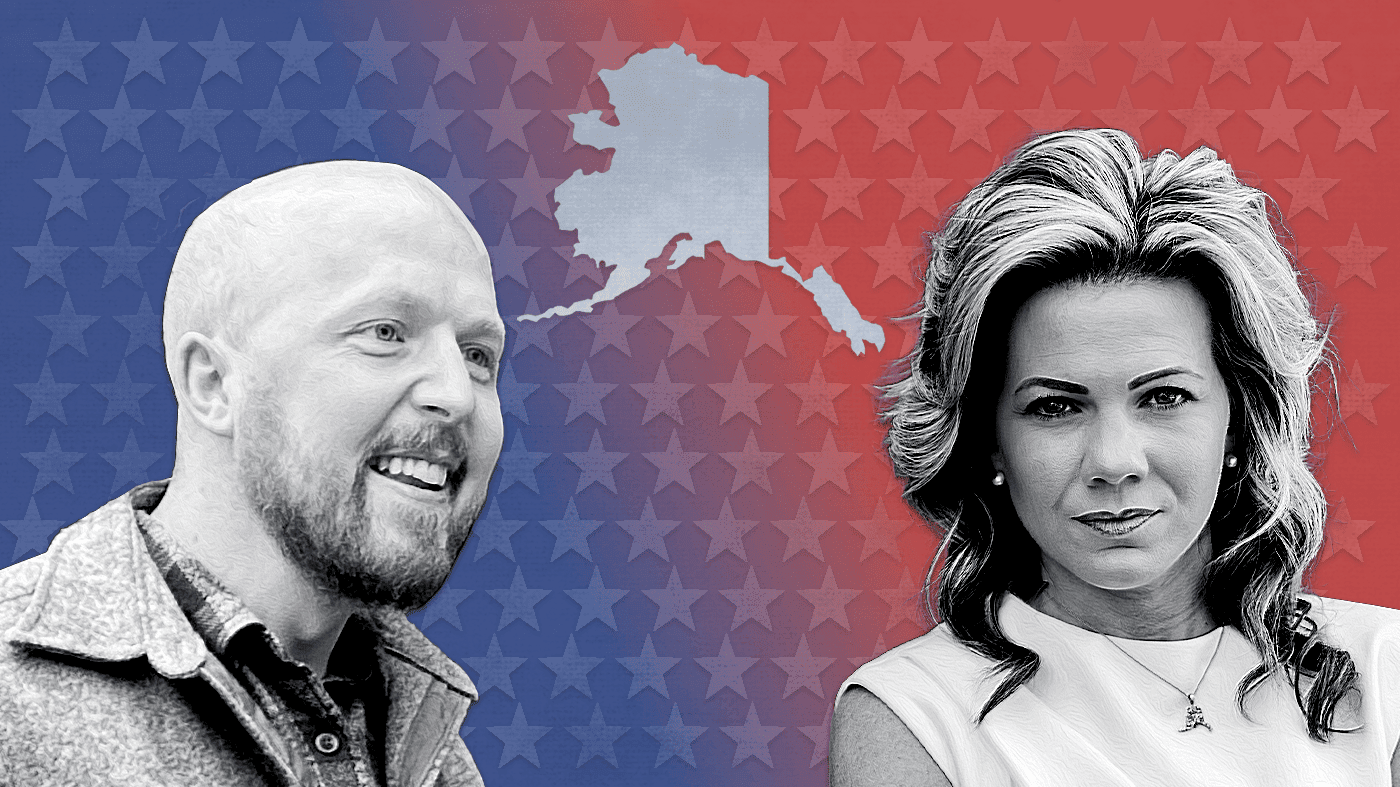
Alaska's next governor will be decided through the state's ranked-choice voting system, with voters selecting among four candidates after incumbent Mike Dunleavy was barred from seeking another term by term limits.
The ballot includes three Republicans—former Anchorage Mayor Dave Bronson, former state Attorney General Treg Taylor, and businesswoman Bernadette Wilson—and one Democrat, former state Representative Jonathan Kreiss-Tomkins. The field is the product of an August primary that saw Kreiss-Tomkins emerge as the top vote-getter, capturing nearly 23 percent of the vote.
Kreiss-Tomkins's primary performance was followed closely by another Democrat, former state Senator Tom Begich, who pulled in almost 21 percent but withdrew from the race after the primary, leaving Kreiss-Tomkins as the sole Democratic contender. Wilson, Bronson, and Taylor trailed with 10, 8, and 7 percent respectively.
Polls close at 1 a.m. Eastern Standard Time, and results are expected to come in overnight. The ranked-choice format means that if no candidate secures a majority of first-choice votes, the field will be whittled down in rounds, with the lowest-performing candidate eliminated and their votes redistributed until a winner is declared.
This election is taking place against a backdrop of heightened election scrutiny nationwide. The Justice Department has deployed a record number of election monitors across all 50 states, a move that underscores the intense focus on election integrity this cycle. Meanwhile, several states have reported voting machine glitches that forced some polling places to extend hours, though Alaska has not reported similar issues so far.
The race is seen as competitive, with Kreiss-Tomkins's primary lead giving Democrats hope in a state that has trended Republican in recent gubernatorial contests. However, the ranked-choice system can produce surprising outcomes, as seen in recent Alaska elections, and the split Republican field could either dilute conservative votes or consolidate behind a single candidate in later rounds.
Bronson, the former Anchorage mayor, is a polarizing figure known for his conservative stances and his narrow loss in the 2022 gubernatorial primary. Taylor, who served as attorney general under Dunleavy, is running on a platform of continuity and experience, while Wilson, a businesswoman, has positioned herself as an outsider focused on economic development and resource extraction.
Kreiss-Tomkins, a former state representative from Sitka, has emphasized issues such as education funding, infrastructure, and sustainable energy development. His campaign has sought to appeal to moderate voters and independents, a key demographic in Alaska's ranked-choice system.
With the state's unique voting method, the outcome may not be known for several days if the race goes to multiple rounds of counting. Election officials have urged patience as they process ballots, including absentee and early votes, which are expected to play a significant role in the final tally.
As Alaskans head to the polls, the race remains tight, and the result will shape the state's direction on issues like oil and gas policy, the controversial Pebble Mine project, and the state's fiscal challenges. The next governor will face immediate decisions on the state budget, which has been strained by fluctuating oil revenues and a persistent deficit.