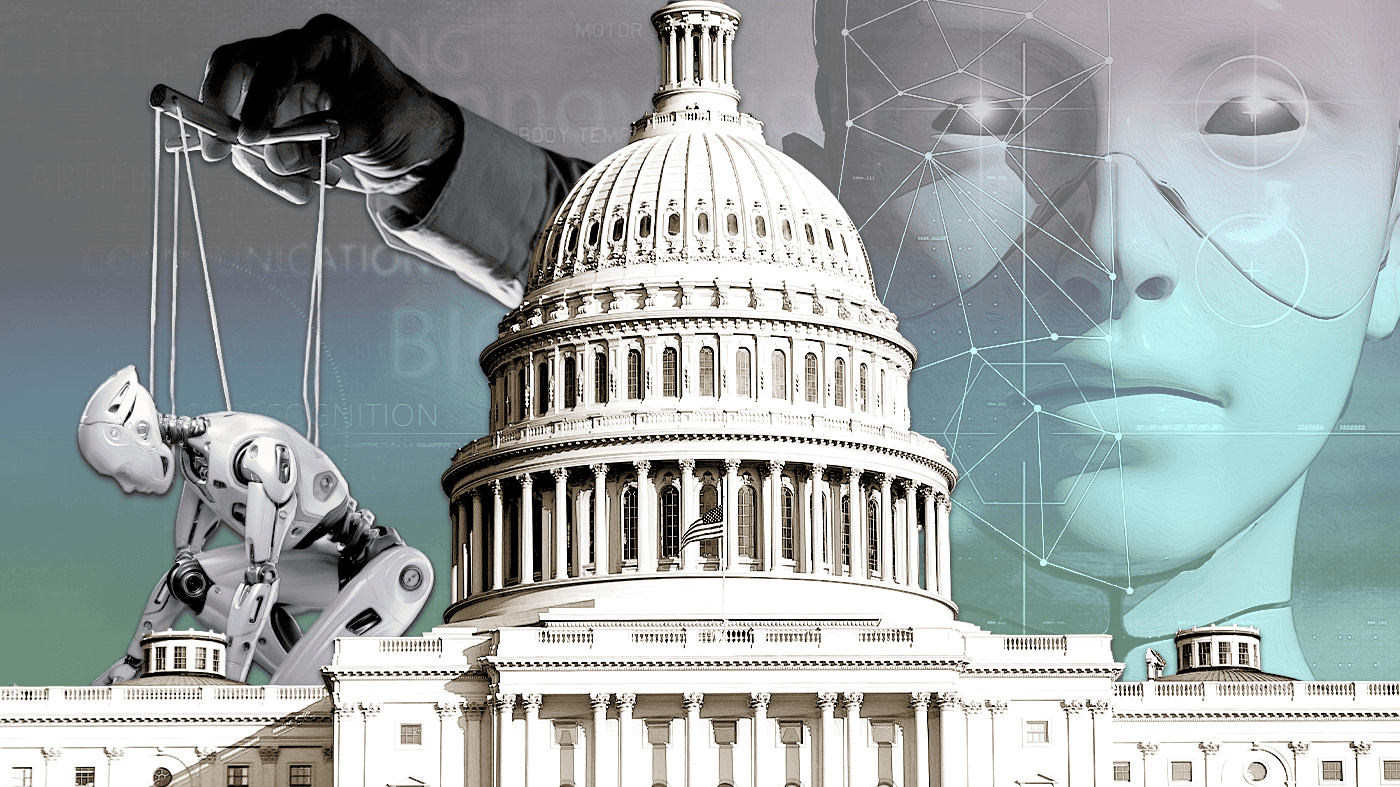
As fears over artificial intelligence escalate, U.S. policymakers are increasingly backing regulations to curb the pace of technological advancement. But two prominent scholars warn that such efforts could inadvertently empower the state to an unprecedented degree, potentially eclipsing the very dangers they aim to mitigate.
In a new analysis, Georgy Egorov of Northwestern University's Kellogg School of Management and Konstantin Sonin of the University of Chicago Harris School of Public Policy argue that any effective attempt to slow AI progress would require a dramatic expansion of government surveillance and investigative authority. They contend that the historical record suggests such a concentration of power carries risks that may outweigh the benefits of regulation.

The authors acknowledge that targeted rules—addressing fraud, privacy, copyright, or liability for AI-caused harms—are both feasible and necessary. The thornier problem arises when regulation seeks to halt technological development itself, preventing private firms from crossing thresholds deemed too dangerous. The profit motive, they note, would create powerful incentives for companies to secretly develop prohibited capabilities, especially given the enormous financial rewards of a competitive edge.
Unlike factories or banks, AI firms can advance quietly. A company with superior algorithms could cut costs, improve products, or streamline operations without immediately revealing the source of its advantage. This makes enforcement far more difficult than in traditional industries, the professors explain.
To effectively monitor compliance, regulators would need deep access to corporate research and development—tracking computing resources, training runs, data centers, internal evaluations, and even nascent ideas. Such oversight would have to be continuous, given the rapid pace of frontier AI. The resulting agency would wield extraordinary technical expertise and access to some of the most valuable commercial secrets in the economy, creating fertile ground for regulatory capture and corruption.
“How powerful would a government have to become to make sure that nobody was secretly developing prohibited AI?” the scholars ask. They point to history, noting that authoritarian states often justify their power by promising safety and security, but at a steep cost to liberty. They also highlight the international dimension: a unilateral U.S. slowdown would be futile if rivals like China continue to race ahead. Traditional arms control worked because weapons had observable physical signatures; AI progress is far more opaque, and it is doubtful China would accept intrusive monitoring.
The authors caution that the U.S. could face an untenable choice: abide by restrictions that competitors evade, falling behind, or abandon its own rules once cheating is suspected. Neither scenario bodes well for a durable regulatory regime. They stress that AI is not inherently safe, and specific applications must be governed, but they urge policymakers to weigh the risks of government overreach as heavily as the risks of unregulated innovation.
“Creating a government powerful enough to monitor the frontier of technological progress is not a costless response,” they conclude. “It creates a new concentration of power—and a new risk of its own.”
The debate arrives amid growing political friction over AI policy. Recent reporting has highlighted voter backlash against Republican efforts to deregulate AI, while internal rifts over AI regulation have emerged within the Trump administration. Meanwhile, public confidence in federal institutions remains near historic lows, as Gallup polling shows—a factor that could complicate any expansion of state power.