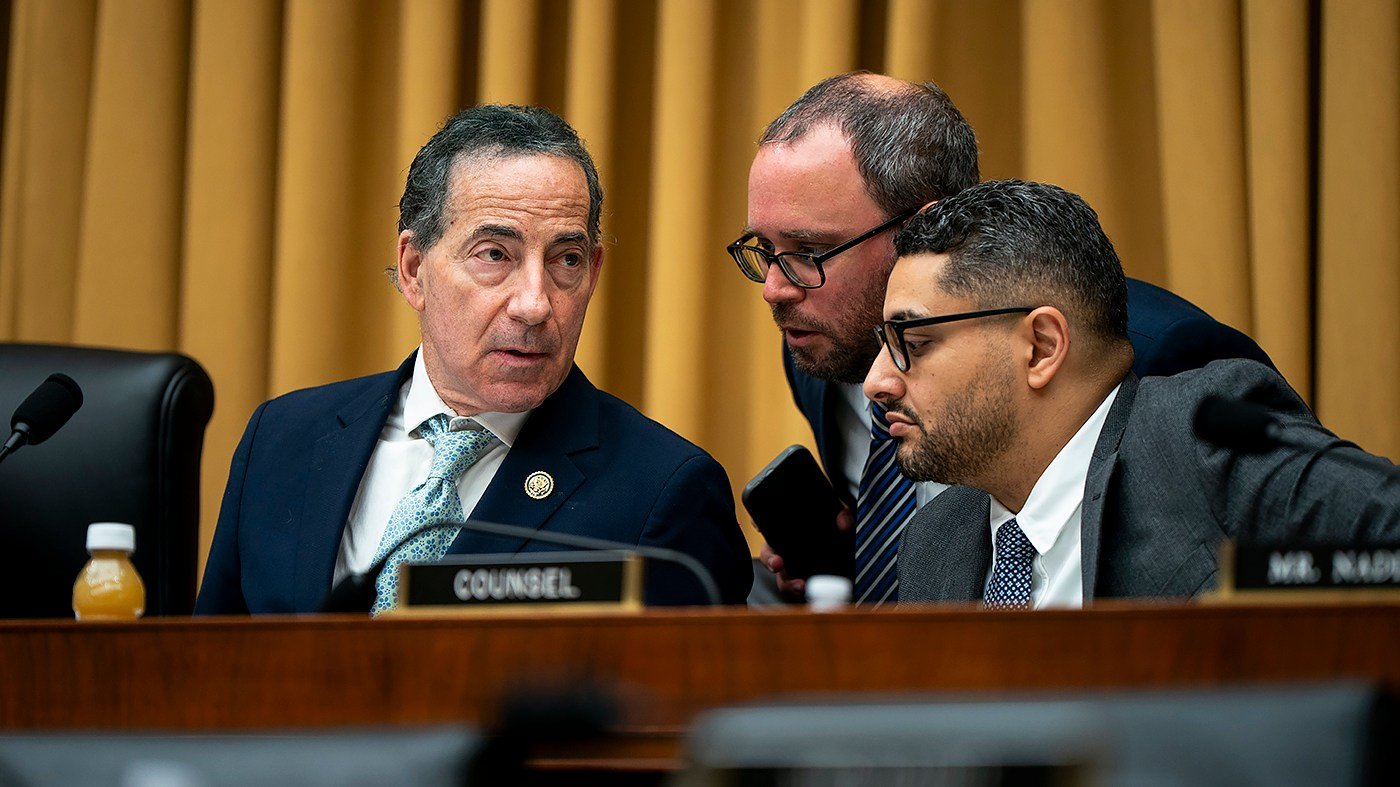
Calls for congressional reform are intensifying on both sides of the aisle following a series of high-profile, months-long absences by lawmakers, reigniting a debate over how to handle incapacitation and chronic absenteeism in the Capitol.
With Congress being one of the oldest in U.S. history—Senate Judiciary Committee Chair Chuck Grassley (R-Iowa), 93, even joked about his own mortality while discussing his state's gubernatorial race—several members are now demanding action. “America is tired of seeing these guys and gals up here that don’t show up and are gone mentally and physically,” said Rep. Tim Burchett (R-Tenn.), who has called for changes to congressional rules on absences and incapacitation.

Despite the uproar, only one bill has been introduced this year to address the issue. The legislation, sponsored by Democratic Reps. Seth Moulton (Mass.) and Ritchie Torres (N.Y.), would require disclosure of any absence longer than 21 days. It has gained little traction, even after Sen. Mitch McConnell (R-Ky.) and Rep. Tom Kean Jr. (R-N.J.) spent months away from Washington due to health issues this summer. “This institution needs reform. Everyone in America knows that,” Moulton told The Hill.
Long Absences Not New, but Scrutiny Intensifies
Extended absences are not unprecedented, nor are they confined to one party. In 2023, former Sen. Dianne Feinstein (D-Calif.) missed 91 votes, and her deteriorating health led to calls for her resignation. Former Rep. Kay Granger (R-Texas) missed over 76% of votes in her final months before it was revealed she was in an assisted living facility. Concerns about former President Biden’s age and health also torpedoed his reelection bid in 2024.
This year, Kean’s 116-day absence for treatment of depression and McConnell’s months away after a fall have raised fresh questions about lawmakers’ capacity to serve. A May Marist poll found that 8 in 10 Americans favor age caps and term limits for Congress, while approval of Congress stands at just 16%.
Constitutional Hurdles and Proposals
Major reforms would require a constitutional amendment, a process that has succeeded only 27 times in U.S. history. Burchett has previously called for such an amendment, but Moulton and Torres’s bill is the most recent legislative effort.
John Martin, a law professor at Quinnipiac University, has proposed a constitutional mechanism to replace incapacitated lawmakers. “There presently exist no practical means of ensuring that representation continues undisrupted for affected constituents. This is antithetical to our democracy,” he wrote. Drawing on the 25th Amendment, Martin suggests allowing lawmakers to temporarily transfer duties to a same-party appointee, with a Congressional Medical Oversight Board deciding on return. “Why don’t we just have something similar for Congress as we already do for the president?” he asked.
Some political figures have gone further, advocating term limits across all branches. Kentucky Gov. Andy Beshear (D), a vocal critic of McConnell’s absence, told ABC’s “The View”: “We all deserve senators that can actually do their job. And I think it’s fair to say we can now all agree it’s time for term limits for Congress, and I’ll throw it out, for the Supreme Court too.”
Transparency Bill and International Models
The Duty of Transparency Act, introduced by Moulton and Torres in July, would require disclosure of the reason for and expected duration of absences, with updates every 30 days. While less ambitious than constitutional change, it has not gained much support.
Other countries offer models: Australia can vacate a seat after two consecutive months of absence; Canada can dock pay after 21 days; Mexico elects alternates to step in after 10 unexcused absences. Sen. Ben Ray Luján (D-N.M.), who suffered a stroke in 2022, said a transparency rule should be “embraced,” adding, “It’s important to share with your colleagues what happened; it’s most essential and critical to maintain trust.”