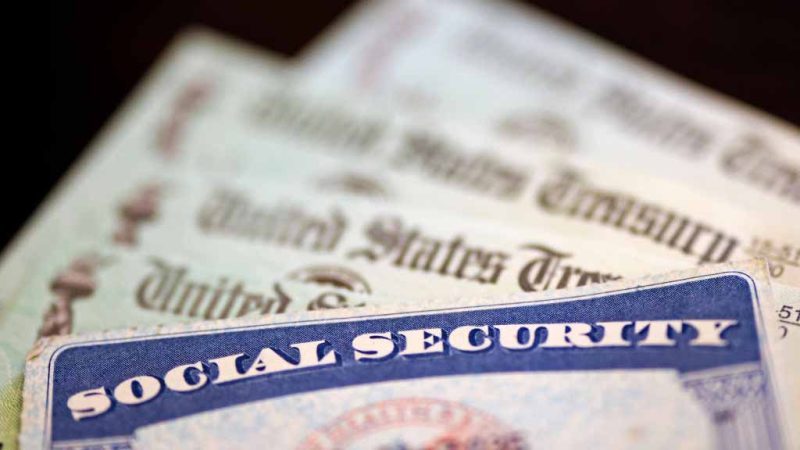
The Trump administration's latest Social Security trustees report, released Tuesday, shows the program's main trust fund will run dry a quarter earlier than previously projected, prompting AARP to demand immediate bipartisan action to shore up the system.
The Old-Age and Survivors Insurance (OASI) Trust Fund can pay full benefits only through the fourth quarter of 2032, after which it will cover just 78% of scheduled payouts—a slight improvement from last year's 77% estimate. Treasury Secretary Scott Bessent, Health and Human Services Secretary Robert F. Kennedy Jr., acting Labor Secretary Keith Sonderling, and Social Security Administration (SSA) Commissioner Frank Bisignano signed off on the report.

If the OASI and Disability Insurance (DI) trust funds were legally combined—which current law prohibits—they could meet all obligations until the third quarter of 2034, then pay 83% of benefits. Currently, over 75.4 million Americans receive Social Security, Supplemental Security Income, or both, according to the SSA.
AARP CEO Myechia Minter-Jordan called the report a “wake-up call” for Congress. “Americans have worked hard and paid into Social Security their entire lives, and they deserve to count on it when they retire,” she said in a statement. “This should be a wake-up call: Congress needs to act.”
The trustees attributed the worsening outlook to declining U.S. fertility rates—down from 69.5 births per 1,000 women of reproductive age in 2007 to a record low of 53.1 last year—and lower net migration. They also cited the One Big Beautiful Bill Act (OBBBA), the tax and spending package Trump signed in July, which raised the standard deduction to $15,750 for single filers and $31,500 for married couples filing jointly, and created a new $6,000 deduction for seniors. While AARP backed the senior deduction, the report notes the tax changes will reduce revenue flowing to the trust funds from taxation of benefits.
Medicare's Hospital Insurance Trust Fund faces a similar timeline, able to pay full benefits only until the second quarter of 2033—also a quarter earlier than last year's projection—then covering 89% of scheduled benefits.
AARP officials stressed the trust fund's depletion does not mean benefits will stop. “It doesn't mean that Social Security will stop paying benefits. It does not mean the program is bankrupt,” said Rich Johnson, vice president of financial security at the AARP Public Policy Institute. However, Nancy LeaMond, the organization's executive vice president and chief advocacy officer, noted Congress has “hundreds of tools in its toolbox” to address the shortfall. She specifically pushed for expanding workplace retirement accounts, a topic of bipartisan legislation and a recent executive order from Trump.
LeaMond reiterated AARP's opposition to cutting cost-of-living adjustments, privatizing the program, or raising the retirement age. Bisignano said in September that raising the retirement age is not under consideration. “At a time when the future of Social Security is being tested by proposals that would weaken the program, the trustees' report highlights the need for Congress to protect what people have earned,” Minter-Jordan said. “We will not let special interests push proposals to cut Social Security for middle-class families.”
Meanwhile, the administration has been active on other fronts, including a $70 billion border security bill sent to Trump after a dramatic House vote, and pressure on the UK to scrap its under-16 social media ban. The ongoing political dynamics underscore the broader challenges facing the White House as it navigates fiscal and social policy.