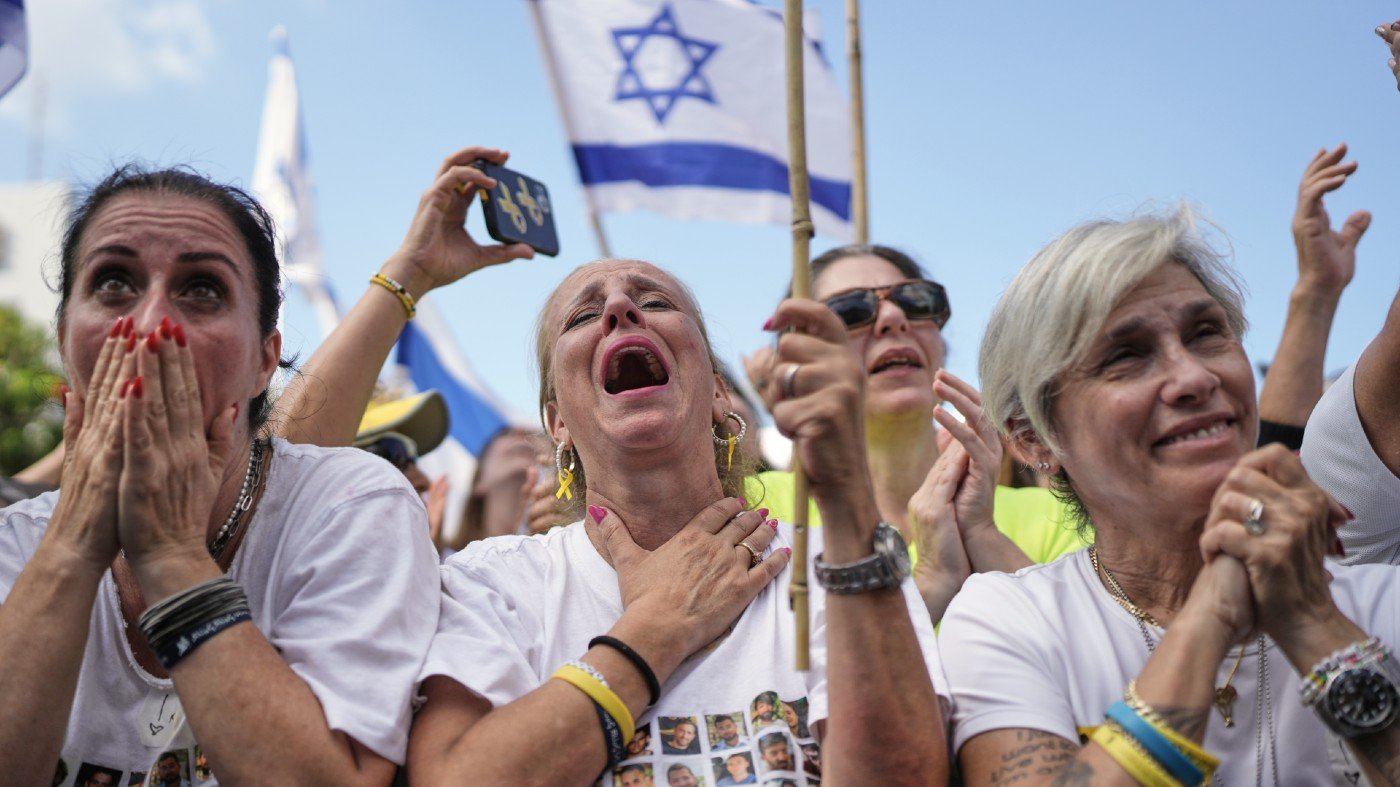
A survey released Monday by the Associated Press and NORC Center for Public Affairs Research highlights a sharp generational split in how American Jews define their religious and cultural identity. Among Jewish adults under 45, only 42 percent say support for Israel is important to their Jewish identity, compared to 53 percent of those 45 and older.
The findings underscore a broader shift in younger Jewish Americans' priorities. While 50 percent of older respondents said celebrating Jewish holidays matters to their identity, that figure jumps to 72 percent among the under-45 group. Similarly, younger Jews are more likely to emphasize observing Shabbat (39 percent vs. 22 percent), keeping kosher by avoiding pork and shellfish (34 percent vs. 20 percent), and wearing distinctly Jewish clothing or accessories (29 percent vs. 12 percent).
The poll also reveals a significant divide on the question of whether Israel's military campaign in Gaza constitutes genocide. Among Jewish adults under 45, 37 percent said yes, compared to just 23 percent of those 45 and older. This comes after an independent UN Human Rights Council panel concluded last month that Israel had committed genocide—a charge Jerusalem strongly rejects.
Israel's international standing has eroded since its response to the Hamas-led attack on October 7, 2023. The conflict has not only strained diplomatic ties but also reshaped domestic political alignments. A separate AP-NORC poll from last week found that most Jewish Americans feel unrepresented by both major parties and President Trump. Only 15 percent said the Democratic Party supports them, and 16 percent said the same of the GOP. Half of respondents said Trump does not support them.
Former U.S. Ambassador to Japan Rahm Emanuel, speaking at Tel Aviv University last week, delivered a pointed critique of Prime Minister Benjamin Netanyahu's strategy. Emanuel warned that Israel risks becoming a “prisoner of its own tools,” arguing that an overreliance on military force has led the country into a “dead end.” He urged greater cooperation with Arab states.
The AP-NORC survey was conducted June 11–17 among 3,040 respondents, including 1,022 Jewish adults. The overall margin of error is 2.8 percentage points, and 5 percentage points for the Jewish adult subsample.
The generational divide comes as debates over Israel policy increasingly play out in American politics. A recent poll found that most Jewish Americans feel unrepresented by both major parties and Trump, reflecting broader dissatisfaction with the political options on offer. Meanwhile, a Senate task force is pushing the Jewish American Security Act in response to rising antisemitism, a concern that may resonate differently across age groups.
Emanuel's remarks also echo a wider unease about the direction of Israeli policy. He warned that Netanyahu's approach could isolate Israel further, a risk that younger American Jews may be more attuned to as they prioritize cultural and religious practices over unconditional support for the Jewish state.