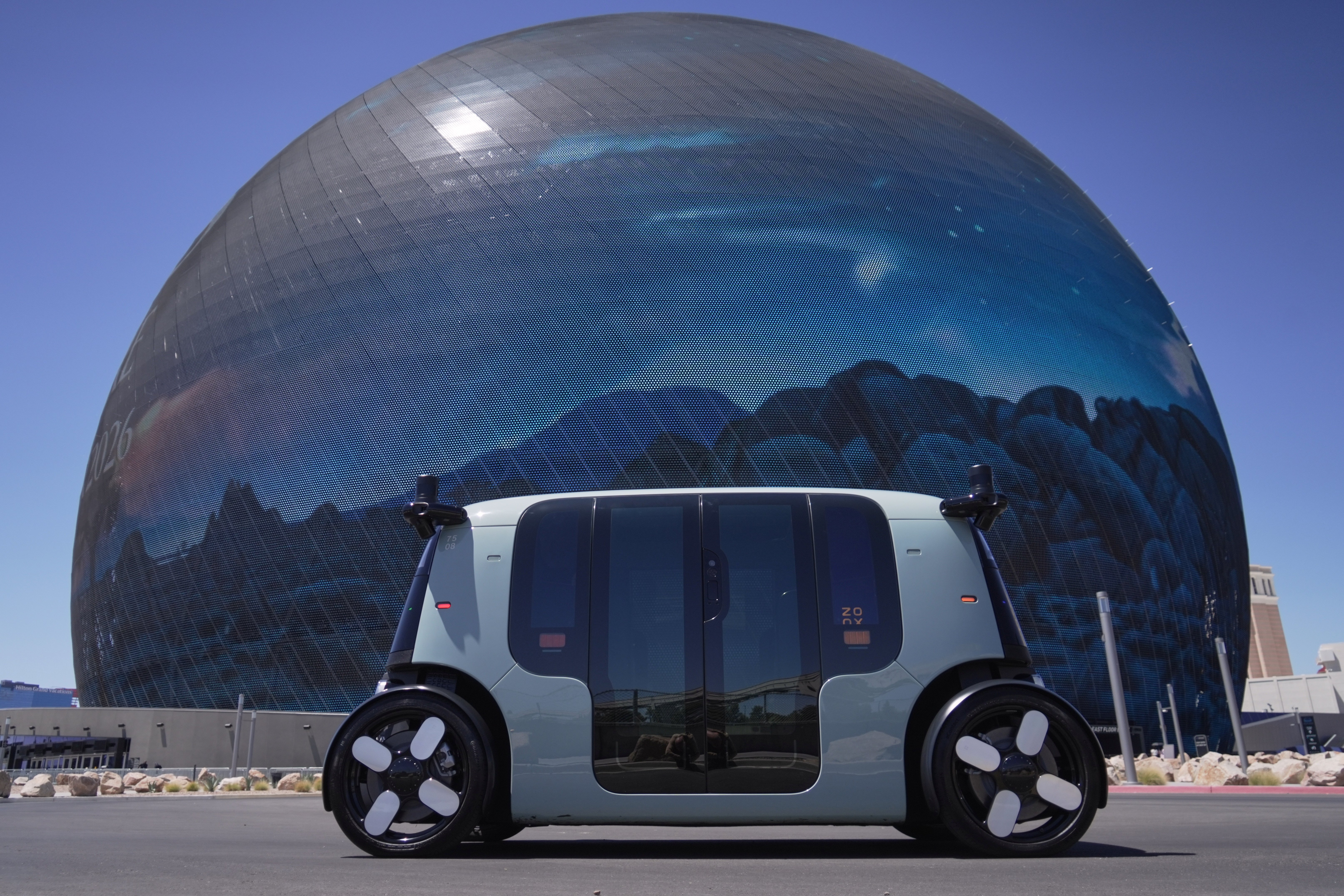
The usual icebreaker about autonomous taxis is whether you'd trust one with your commute. But a more pressing question for passengers and policymakers alike is: if you're hurt inside one, who's responsible? That query shifted from theoretical to concrete when federal regulators gave Zoox the green light for its steering-wheel-free robotaxi to operate commercially late last month. Las Vegas will soon see these vehicles on the road, with no driver's seat, no steering wheel, and eventually no pedals.
Every era of transportation has brought innovations promising safer travel—seat belts, airbags, anti-lock brakes. Autonomous vehicles may one day join that list, but they also introduce a fresh set of accountability puzzles. The presence of a computer at the wheel doesn't erase the question of who answers when things go wrong.

Having spent years representing injured New Yorkers, I've learned that the initial account of a crash is rarely the full story. People speculate, companies issue cautious statements, and media reports capture only what's known at the moment. The evidence then begins to tell a more complex tale. With autonomous vehicles, that complexity multiplies.
Traditional crash investigations focus on familiar elements: traffic signals, speed, driver distraction, right-of-way. A robotaxi shifts the inquiry to a different domain. Investigators may need to determine whether a sensor failed to spot a pedestrian, whether software misclassified an obstacle, whether a recent system update introduced a glitch, or whether the vehicle's response to dynamic traffic conditions was appropriate. Did the company have prior knowledge of a recurring defect? These are not merely engineering puzzles; they are questions of legal and moral responsibility.
A common misconception is that the vehicle itself holds all the answers. It doesn't. Every serious injury case starts with evidence, and evidence must be preserved promptly. For decades, that meant skid marks, photographs, witness statements, and police reports. Those will still matter, but autonomous vehicles add a hidden layer: camera footage, sensor logs, software diagnostics, and electronic records detailing what the vehicle detected and how it reacted in the moments before impact. This data could be pivotal, but it may vanish if no one acts quickly to secure it.
Federal approval is not a safety guarantee. The National Highway Traffic Safety Administration (NHTSA) cleared Zoox's deployment after determining it met federal safety standards—a significant milestone, but not a promise of flawless performance under every condition. Regulators acknowledged this by requiring ongoing reporting of crashes and safety incidents as the vehicles begin operating on public roads.
History shows that every major transportation advance has been followed by real-world lessons that testing couldn't fully anticipate. That's not a knock on innovation; it's how progress works. The law evolves similarly. Courts don't judge whether a technology is exciting; they assess whether reasonable care was exercised, whether warnings were adequate, and whether a preventable injury could have been avoided. These principles have held for over a century and shouldn't change just because the steering wheel disappeared.
Autonomous vehicles may become commonplace sooner than expected. If they reduce crashes caused by distracted or impaired drivers, that's a win. But consumers shouldn't equate innovation with immunity. Companies introducing revolutionary technology still bear a duty to make it as safe as reasonably possible. When something goes wrong, injured passengers retain the right to ask tough questions, demand evidence, and seek accountability. The vehicle may drive itself, but responsibility doesn't drive away with it.
Billy Cooper, Esq., represents clients in serious personal and catastrophic injury matters, including motor vehicle and Uber-Lyft accidents and complex liability cases.