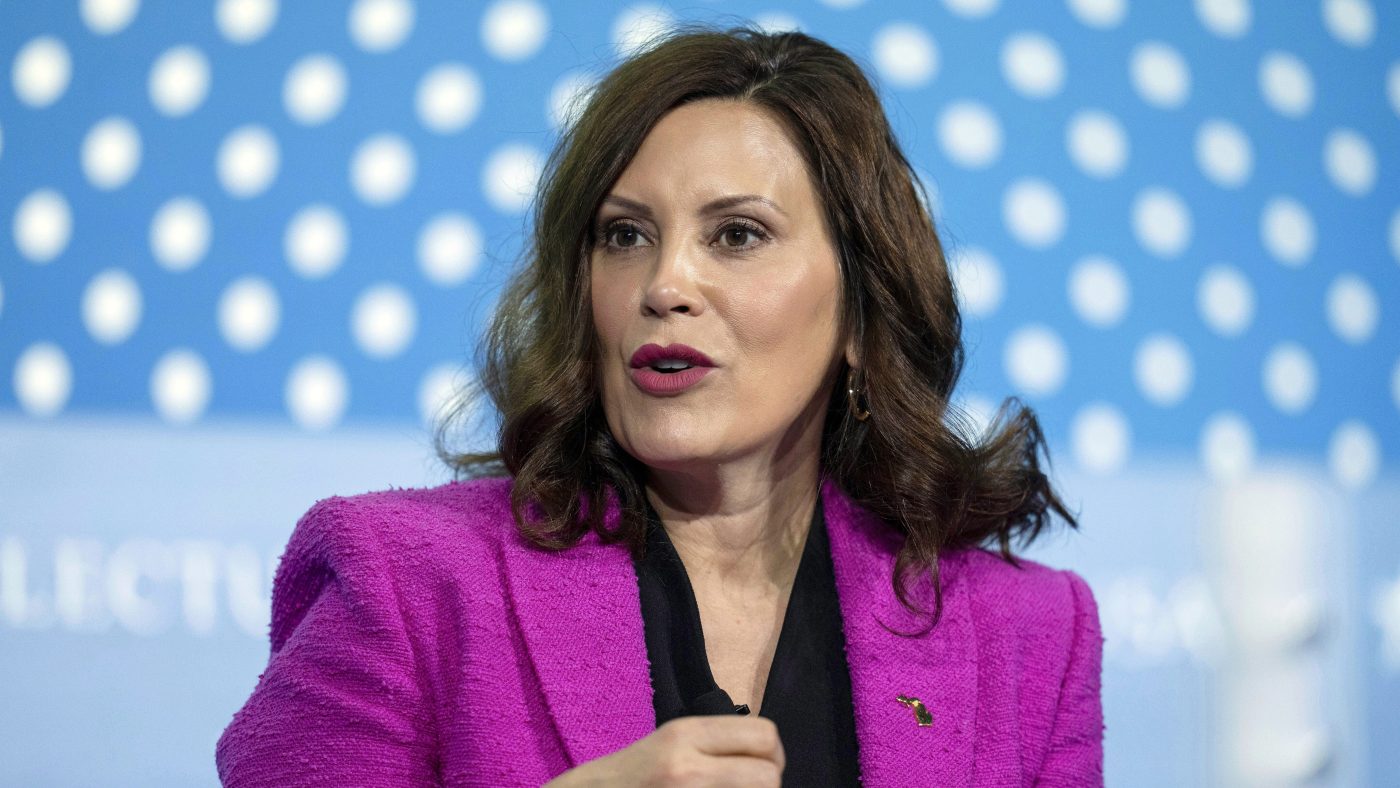
Michigan Governor Gretchen Whitmer (D) has taken herself out of the running for the 2028 Democratic presidential nomination, a decision that reshapes the early contours of the party's next primary battle.
In an interview Thursday with WJBK-TV at the Mackinac Policy Conference, Whitmer stated flatly: “There will be a robust group of people running for president. I will not be one of them in 2028, I can tell you that.” The two-term governor, who has been a prominent figure in Democratic politics, said she looks forward to stepping back after leaving office and “thinking about it, not jumping right into something.”
Whitmer revealed she had consulted several political figures about her future, including former Transportation Secretary Pete Buttigieg, former House Speaker Paul Ryan (R-WI), and former Commerce Secretary Gina Raimondo. Buttigieg was a 2020 presidential candidate, while Ryan was the GOP's vice presidential nominee in 2012. “That’s the advice everyone says: ‘Take a little bit of time,’ and so that’s what I’m going to do,” she added.
Her announcement comes as early jockeying for the 2028 Democratic nomination intensifies. A recent Emerson College Polling survey, released Thursday, placed Buttigieg at the top of a hypothetical primary field with 18% support, followed by California Governor Gavin Newsom at 16% and Representative Alexandria Ocasio-Cortez (D-NY) at 11%. All three have fueled speculation about potential White House runs, though none have formally declared.
Whitmer’s decision to step aside underscores the fluid dynamics of the emerging race. While she had been viewed as a potential contender—especially after leading Michigan through a pandemic and a series of contentious policy battles—her choice to take a break could open space for other candidates. Michigan's political landscape remains active, with recent developments like Democrats holding their Senate majority in a special election and John James surging in the GOP gubernatorial primary.
The governor’s exit from the 2028 conversation also shifts attention to other potential candidates, including those from the Midwest. With Whitmer out, the field may see heightened interest from figures like Buttigieg, who has maintained a national profile, or from governors in other swing states. The Democratic primary is expected to be highly competitive, as the party seeks to reclaim the White House after the 2024 election.
Whitmer’s tenure has been marked by significant policy wins, including infrastructure investments and expanded healthcare access, but also by sharp partisan divisions. Her decision to take a post-governorship break mirrors the advice she received from Ryan and Raimondo, both of whom have navigated transitions out of high office. The move allows her to avoid the immediate pressures of a national campaign while keeping future options open.
For now, the 2028 Democratic field remains in flux, with Whitmer’s announcement providing clarity—and a reminder of the unpredictable nature of presidential politics.