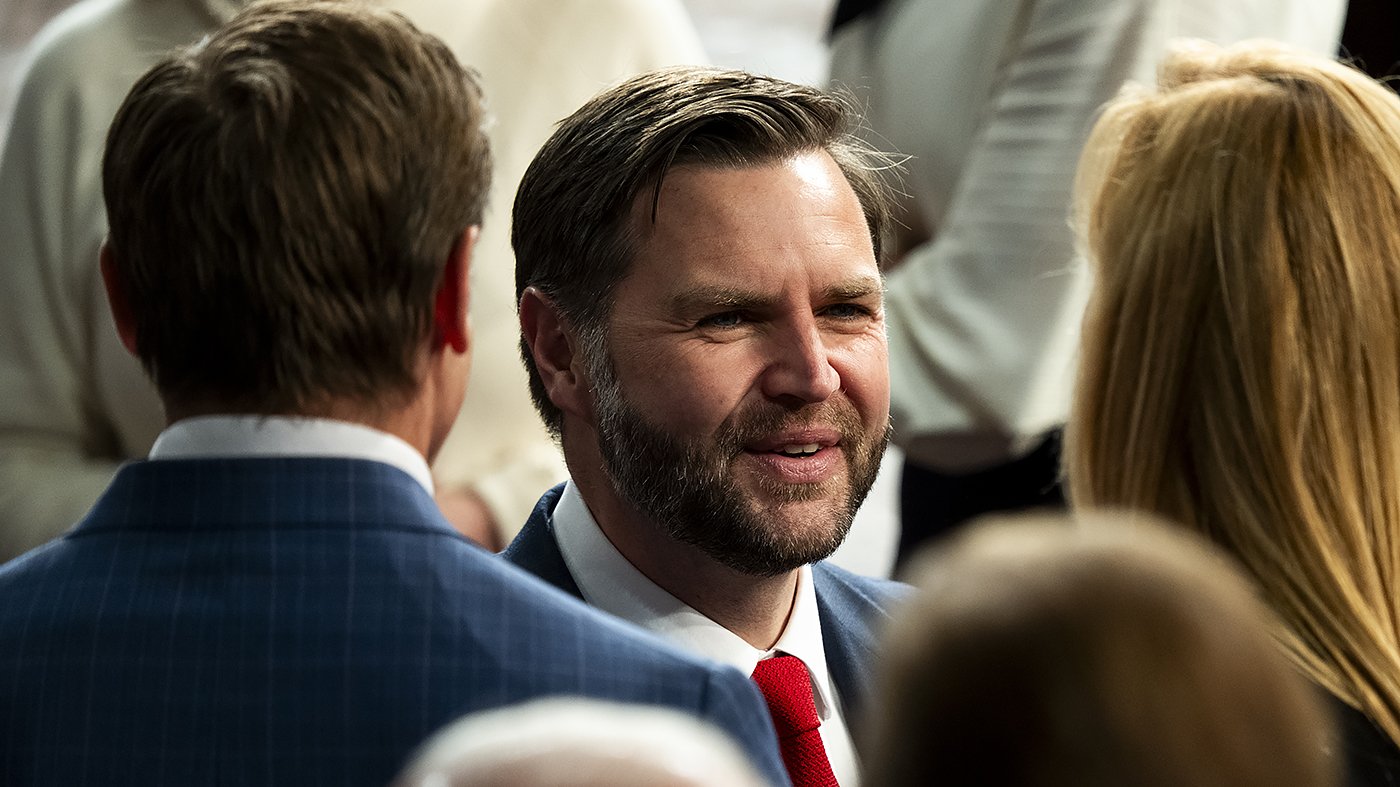
Vice President Vance is stepping into the spotlight as the Trump administration prepares to sign a preliminary agreement with Iran aimed at reopening the Strait of Hormuz. The deal presents both a political opportunity and a potential minefield for Vance as he builds his resume ahead of a likely 2028 presidential bid.
President Trump confirmed Monday that Vance will represent the United States in a signing ceremony in Switzerland if the agreement is finalized. The move puts the vice president at the center of a high-stakes diplomatic effort that could reshape his political trajectory.
Senator Lindsey Graham (R-S.C.), a close Trump ally, sparked discussion with a post on X calling Vance the "architect of the deal." However, Graham also expressed concerns about how Iran is portraying the agreement and called for it to be submitted to Congress for final approval. The mixed signals from a key Republican underscore the delicate balance Vance must strike.
If the deal holds and is seen as a lasting solution to the unpopular war, it could reinforce Vance's anti-interventionist credentials. The vice president was widely viewed within the administration as the least enthusiastic about entering the conflict, and Trump has publicly acknowledged his coolness toward the Iran intervention. With the American public broadly skeptical of the war, according to polls, this stance may resonate with voters.
Yet, hawkish factions within the GOP are already voicing skepticism. "Given that Vance is in pole position, every ball he picks up is fraught with peril," said Dan Eberhart, a Republican donor. "I would not want that specific assignment." The challenge is compounded by the fact that a subsequent deal on Iran's nuclear program, to be negotiated over the next 60-plus days, could still collapse.
Vance went on a media blitz Monday, appearing on several morning shows to promote the agreement. He described the memorandum of understanding on CNN as a "one and a half page general document" and emphasized that more details would be released later this week. On CNBC, he called it "a great day for the American people," citing falling oil prices and a "long-term commitment that Iran will never develop or procure a nuclear weapon." He added, "Those are two very big wins for the American people."
Addressing Graham's concerns on ABC's "Good Morning America," Vance said, "I'd caution Lindsey Graham and anybody else not to believe the hardliner propaganda in Iran, but to believe what's actually in the agreement." He stressed that Iran would not receive U.S. funds unless it fulfills obligations, including giving up its nuclear program and halting terror financing across the Middle East. "What we are saying is that we're willing to give significant sanctions relief if the Iranians make the kind of long-term commitments that are necessary to be a normal country," Vance told ABC.
One former Trump administration official noted that Vance's status as an elected official makes him the ideal representative for a signing ceremony, especially if the deal goes to Capitol Hill. "This is signing something that could potentially be passed through the Senate as a treaty," the former official said. "Having it signed by an elected official of which the executive branch only has two is, I think, significant."
Vance is also promoting his new book "Communion," set for release Tuesday, with scheduled appearances on ABC's "The View" and Megyn Kelly's podcast. He is widely seen as Trump's heir apparent for the 2028 GOP nomination, though Secretary of State Marco Rubio remains a potential rival. Trump has referred to both as a "dream team" but has not named a successor. Rubio, who will promote the deal at the G7 summit in France this week, has received widespread praise, fueling speculation of a primary matchup.
"There's kind of a jockeying underway, and I think it's important that the vice president himself gets into the arena and starts demonstrating some political heft of his own," one Republican said. Others see Vance's role on Iran as consistent with his broader responsibilities. "This has sort of been a consistent role JD has played throughout the administration," said Alex Pfeiffer, a Republican strategist and former deputy White House deputy communications director. "I sort of just see this as a continuation of JD's role as a spokesman or an advocate for administration policy wins."
For more details on the agreement, read our coverage of Trump, Vance, and Iranian Speaker Sign Preliminary US-Iran Agreement. Also, stay tuned for Vance Promises Full Iran Deal Text This Week, Rejects Hardliner Propaganda.