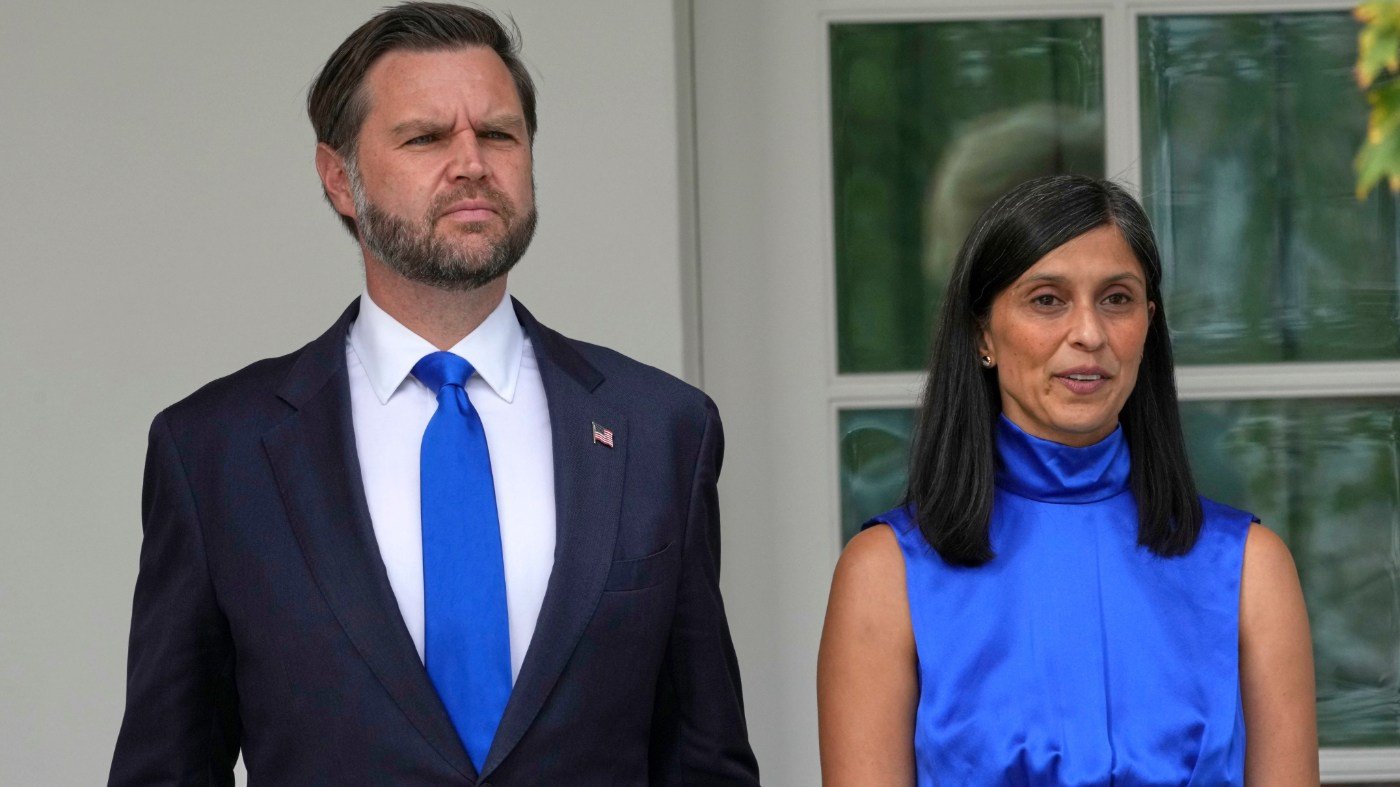
Vice President JD Vance has a legitimate point to make about the H-1B visa program, but his recent rhetoric has crossed a line. By describing H-1B workers as “indentured servants,” Vance has shifted from policy critique to demeaning the very people the program aims to attract. The term carries a painful historical weight for Indians, evoking the era of British colonial rule when millions were transported under coercive labor agreements. To apply that label to today’s Indian professionals is not just inaccurate—it is deeply offensive.
Usha Vance, the vice president’s wife, is an accomplished attorney with Indian heritage. Her parents immigrated to the United States seeking opportunity, much like many others. She has a unique platform to remind her husband and the nation that Indian professionals are not a class to be dismissed with careless language. This is not about defending every aspect of the H-1B program, but about affirming a basic principle of respect.
The H-1B program, despite its flaws, is not a system of indenture. It is a temporary visa designed to let U.S. employers recruit foreign professionals for specialized roles. Workers do face real vulnerabilities—their status is tied to their employer, and losing a job can trigger a precarious race against the clock to find new sponsorship. Those are serious issues that deserve scrutiny, but they do not reduce every visa holder to a modern-day bondsman.
Having employed H-1B professionals from India for over two decades, I have seen firsthand the value they bring. From technical expertise to problem-solving under pressure, these workers have helped advance America’s technology, medicine, and research sectors. They are recruited because they possess skills that employers need. That does not mean every foreign candidate outshines an American applicant, nor that every employer follows the rules. But the discussion should be grounded in evidence, not stereotypes.
Vance’s concerns about American workers are worth examining. If a company lays off domestic staff while using immigration programs to hire cheaper replacements, regulators should investigate. But layoffs alone do not prove wrongdoing. The facts must be tested against evidence. There are also genuine abuses in the recruitment system—fabricated résumés, exaggerated credentials, and deceptive staffing practices that harm both American workers and legitimate Indian professionals. Such misconduct should face meaningful consequences.
The solution is a more accountable system: credible verification of qualifications, transparent compensation, fair hiring practices, and rigorous enforcement against employers who circumvent the rules. Immigration policy should protect the integrity of American hiring without treating nationality as a red flag. The U.S. has every right to prioritize its domestic workforce, but it should do so through sound policy, not by diminishing the dignity of those who contribute to its economy.
This is why I would ask Mrs. Vance to speak up—not to defend every aspect of the H-1B program, but to affirm a principle that should transcend partisanship. We can criticize a visa program without equating employment dependence with servitude. America’s strength has always relied on attracting people who want to contribute their knowledge and ambition. Indian professionals are physicians, engineers, researchers, and entrepreneurs. They are also parents, neighbors, and colleagues. Their lives cannot be reduced to the terms of a visa.
Mrs. Vance has her own voice and must decide how to use it. But this moment offers a chance to remind the country that respect for American workers need not come at the expense of respect for Indian professionals. Indians are not indentured servants. They are professionals who come to America to work, contribute, and pursue opportunities. The answer to an imperfect immigration system is to fix its flaws, not demean the people who participate in it.
As the debate continues, Vance has also faced criticism over his claims about immigration fraud, with Rep. Ilhan Omar calling his assertions “delusional.” The vice president’s broader immigration stance remains a flashpoint, and his choice of words only adds fuel to the fire.