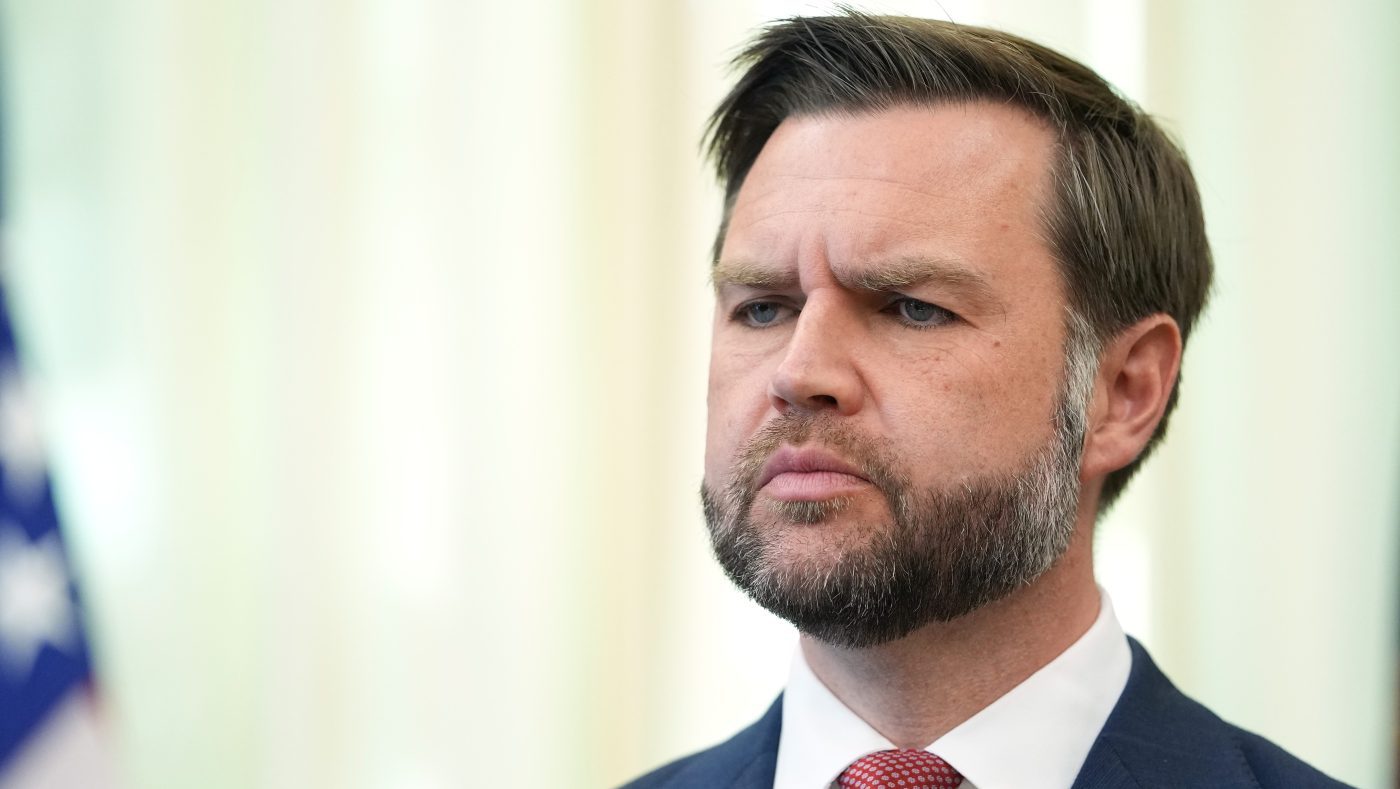
Vice President JD Vance's role as President Trump's chief defender is becoming a political liability, as new polling shows a growing majority of Americans—including a significant slice of Republicans—believe the president is using the White House for personal gain. Vance has dismissed such claims as "laughable" and said he sees no evidence of corruption, but his unwavering loyalty is raising questions about his viability as a 2028 presidential contender.
A recent Fox News survey found that six in ten respondents are extremely concerned about government corruption, ranking it above inflation and healthcare. Meanwhile, a Washington Post/ABC News/Ipsos poll released over the weekend shows that nearly two-thirds of Americans say Trump is enriching himself while in office, with the sharpest increase coming from Republicans and Republican-leaning independents—a 12-point jump since September 2025.
Vance's comments have put him at odds with public sentiment, but Republican strategists say he has little room to maneuver. "What else are you supposed to say?" one GOP strategist told The Hill. "Whether you do or you don't, you're still never going to say yes." Another strategist noted that polls can shift, but the issue "bedevils both parties."
The president's financial disclosures show he made over $1 billion from cryptocurrency ventures last year, and his family has profited from related investments. These figures have fueled Democratic accusations that Trump is monetizing his office. Sen. Chris Murphy (D-Conn.) took to social media to mock Vance's denial, listing multiple instances of alleged self-dealing and writing, "If you work for Trump, you agree to lie and let your boss steal from taxpayers. But NO ONE believes you."
Vance's office did not respond to a request for comment. Arizona-based GOP strategist Barrett Marson said that "most people understand that Trump has made a substantial amount of money on ventures that the government regulates," and that "the money is free-flowing to people in or connected to the Trump administration." He added that Vance is "just trying to be a defender."
The political fallout extends beyond the current term. One national consultant told The Hill that Vance's comments "speak to a larger issue should he run for president," pointing to his inability to separate from Trump on almost any issue. The consultant drew a parallel to Kamala Harris's struggles when she couldn't critique the Biden administration, asking, "In what world is JD Vance allowed to say anything critical of President Trump?"
Trump's approval rating has sunk to 33 percent, an 8-point drop from a year ago, according to the same poll. That decline could force Republican candidates in 2028 to create distance from the president—a delicate balancing act. "If Trump continues to be this unpopular, they're going to have no choice," the consultant said.
But some Republicans believe Vance can pivot to his anti-fraud work, which he has championed as chair of the Task Force to Eliminate Fraud. He has held briefings and roundtables to highlight findings, and on Tuesday appeared with Trump in the Oval Office to announce a $25 million whistleblower incentive program—a move that could bolster his image as a reformer. "The anti-fraud stuff really plays well for him," one GOP strategist said, suggesting it could help him navigate the corruption narrative.
However, the broader challenge remains. As one strategist put it, "every Republican who becomes the nominee—the Democrats are going to try to make them answer for Trump in every way, shape or form." Whether Vance can escape that shadow may define his political future. For now, his loyalty to Trump is clear, but the political cost is mounting.