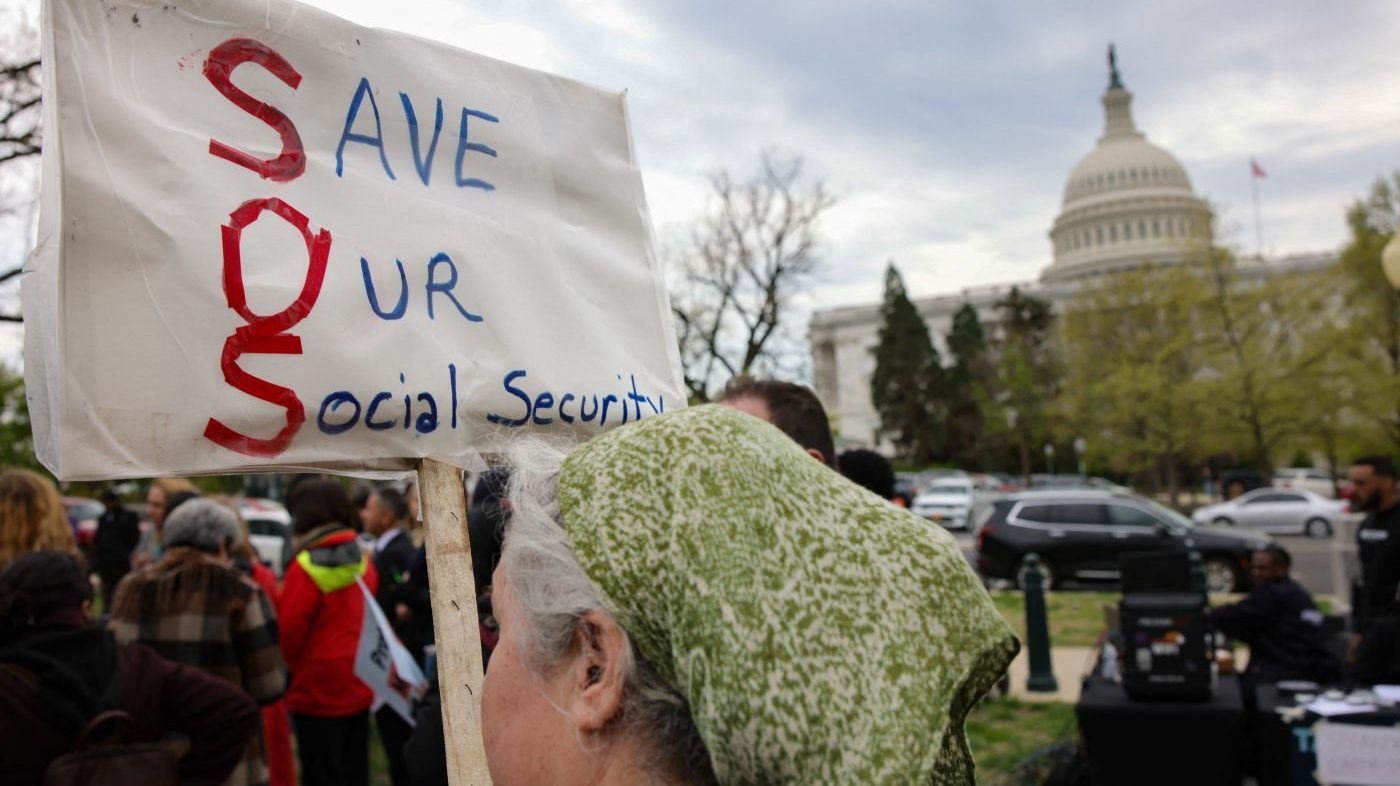
The 2027 Senate class will be the first in over forty years to confront Social Security's looming insolvency head-on. The program's trust fund is projected to be exhausted by 2032, which would trigger an automatic 22% reduction in benefits for tens of millions of Americans unless lawmakers intervene. While some bipartisan consensus is emerging among candidates in key battleground states like Iowa, Maine, and New Hampshire, time is running short.
“The longer we wait, the narrower the operating room becomes for the types of changes you can make,” said Andrew Eschtruth, director of the Center for Retirement Research at Boston College. This fiscal pressure places politicians in a delicate position, as they must weigh tax increases against benefit cuts—both politically toxic options. Social Security has largely remained on the back burner during campaigns, with many hopefuls offering vague promises despite widespread public support for the program.

Democrats generally advocate for raising or eliminating the payroll tax cap, increasing the payroll tax rate, and adjusting the cost-of-living calculation to better reflect inflation. Republicans tend to propose raising the retirement age and reducing benefits for higher-income earners. “It is challenging politically for Republicans to have a position on Social Security for the very reason that the administration has articulated a desire not to cut benefits” while also opposing tax hikes, Eschtruth explained. President Trump has vowed to protect the program.
More than 75 million Americans currently receive Social Security, and 43% of seniors depend on it as their primary income, according to AARP. The Committee for a Responsible Federal Budget projects that over 60 million people would be affected if the trust fund runs dry. A recent AARP poll shows 95% of Americans view Social Security as critical, and 91% want Congress to act to preserve it.
The issue is especially salient in Maine, New Hampshire, and Iowa, where roughly one in four residents (and more than one in five in Iowa) receive benefits, per 2025 AARP data. “Older Americans are a powerhouse in terms of voting in every state, and in every state that has a competitive Senate election, as we’ve been doing in our polling, we’ve shown that older voters are extremely motivated to vote, and they’re very focused on this issue,” said Bill Sweeney, AARP’s senior vice president of government affairs. These three races could determine control of the Senate; Decision Desk HQ rates Iowa and Maine as toss-ups, while New Hampshire leans Democratic.
In interviews and questionnaires, Democrats Josh Turek (Iowa) and Troy Jackson (Maine) support raising or eliminating the payroll tax cap, as does Chris Pappas (New Hampshire). The current payroll tax rate is 12.4%, split between employer and employee, but earnings above $184,500 are exempt. Lifting the cap is popular—a 2025 survey by the National Academy of Social Insurance, AARP, and others found broad support—but it alone won't close the gap. “When it comes to the tax increases, we certainly need to be thinking about asking for more from those who can most support it, but we can’t just rely on taxes on the rich to solve all of the spending needs that we have as a country,” said Shai Akabas of the Bipartisan Policy Center.
Privatization, long floated by some Republicans, carries financial risk for average Americans and is a nonstarter for most Democrats. Republican Ashley Hinson of Iowa opposes raising the retirement age and has signaled openness to a commission to study solutions, as have Pappas, Turek, and Maine Sen. Susan Collins. Collins has even suggested former Sen. Mitt Romney could lead such a panel. Hinson’s campaign clarified that her earlier debate comment about “separate investment funds” referred to creative revenue-raising within the trust fund, not privatization. New Hampshire’s Republican candidate, John E. Sununu, has previously backed an opt-in privatization option, though details remain vague.
As the November elections approach, the future of Social Security hangs in the balance. The next Senate class will have to navigate a politically treacherous path, balancing the demands of a powerful senior voting bloc against the fiscal reality of an insolvent trust fund. With the clock ticking toward 2032, the stakes could not be higher.