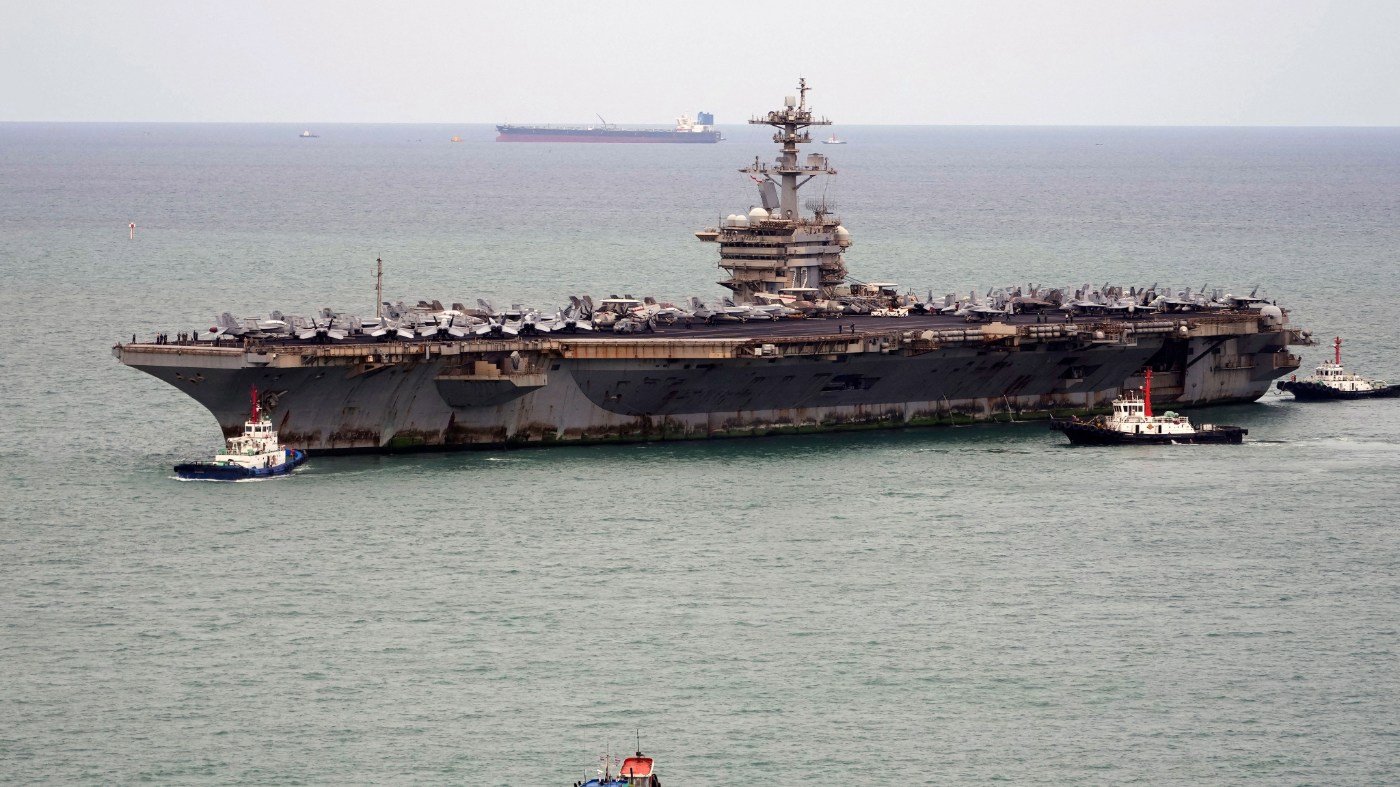
The aircraft carrier USS Abraham Lincoln pulled out of Thailand on Sunday, capping a five-day port call and wrapping up an extended deployment that included a lengthy stint in the Middle East. The ship is now bound for its homeport in San Diego, having left there in November as the U.S. and Israel moved toward confrontation with Iran.
In a statement released through the U.S. Embassy in Bangkok, the carrier's commanding officer, Capt. Dan Keeler, expressed gratitude to Thai authorities and locals for their reception, saying the visit gave the roughly 5,000 sailors and Marines aboard a chance to “recharge.” He also praised the Navy's morale and recreation programs for arranging tours and events with local businesses, allowing crew members to make the most of their time ashore.
Keeler emphasized the strategic importance of the stop, noting that the U.S. remains committed to working with Thailand and other allies across the 7th Fleet area of operations. “We are grateful to our Thai allies for hosting us,” he said, “and we look forward to continuing our mission here in 7th Fleet, alongside Thailand and our other regional allies and partners.”
The departure marks the end of a 286-day deployment, with the ship spending 264 consecutive days at sea before pulling into Thailand – its first port visit since leaving San Diego. The carrier's return comes as the U.S. and Iran trade blows in the Strait of Hormuz, with Washington launching strikes on Iranian oil facilities and Iranian state media reporting an attack on a U.S. vessel in restricted waters.
The Lincoln's deployment was not without controversy. Reports emerged of poor living conditions aboard the ship, including food shortages, contaminated supplies, low morale, and alleged suicide attempts. The carrier was relieved by the USS George Washington, which entered the Middle East late last month. President Trump dismissed the accounts as “fake,” while Defense Secretary Pete Hegseth argued that the reporting “completely misrepresented” the situation. Democratic lawmakers have since pressed the Pentagon for answers on what went wrong during the tour.
The political fallout over the carrier's conditions has added to broader tensions in the region. The U.S. strikes on three Iranian oil carriers at Kharg Island on Saturday were a direct response to Iranian attacks on two American warships. Iranian officials claimed Sunday that they had targeted a U.S. ship attempting to enter a restricted zone in the Strait of Hormuz.
As the Lincoln heads home, its crew leaves behind a volatile security environment, but the Navy has signaled that the carrier's return does not imply a reduction in U.S. commitment to the region. The George Washington remains on station, and U.S. officials continue to weigh options as escalating strikes in the Strait of Hormuz dominate headlines.
The ship's homecoming also comes amid broader political maneuvering in Washington, where the White House is juggling foreign policy crises with domestic priorities, including midterm election battles and a contentious legal case involving the Lincoln Memorial. For now, the focus for the Lincoln's crew is on reuniting with families and concluding a deployment that tested both sailors and the Navy's operational readiness.