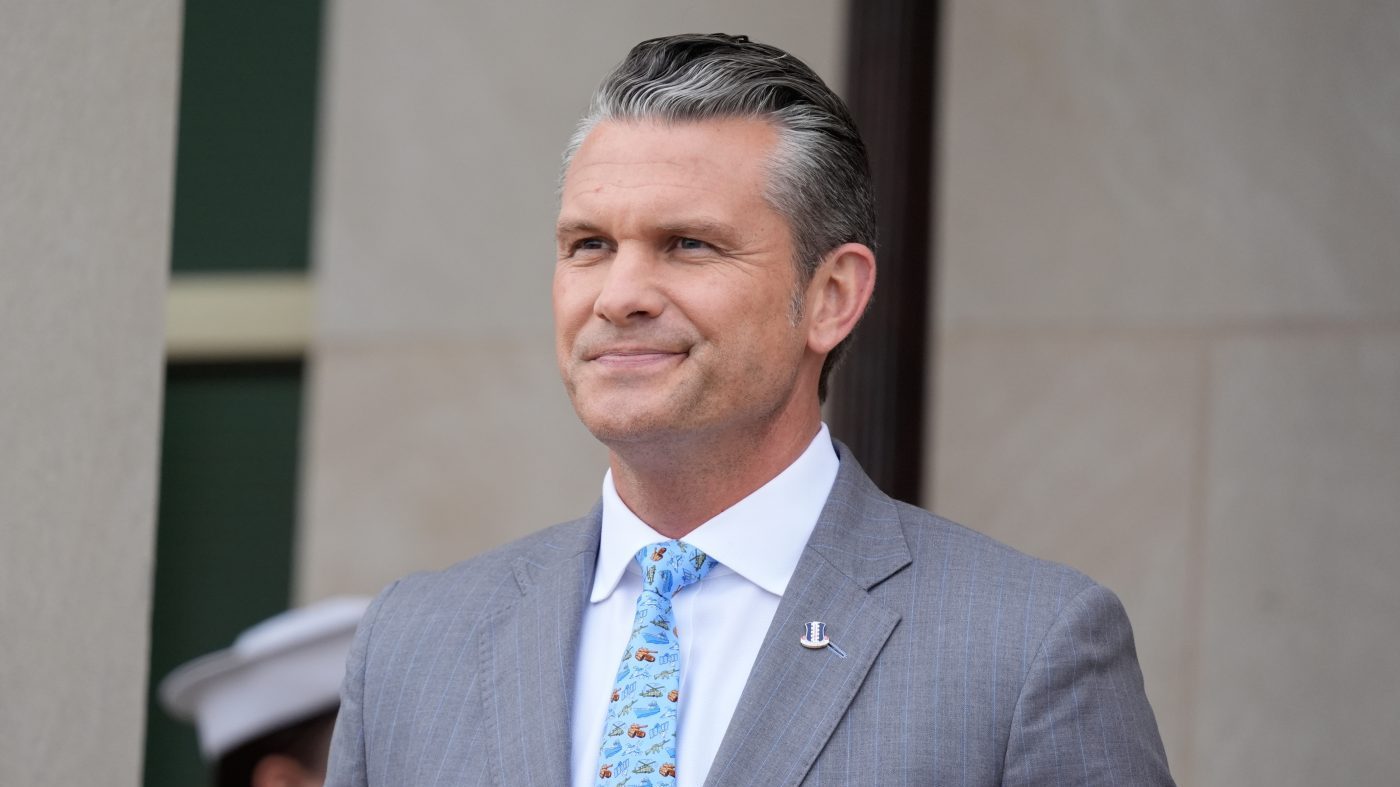
Defense Secretary Pete Hegseth on Tuesday pushed back against reports that the Pentagon is blocking the transfer of Patriot missile interceptors to Ukraine, insisting that the U.S. posture toward Kyiv remains unchanged. But he also made clear that American forces must have their own adequate supply of the critical air-defense weapons.
“There’s a lot of things that have been said in the press that are not true about the Department of War,” Hegseth told reporters in Eau Claire, Wisconsin, when asked about the alleged holdup. “We haven’t changed our posture in any way toward the Ukrainians, but certainly with things like interceptors, we want to make sure our guys have the most possible as well.”
The comments come amid growing scrutiny of the administration’s Ukraine policy. President Trump has publicly feuded with Ukrainian President Volodymyr Zelensky and suggested that Kyiv bears more blame for the war than Russian President Vladimir Putin. In recent weeks, Trump signed a deal allowing Russia to export diesel fuel to the U.S. and waived sanctions on Russia that had been imposed by legislation named for the late Sen. Lindsey Graham (R-S.C.). Those moves have drawn sharp criticism from some Republicans, who argue that the president is going soft on Moscow. For more on that internal GOP pushback, see GOP senators challenge Trump, Hegseth on Russia.
Patriot interceptors are vital for Ukraine’s defense against Russian drone and missile strikes, which have pounded Ukrainian cities since the full-scale invasion in 2022. Any interruption in that supply could leave Ukrainian civilians and infrastructure more vulnerable. Yet Hegseth framed the issue as a matter of balancing U.S. needs with Kyiv’s. He pointed to the previous administration, claiming it “emptied stockpiles” and that Trump is now working to refill them. “That’s part of the arsenal of freedom, and not only are we not refilling, we’re going even further with those stockpiles,” he said.
The defense secretary also said he has had “very earnest conversations” with Zelensky about the matter and endorsed recent remarks by Secretary of State Marco Rubio. “Our policy hasn’t changed,” Hegseth said. “Ultimately, the President does want to see peace. He believes that the killing should stop. It’s not necessary that it need to continue, and he wants both sides to come together on that.”
Trump on Tuesday repeated his call for the war to end, citing the high number of casualties on both sides. But his recent actions—easing sanctions and allowing Russian diesel imports—have raised questions about whether his administration is shifting away from Ukraine. Some GOP lawmakers have warned that Putin is manipulating Trump, a concern highlighted by Sen. Tillis’s warning on Putin.
Hegseth’s remarks are unlikely to quiet critics who see a pattern of mixed signals. While he insists the U.S. stance is unchanged, the practical effect of prioritizing American interceptor stockpiles could still delay or reduce deliveries to Ukraine. The Pentagon has not provided specifics on how many interceptors are being held back or for how long.
As the war drags on and Trump continues to push for a negotiated end, the debate over military aid is likely to intensify. For now, Hegseth is trying to project continuity while acknowledging that U.S. forces come first. Whether that reassures Kyiv or alarms allies remains to be seen.