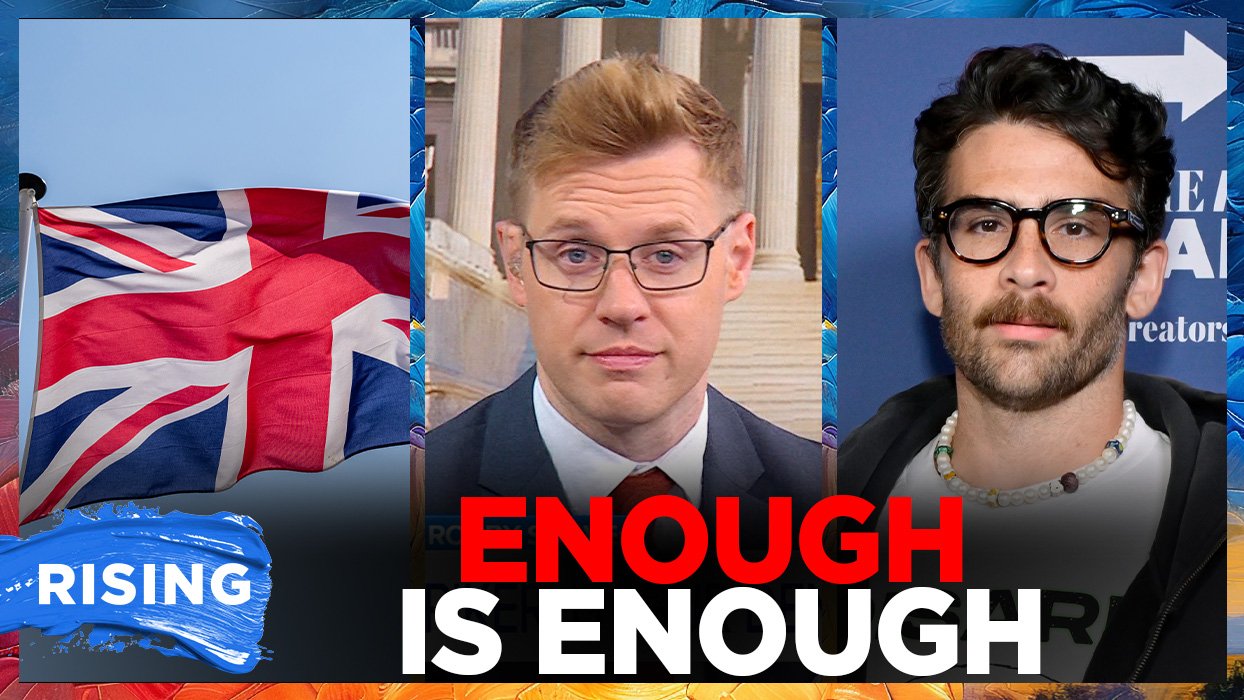
The United Kingdom's Home Office has barred two prominent progressive commentators, Hasan Piker and Cenk Uygur, from entering the country to participate in an ideas festival, sparking accusations of censorship from free speech advocates.
Uygur, co-host of the popular YouTube news program “The Young Turks,” and his nephew Piker, a well-known Twitch streamer and fierce critic of Israel, had their travel visas revoked because “their presence in the U.K. may not be conducive to the public good,” according to a government statement. The phrase has drawn comparisons to Orwellian language, with critics arguing it represents a dangerous precedent for a Western democracy.
The ban comes despite Piker’s history of inflammatory remarks—including saying America “deserved” 9/11 and praising repressive communist regimes—which the original article acknowledged as “vile stuff.” Nevertheless, the author argues that such speech should be debated, not silenced, especially given that neither man has a record of inciting violence.
Piker himself blamed Israeli influence for the decision, posting on social media: “The UK has revoked my visa as well. All at the behest of Israel. The west is betraying ‘liberal values’ for a genocidal fascist foreign government. Soon we will all become Israel.” While the claim remains unverified, the article notes that if true, it would be a strategic blunder, as suppressing debate often backfires.
Notably, the ban derailed a planned debate between Uygur and conservative commentator Shabbos Kestenbaum, moderated by Piers Morgan. Kestenbaum condemned the move on X, writing: “This ban is completely unfounded and must be reversed. Free speech must always be protected and allowed. Shame on Keir Starmer.”
The incident is the latest in a series of speech-suppression moves by the U.K. government, which has drawn criticism from U.S. figures including Vice President Vance, who previously upbraided Starmer over hate speech prosecutions that led to fines and jail time for dissenters. The pattern has raised concerns about Britain’s commitment to liberal values, especially as it lacks a First Amendment equivalent.
As the debate over free expression intensifies, the article warns that censorship, regardless of the target’s views, undermines the principles of open discourse. “Censorship is wrong, whether it’s wielded by the right against the left, or the left against the right,” it concludes.