President Trump's decision to sign an executive order overhauling the childhood vaccine schedule has injected a volatile issue into the political bloodstream just three months before the midterm elections, posing new risks for Republicans fighting to hold their congressional majorities.
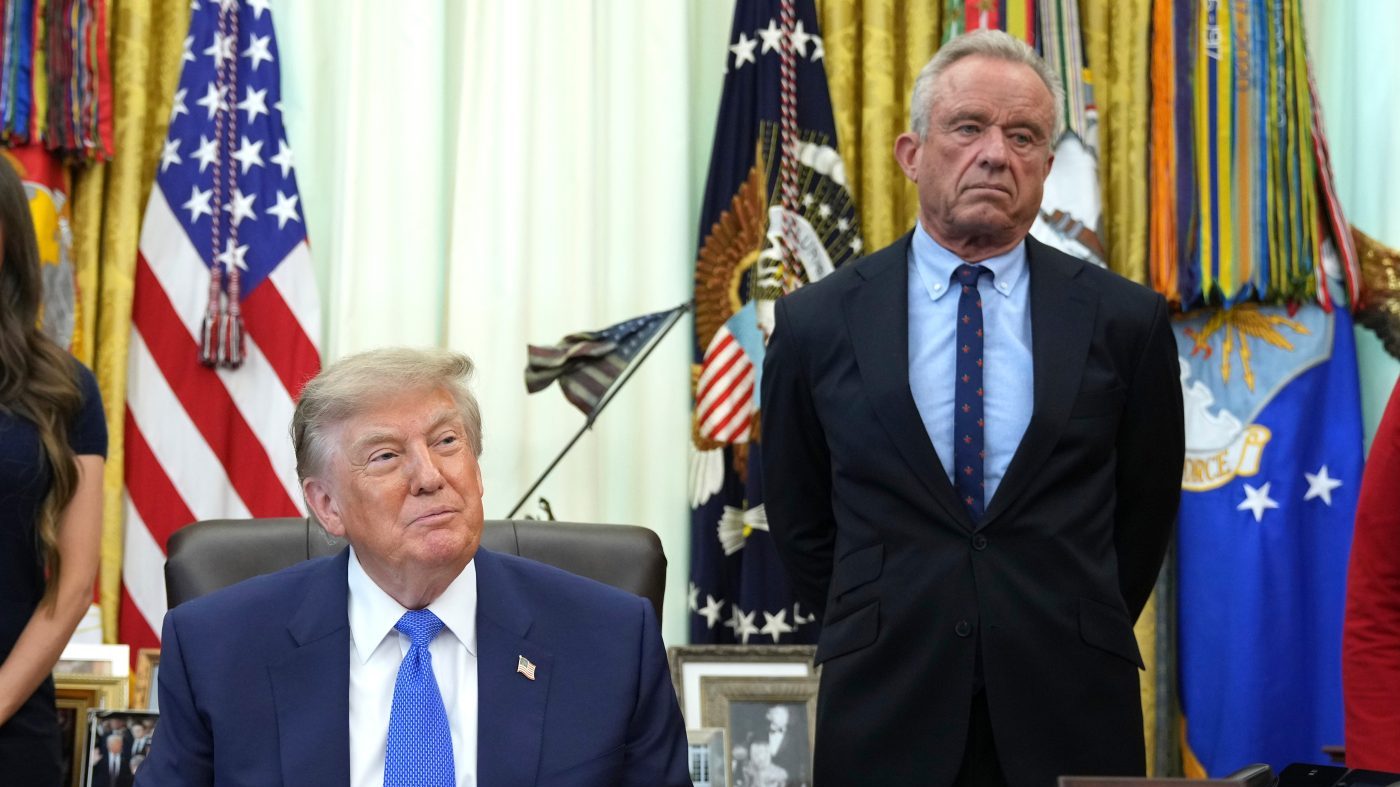
The order, announced Monday from the Oval Office, directs federal agencies to reduce the number of recommended vaccines for young children and to break the combined measles-mumps-rubella (MMR) shot into separate inoculations. Trump framed the move as a matter of choice and convenience, saying, "We're reducing them... you're doing them in a series of visits to the doctor."
The timing is particularly fraught. Trump's own pollsters have warned that vaccine changes are deeply unpopular, and the order undercuts a recent White House effort to moderate the public image of the Department of Health and Human Services (HHS) under Secretary Robert F. Kennedy Jr., a longtime vaccine critic who founded an anti-vaccine advocacy group before taking the helm.
In recent weeks, the administration had sought to project a more mainstream health agenda, installing officials without public records of vaccine opposition, such as Dr. Erica Schwartz, a former military public health officer who becomes CDC director this week, and Dr. Nicole Saphier, a radiologist and Fox News commentator, as surgeon general. The White House also touted cost-cutting and food policy reforms, including one Kennedy praised just hours before Trump's order.
Republican strategists are divided on the political fallout. Some see the order as a rallying cry for the Make America Healthy Again (MAHA) base, which helped Trump win in 2024. Jay Richards of the Heritage Foundation said it could energize voters who were "feeling depressed" over the administration's stance on pesticides, adding, "They probably weren't going to vote for Democrats, but I could have imagined a lot of them not bothering to vote in the midterms."
But others warn of a backlash among swing voters. Whit Ayres, a GOP pollster, said, "The overwhelming majority of Americans view effective vaccines as one of the miracles of modern medicine... Running against medical miracles doesn't strike me as a particularly persuasive political message." A December memo from Fabrizio Ward, the firm of Trump's 2016 pollster, noted "strong bipartisan support" for routine childhood immunizations and called vaccine skepticism "politically risky for both parties."
Former Rep. Larry Bucshon (R-Ind.), a physician, downplayed the order's novelty, saying it "doesn't really cover any new ground politically." But he acknowledged that vulnerable Republicans could face tough questions about vaccine safety and the standard schedule, and might need a clear response.
Democratic groups are already attacking. Save My Care launched ads Tuesday against GOP incumbents in Alaska, Colorado, Florida, and New York, tying them to "Trump's dangerous vaccine agenda." The order also comes amid a measles outbreak—the largest in over three decades—and rising foodborne illness concerns, which could further erode trust in federal health agencies.
Some strategists, like Arizona independent Chuck Coughlin, argue vaccines won't dominate voter concerns given the economy and the war in Iran. "Swing voters are already turned off," he said. But with the administration's broader moves to control midterm messaging, the vaccine fight is unlikely to fade quietly.