President Donald Trump's administration is grappling with a widening credibility gap that is undermining America's relationships with allies and emboldening adversaries, according to political analysts and recent polling data. The phenomenon, reminiscent of the trust deficit that plagued Lyndon Johnson during the Vietnam War, now threatens to destabilize US foreign policy and national security.
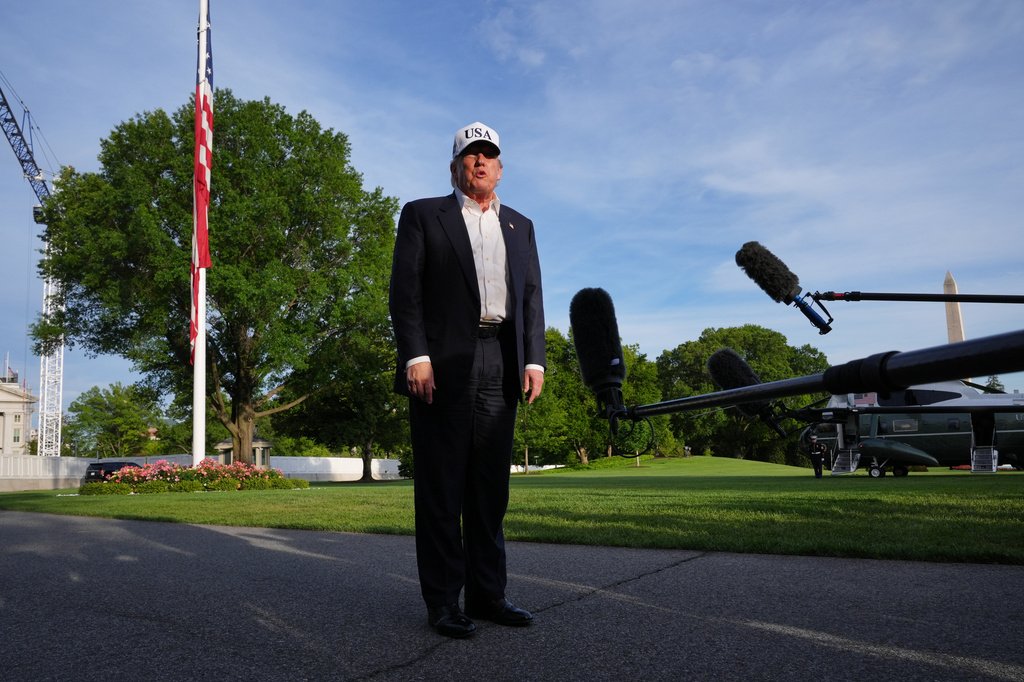
Trump's habit of making hyperbolic statements and reversing policy positions has left foreign leaders uncertain about whether to take his threats or promises seriously. Allies have grown wary after enduring insults, tariff battles, aid cuts to Ukraine, and threats to withdraw from NATO, while adversaries have coined the term TACO—'Trump Always Chickens Out'—to describe his pattern of failing to follow through on aggressive rhetoric.
The credibility gap extends to domestic politics as well. A Washington Post-ABC News poll published in May found that 59% of Americans believe Trump lacks the mental sharpness to serve effectively as president, and 71% say he is not honest or trustworthy. Only 37% approve of his job performance. Trump dismissed the survey as 'FAKE POLLS FROM FAKE NEWS ORGANIZATIONS' on his social media platform, Truth Social.
Trump's erratic behavior has real-world consequences. His tariffs have raised costs for US factories, retailers, and farms, and Moody's Analytics chief economist Mark Zandi says they 'have done significant damage to the economy' and slowed job growth. Court decisions have overturned many of these tariffs, leading to a chaotic legal landscape that complicates business planning.
On the international stage, Trump's threats have sometimes taken on a cartoonish quality. In April, he warned on Truth Social that Iran's 'whole civilization will die tonight, never to be brought back again,' a statement that implied a massive nuclear strike. He later backtracked, saying he would not use nuclear weapons against Iran, but the incident highlighted the dangers of his unpredictability. Trump has also falsely claimed that Iranian leaders agreed to major concessions, only to be contradicted by Tehran.
The president's credibility gap is not limited to foreign policy. CNN documented 100 false claims in his first 100 days back in office. He promised to end Russia's war in Ukraine, lower grocery prices, and 'end inflation' on day one of his second term—none of which have materialized. He falsely claimed that undocumented immigrants constitute an 'invasion' of violent criminals, and he lied about DEI programs discriminating against white men.
Perhaps most damaging is Trump's continued insistence that the 2020 election was stolen, a claim rejected by more than 60 state and federal courts. This lie motivated the January 6, 2021, Capitol attack, and Trump later granted blanket clemency to about 1,500 rioters. The growing defiance among GOP lawmakers reflects the strain this has placed on the party.
At the end of his first term, the Washington Post reported that Trump had accumulated 30,573 untruths—averaging about 21 false claims per day. This stands in stark contrast to Abraham Lincoln, the first Republican president, who earned the nickname 'Honest Abe.' Trump, by contrast, has been dubbed 'Dishonest Don' by critics.
Democrats are expected to make Trump's credibility gap a central issue in the November midterm elections, arguing that a Democratic-controlled Congress could act as a check on his misconduct. The Senate parliamentarian's recent block of $1 billion in Trump ballroom funding underscores the institutional friction his administration faces.
As the credibility gap widens, the question remains whether the US can restore trust with its allies and deter adversaries before the damage becomes irreversible.