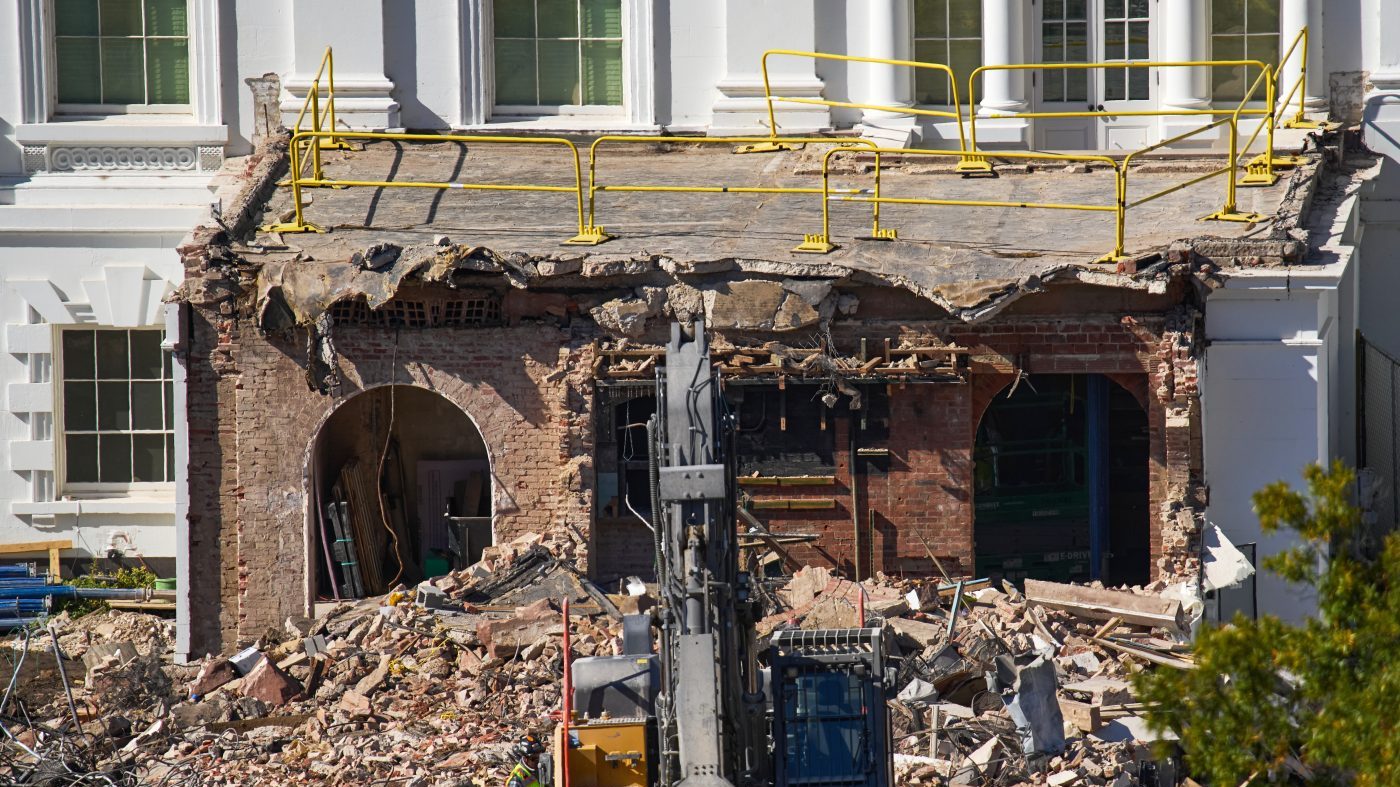
The Senate parliamentarian dealt a blow to the Trump administration late Saturday, ruling against a $1 billion provision in the budget reconciliation package intended to fund a new White House ballroom. The nonpartisan arbiter determined the funding violated the Byrd Rule, a Senate procedure that restricts extraneous, non-budgetary items from passing through the reconciliation process.
Sen. Jeff Merkley (D-Ore.), ranking member of the Senate Budget Committee, released a statement detailing the parliamentarian's guidance. According to Merkley, Elizabeth MacDonough concluded that the ballroom project is too complex and large-scale for inclusion in reconciliation, as it spans the jurisdiction of multiple Senate committees. The funding had originally been included in a bill from the Senate Judiciary and Homeland Security Committees focused on federal immigration enforcement.
“The Parliamentarian’s advice is based on whether a provision is appropriate for reconciliation and conforms to the limitations of the Byrd Rule; it is not a judgement on the relative merits of a particular policy,” Merkley’s statement read. He added that any attempt to revive the ballroom funding would require a 60-vote threshold, effectively raising the bar for passage in the closely divided Senate.
The ruling marks a significant setback for the White House, which has sought to secure the funds for security upgrades at the new venue. The administration has argued the ballroom is essential for hosting state events and bolstering national security, but the parliamentarian’s decision underscores the procedural hurdles facing the proposal.
Ryan Wrasse, communications director for Senate Majority Leader John Thune (R-S.D.), signaled the administration would not back down. “Redraft. Refine. Resubmit,” Wrasse posted on X, adding, “None of this is abnormal during a Byrd process.” The response suggests Republicans aim to rework the provision to meet the Byrd Rule’s constraints, though success is far from guaranteed.
The Trump administration has faced pushback from Democrats and even some Republicans over the ballroom funding, with critics questioning the necessity of a $1 billion expenditure. Last week, Secret Service Director Sean Curran briefed Senate Republicans on the security needs, detailing plans for bulletproof glass, drone detection technologies, and chemical threat filtration systems. The White House ballroom is slated to open in September 2028.
According to a one-pager obtained by PBS Newshour, the administration plans to invest $220 million in national security functions, including counter-drone measures and biological threat detection. An additional $180 million would go toward a visitor screening facility. Trump has already secured private donors for the project, but the White House insists congressional funds are needed for security improvements.
The parliamentarian’s ruling comes amid broader tensions between the administration and Capitol Hill, as GOP lawmakers increasingly defy Trump on key issues. The ballroom controversy has become a flashpoint, highlighting the limits of executive influence over legislative procedures. For now, the White House faces an uphill battle to salvage the funding through reconciliation, a process already strained by partisan divisions.