President Trump's administration often resembles a Shakespearean tragedy—full of sound and fury, but ultimately signifying little. His recent threats and actions, from Iran to Greenland to press access, have been marked by grand rhetoric but limited follow-through, as institutional checks and international realities constrain his ambitions.
Iran: Threats Without Follow-Through
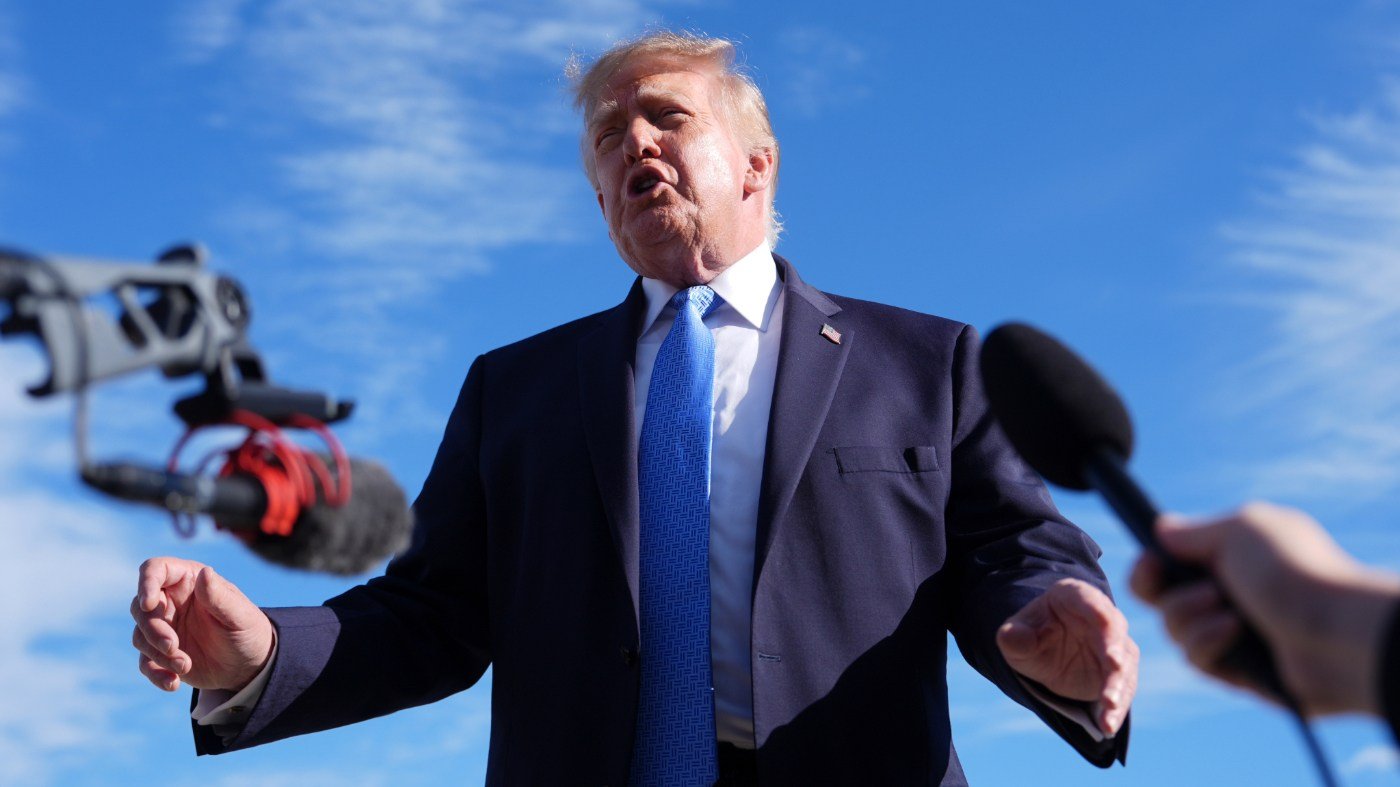
In April, Trump threatened to bomb Iran "back to the Stone Ages," yet no military action followed. At the United Nations last week, he evoked Cold War imagery by brandishing a shoe, reminiscent of Nikita Khrushchev's 1960 antics, while openly contemplating the destruction of a fellow U.N. member state. Trump declared he had "a big decision to make" on Iran, telling the Islamic Republic to negotiate or face annihilation. "Will a deal be made with Iran?" he asked. "Or do I annihilate the Islamic Republic and do it quickly, never giving them a chance to kill and destroy people and countries again?"
The choice of forum—the U.N. General Assembly—and the bellicose message drew sharp criticism. Unlike Khrushchev, who wielded unchecked power, Trump requires congressional approval for military action, which appears unlikely. Earlier this month, the House passed a resolution to end the war authorization, with a growing number of Republicans joining Democrats. This legislative push reflects a broader reluctance to grant the president a blank check for another Middle East conflict.
Greenland: From Annexation to Agreement
Trump's Greenland gambit also shows a pattern of bold claims followed by retreat. In 2025, he announced plans to annex the island, later refusing to rule out military force and threatening tariffs on European nations unless Denmark ceded territory. However, at the U.N., he abruptly dropped the annexation bid and signed a new agreement with Denmark that experts say largely mirrors the 1951 defense deal, granting the U.S. broad rights to build military bases. The new pact includes a clause making it operative only while the U.S. remains a NATO member—a subtle check on Trump's unilateralism.
White House Expansion: Monument to Self
Trump's domestic projects also reflect his penchant for self-aggrandizement over practicality. He has sought to build a 90,000-square-foot ballroom in the White House's east wing, ostensibly for security, but has admitted it's "a monument to myself—because no one else will." Architectural experts have derided the design as "super-size Las Vegas vulgarity." To bypass Congress, Trump now frames it as defense infrastructure, proposing drone launch pads and sniper nests—plans that critics note would interfere with flight paths into Reagan National Airport, forcing diversions and creating safety hazards.
Press Access: Legal Setback
Perhaps the most constitutionally questionable move has been the ban on CNN, MSNBC, and Politico from White House grounds, justified by claims of false reporting. Attorney General Todd Blanche argued that press access is "a privilege, not a right," and that the outlets posed a national security threat by "trafficking in verifiable falsehoods." But federal Judge Timothy Kelly, a Trump appointee, issued a 14-day restraining order, ruling the ban likely unconstitutional and a violation of due process. Trump, in his defense, focused on negative coverage, posting on Truth Social that media outlets shouldn't "constantly write or report FICTION and LIES."
The administration's stance echoes the Pentagon Papers case, where Justice Black affirmed that the First Amendment "gave the free press the protection it must have to fulfill its essential role in our democracy." The press serves the governed, not the governors, and censorship powers are abolished to ensure the press can censure the government. Trump's threats and actions, while headline-grabbing, often fizzle when met with resistance—whether from Congress, the courts, or international partners. His approach may be more talk than action, but it continues to test the limits of presidential power and democratic norms.