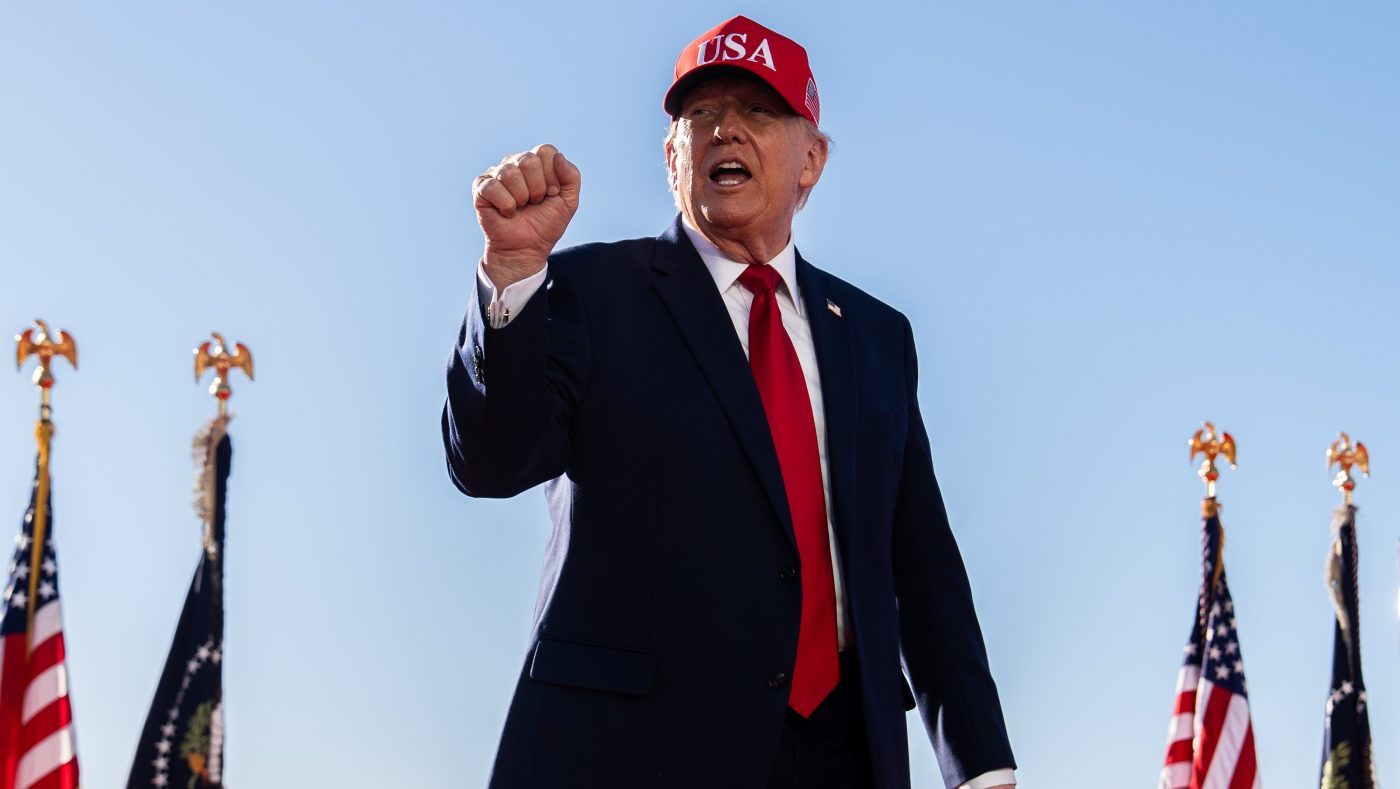
President Trump’s appointment of four senior administration officials to lead his new “Super Intelligence Force” (SIF) provides a clear signal of how the White House intends to navigate the promise and peril of artificial intelligence. The selections, announced over the weekend, come after months of conflicting signals from the administration on AI policy.
Trump, who has rebranded AI as “super intelligence,” tapped Director of National Intelligence Jay Clayton to chair the SIF, with a mandate to explore the technology’s benefits and risks while “ensuring” America’s competitive edge. Joining Clayton as vice chairs are Emil Michael, the Pentagon’s chief technology officer; Andrew Ferguson, chair of the Federal Trade Commission (FTC); and Scott Kupor, director of the Office of Personnel Management. The group has 120 days to deliver a report on AI’s risks, benefits, and the government’s role in managing it.
Clayton: A National Security Lens
Clayton, a former SEC chair and U.S. attorney, brings a legal and financial background to the AI file. As DNI, he oversees the 18-agency intelligence community, which has become increasingly involved in testing and evaluating AI systems. Trump has praised Clayton as a “strong fighter for the truth.”
At a White House meeting last week with tech executives, Clayton echoed Trump’s stance against any pause in AI development. “To take a pause … in some way, not try to drive forward inside the United States with companies that are regulated in the United States … to somehow say, ‘We should back away from this and let the rest of the world develop these models and implement these models,’ I don’t think anyone in that room, anyone in America should think that’s a good strategy,” he told CNBC.
Clayton has framed AI as a “national security issue” and left the door open for government intervention via the Justice Department or the FTC if necessary. This comes despite calls from some industry leaders, including Anthropic CEO Dario Amodei and OpenAI CEO Sam Altman, for a slowdown to manage risks—concerns Trump has dismissed as a “hoax.”
Michael: A Hard-Line Defense Perspective
Emil Michael, a former Uber executive now serving as undersecretary of Defense for research and engineering, has taken an aggressive stance on AI. He has argued for broad Pentagon authority over the technology and was central to the Defense Department’s dispute with Anthropic over safety guardrails. After negotiations collapsed, the Pentagon labeled the AI firm a supply chain risk—an unusual move typically reserved for foreign adversaries—and the company has challenged that decision in court.
Michael has remained adversarial toward Anthropic, recently slamming the company as “hostile to the warfighter” after one of its policy officials voiced support for criticism of Chinese distillation of U.S. models. Like Trump, he advocates for removing regulatory hurdles. “At the @DeptofWar [Department of Defense] we have seen what is possible when red tape is removed and America’s best technology is rapidly put into action,” he wrote on social media. “Working alongside America’s leading technology companies, we are putting the most advanced SI [super intelligence] capabilities into the hands of our warfighters at speed and scale.”
Ferguson: Antitrust and Consumer Protection
Andrew Ferguson, a former antitrust litigator, represents the wing of the GOP that favors light-touch regulation but is tougher on Big Tech when it comes to consumer protection and online safety for kids. Trump praised Ferguson’s “proven record of standing up to Big Tech censorship” when nominating him to lead the FTC, which is pursuing antitrust cases against Meta and Amazon. Despite reported attempts by Meta CEO Mark Zuckerberg to settle, the FTC proceeded with a high-profile trial against the social media giant.
The inclusion of Ferguson signals that the SIF will not shy away from reining in tech companies when it comes to market power or consumer harm, even as the administration pushes for rapid AI deployment. The mix of officials—spanning intelligence, defense, antitrust, and personnel management—reflects the administration’s desire to coordinate AI policy across agencies while keeping a firm hand on the levers of government.
As the SIF begins its work, the political stakes are high. Trump’s AI squad is set to shape policy that could affect everything from national security to the economy. With midterm elections looming, the administration is also mindful of the political fallout from its spending decisions and other controversies. The SIF’s report, due in 120 days, will be a key test of whether the White House can balance innovation with oversight—and whether its “super intelligence” gambit pays off politically.