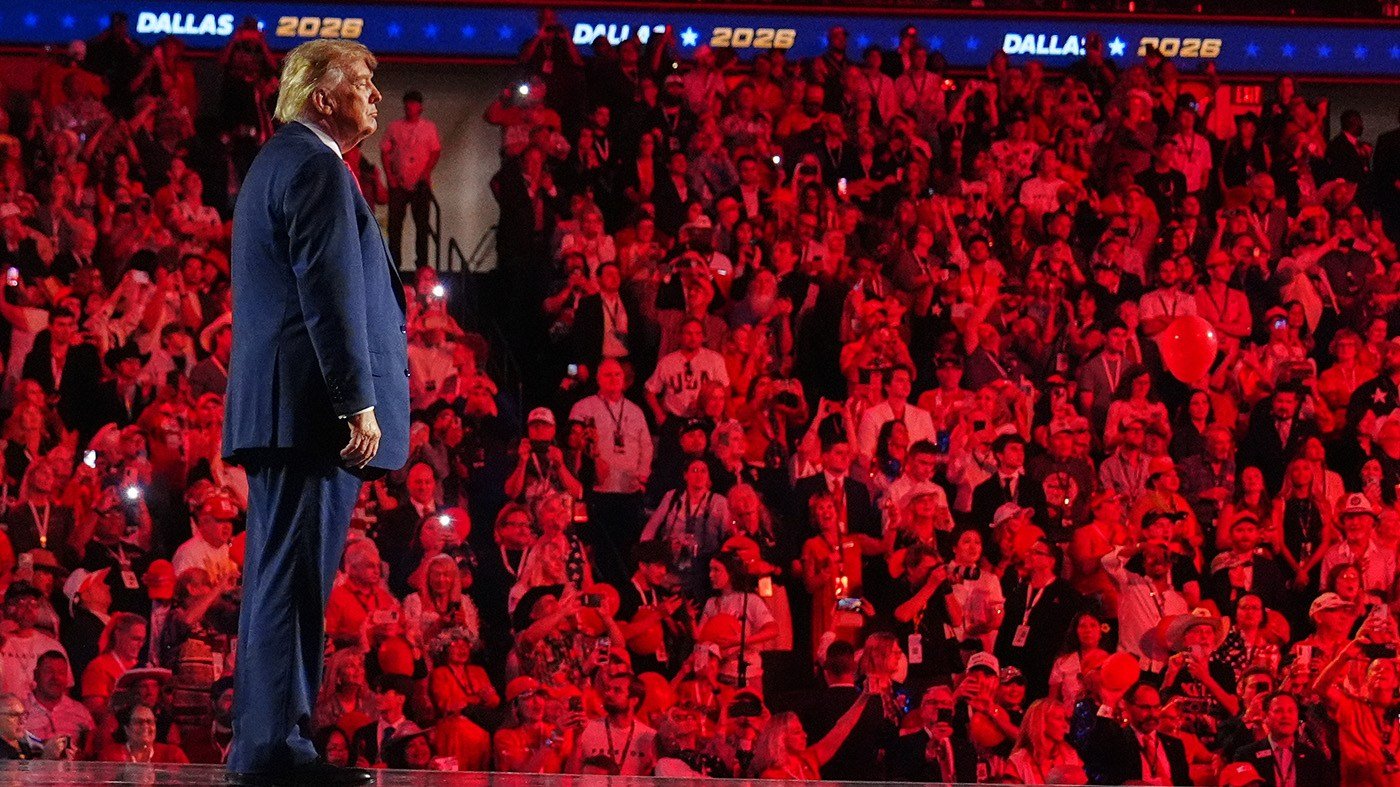
President Trump took center stage at the Republican midterm convention in Dallas this week, basking in the adulation of the MAGA faithful. But as the party looks toward November, the bigger question is whether the event moved the needle in a political climate that remains deeply challenging for the GOP.
According to The Hill's data partner Decision Desk HQ (DDHQ), Democrats hold a 68 percent probability of retaking the House, while the Senate is a coin flip—a far cry from earlier expectations of a comfortable Republican majority. Though no major polling has been conducted since the convention, the national news cycle quickly shifted to the 25th anniversary of the September 11 attacks, underscoring the fleeting nature of political momentum.
The most headline-grabbing moment came when Trump vowed to send a $5,000 "dividend" to every adult American citizen if Republicans win in November. The proposal, however, has raised eyebrows across the political spectrum, with critics labeling it as little more than a bribe. Even some Republicans have expressed reservations, noting the staggering price tag—estimated at roughly $1.3 trillion—at a time when the national debt has surpassed $40 trillion and bond markets are growing uneasy about fiscal stability.
During his Thursday night keynote, Vice President Vance notably avoided any mention of the plan, despite having defended it in a Fox News interview the previous evening. Sen. Ted Cruz (R-Texas) said his support would depend on the structure, favoring a tax refund for workers rather than payments to those not employed. Rep. Pat Fallon (R-Texas) suggested Trump's remarks were more aspirational than definitive, but the president took to social media on Friday to insist, "When I say something, I mean it!"
Republican pollster David Winston cautioned against reading too much into the mixed reactions, noting that many lawmakers were caught off guard. "Part of the reaction you are hearing is that people are unsure," Winston said. "They're not saying it's good or bad. When something like that gets dropped on you, you want some time to think through it."
Others were less charitable. Rick Tyler, a veteran GOP strategist and frequent Trump critic, dismissed the proposal as "a gimmick," adding, "they don't mean it." He questioned the sophistication of voters who might believe they'll receive a check simply for voting Republican.
The convention also reignited a broader debate about the wisdom of centering the party's midterm strategy on Trump, who remains deeply unpopular nationally. DDHQ's polling average shows 57 percent of Americans disapprove of his job performance, with just 40 percent approving. Analyst Nate Silver's numbers are even worse, putting approval at 38 percent.
Trump, ever confident, has repeatedly said, "Pretend I'm on the ballot." Democrats, however, are eager to see him front and center. "If Republicans in swing districts want to appear with Donald Trump, let the chips fall where they may," said Democratic strategist Julie Roginsky. "I understand they are trying to get as many MAGA voters as possible, but I think even those voters who will turn up for Trump will not, at this point, turn up for Republicans in a midterm election. So I just think aligning yourself with Trump is political suicide."
Tyler echoed that sentiment but from a different angle. He pointed to the 1994 "Contract with America" as a successful example of nationalizing an election, but argued that when the party in power faces rising costs and voter dissatisfaction, the wiser move is to localize the race. "It's the time to make the election about the opponent and what would happen if the opponent got elected," he said.
As the campaign enters its final stretch, the GOP's gamble on Trump remains a central—and risky—strategy. With the president's approval numbers stuck in the low 40s and his policy promises facing legal and fiscal hurdles, the convention's impact may prove minimal. And while Trump's base remains enthusiastic, the broader electorate appears unmoved, leaving Republicans to wonder whether their leader's influence is a boon or a burden.