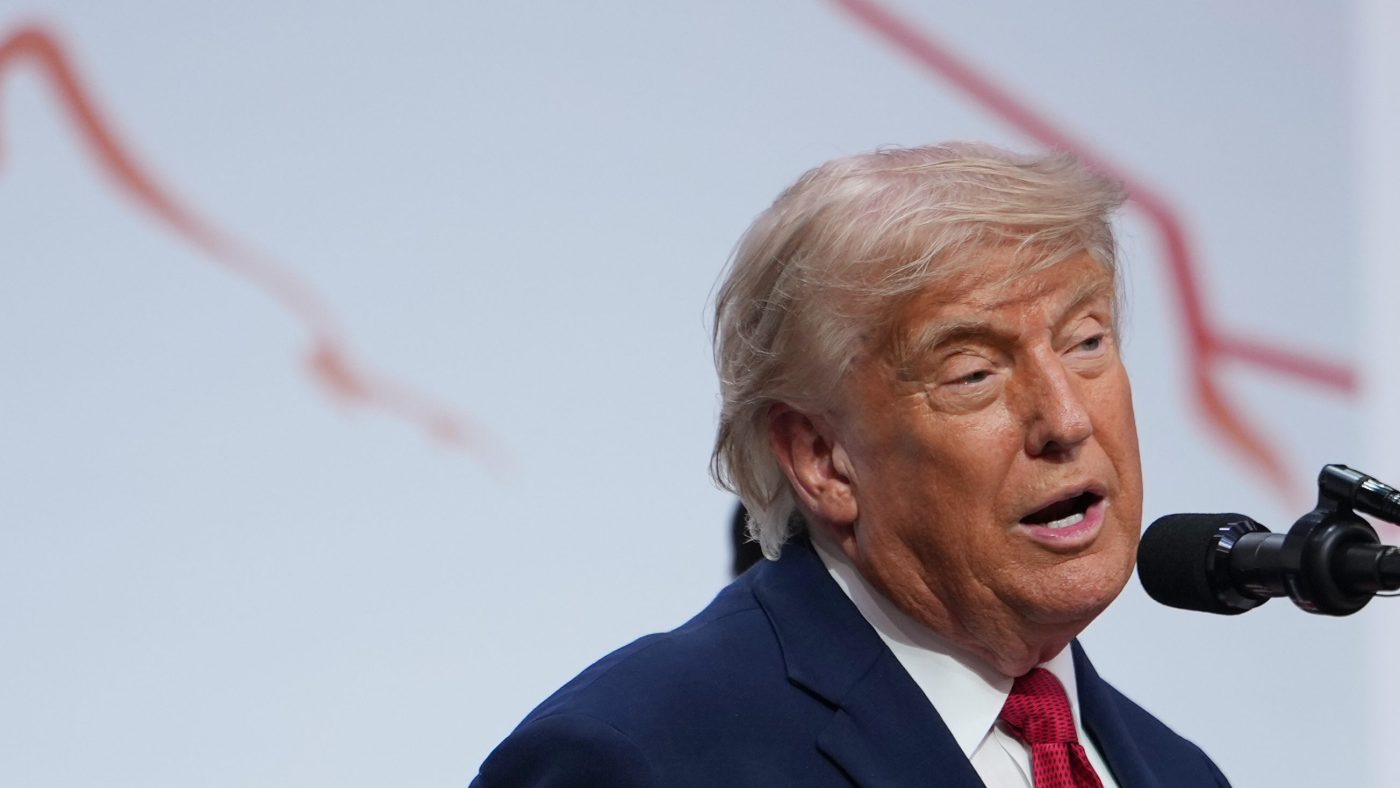
President Donald Trump publicly rebuked Israeli Prime Minister Benjamin Netanyahu on Wednesday during the Group of Seven summit in France, urging him to scale back strikes against Hezbollah in Lebanon as negotiations with Iran reach a critical juncture. The exchange, disclosed at a press conference wrapping up the summit, laid bare the growing rift between the two allies over how to handle the Iran-backed militant group.
Trump described Netanyahu as “a good man” who “gets a little excited sometimes,” but made clear he had pressed the Israeli leader for more measured tactics. “We have a little dispute over Lebanon,” Trump said. “I say you can do a little softer touch, Bibi. You don’t have to knock down a building every time somebody walks into it that’s from Hezbollah.”
The president’s remarks follow a more explosive private conversation earlier this week, in which he reportedly berated Netanyahu with profanity, accusing him of lacking judgment. That outburst, first reported by Axios, came after Israeli airstrikes in Beirut nearly derailed a U.S.-brokered memorandum of understanding with Iran to reopen the Strait of Hormuz and begin nuclear talks.
Trump’s public comments were more restrained but still underscored the stakes. He pointed to Israel’s decision to pull back from a planned assassination of Iranian General Qassem Soleimani in January 2020 as evidence of inconsistent Israeli resolve. “Israel, but they didn’t want to do that attack. They were all set the night before the attack, then for me they didn’t want to do it,” Trump said.
The tension comes as the G7 formally endorsed the Trump-brokered Iran ceasefire, which includes provisions for reopening the Strait of Hormuz and curbing Tehran’s nuclear ambitions. Iran has leveraged Lebanon as a bargaining chip, insisting that Israel halt all strikes on Hezbollah as part of the truce. Trump acknowledged Israel’s right to self-defense but framed the latest Israeli retaliation—following two drones that landed harmlessly in the desert—as disproportionate.
“I’m not saying they shouldn’t protect themselves,” Trump said. “I’m saying when two drones are shot into the desert and drop harmlessly, you don’t have to knock down buildings in Beirut. They could behave better, and frankly, they could do a better job.”
The dispute highlights a broader divergence in strategy. Both leaders initially cooperated on a campaign against Iran, but Trump now appears focused on securing a diplomatic off-ramp, while Netanyahu remains committed to degrading Hezbollah’s military capabilities. The president’s frustration was palpable in his earlier Axios interview, where he said, “Why did Bibi have to do a f---ing attack? I was so p---ed off. I let him know. He has no f---ing judgment.”
With the Iran deal expected to be signed Friday, the Trump administration is racing to finalize terms that could reshape the Middle East. However, the public scolding of Netanyahu suggests that internal cohesion between Washington and Jerusalem is fraying at a moment when Tehran is seeking to exploit every crack. The G7’s endorsement of the ceasefire provides diplomatic cover, but the real test will be whether both sides can maintain discipline as the agreement moves toward implementation.