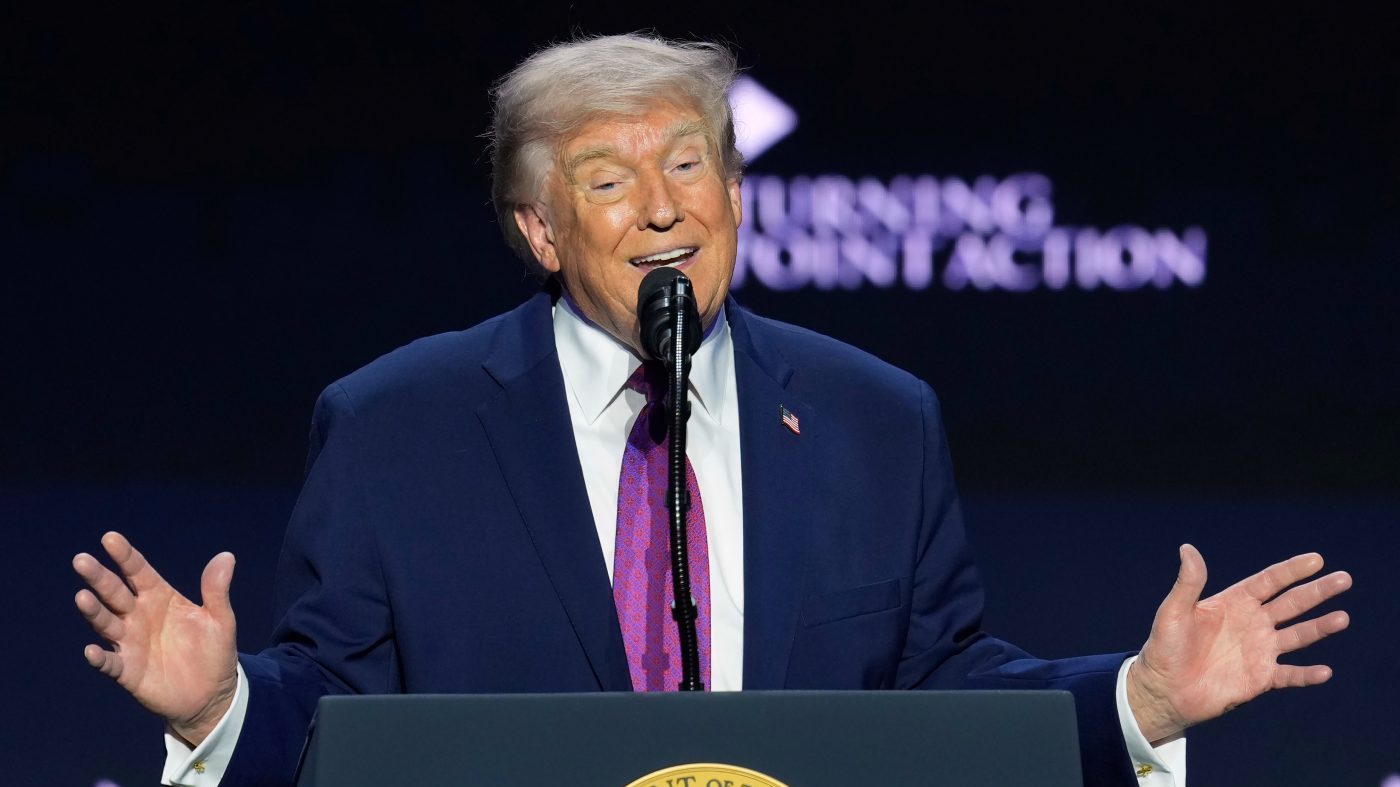
Former President Donald Trump declared Friday that he has instructed his Defense Secretary, Pete Hegseth, to initiate the declassification of government records concerning Unidentified Flying Objects (UFOs) and Unidentified Aerial Phenomena (UAPs). The announcement came during a campaign-style speech at a Turning Point USA event in Phoenix, Arizona, where Trump framed the disclosure as a response to public interest and congressional demands.
Directive Follows Months of Political Pressure
Trump's public remarks formalize a commitment he first outlined on his Truth Social platform in February. At that time, he wrote he was ordering the Department of Defense to release all files "related to alien and extraterrestrial life" and UAPs, calling them "extremely interesting and important." His latest statement indicates the process is active. "This process was well underway and we've found many interesting documents, I must say, and the first releases will begin very, very soon," Trump told the crowd.
The move aligns with sustained pressure from Republican members of Congress who have made government transparency on UAPs a legislative priority. Representative Tim Burchett (R-Tenn.), who has led multiple House hearings on the topic, recently publicly urged Trump to "peel back the layers of that onion, let America decide if we can handle it." Burchett has argued the issue is less about extraterrestrial life and more about accountability, questioning why "tens of millions of your dollars" are being spent on programs that different agencies describe contradictorily.
Congressional Investigations Set the Stage
The political push for disclosure gained significant momentum following 2023 hearings where former intelligence official David Grusch testified under oath about an alleged "multi-decade" U.S. program to retrieve and reverse-engineer non-human spacecraft. The Pentagon has denied Grusch's claims, but the testimony galvanized a faction of lawmakers. The oversight effort is bipartisan in nature, focusing on national security implications and budgetary opacity.
Representative Anna Paulina Luna (R-Fla.), who chairs the House Oversight Task Force on the Declassification of Federal Secrets, has taken a more confrontational approach. After the Pentagon missed a deadline to provide dozens of classified UAP videos, Luna issued subpoenas. She told NewsNation she will now work directly with Secretary Hegseth to obtain the footage, expressing confidence in his cooperation. The requested videos include incidents recorded over Iran, the Persian Gulf, the East China Sea, and near U.S. airports.
In a March letter to the Pentagon, Luna framed the lack of disclosure as a direct threat. "The presence of UAPs in and around the sensitive airspaces of U.S. military installations poses a threat to the security of the armed forces and their readiness," she wrote. This national security framing has shifted the political conversation around UAPs away from speculative discourse and toward defense oversight.
A Broader Political Context
Trump's announcement intersects with other foreign policy and domestic tensions. His pledge comes as his administration faces scrutiny on multiple fronts, including escalating conflicts with Federal Reserve leadership and navigating complex international disputes. The event itself was part of a broader outreach effort, as Trump addresses young voter demographics in key states like Arizona.
Furthermore, the focus on Iran in some of the requested UAP footage dovetails with the administration's fraught diplomatic posture toward Tehran. While Trump has declared the long-standing conflict with Iran is nearing its end, the persistent silence from Iranian officials continues to generate uncertainty about the actual state of affairs.
The Department of Defense has not yet issued a public statement regarding Trump's latest directive or the timeline for any document release. The success of this declassification push will likely depend on the bureaucratic cooperation between the Pentagon, the White House, and congressional overseers, setting up a potential test of executive authority and transparency in a politically charged election year.