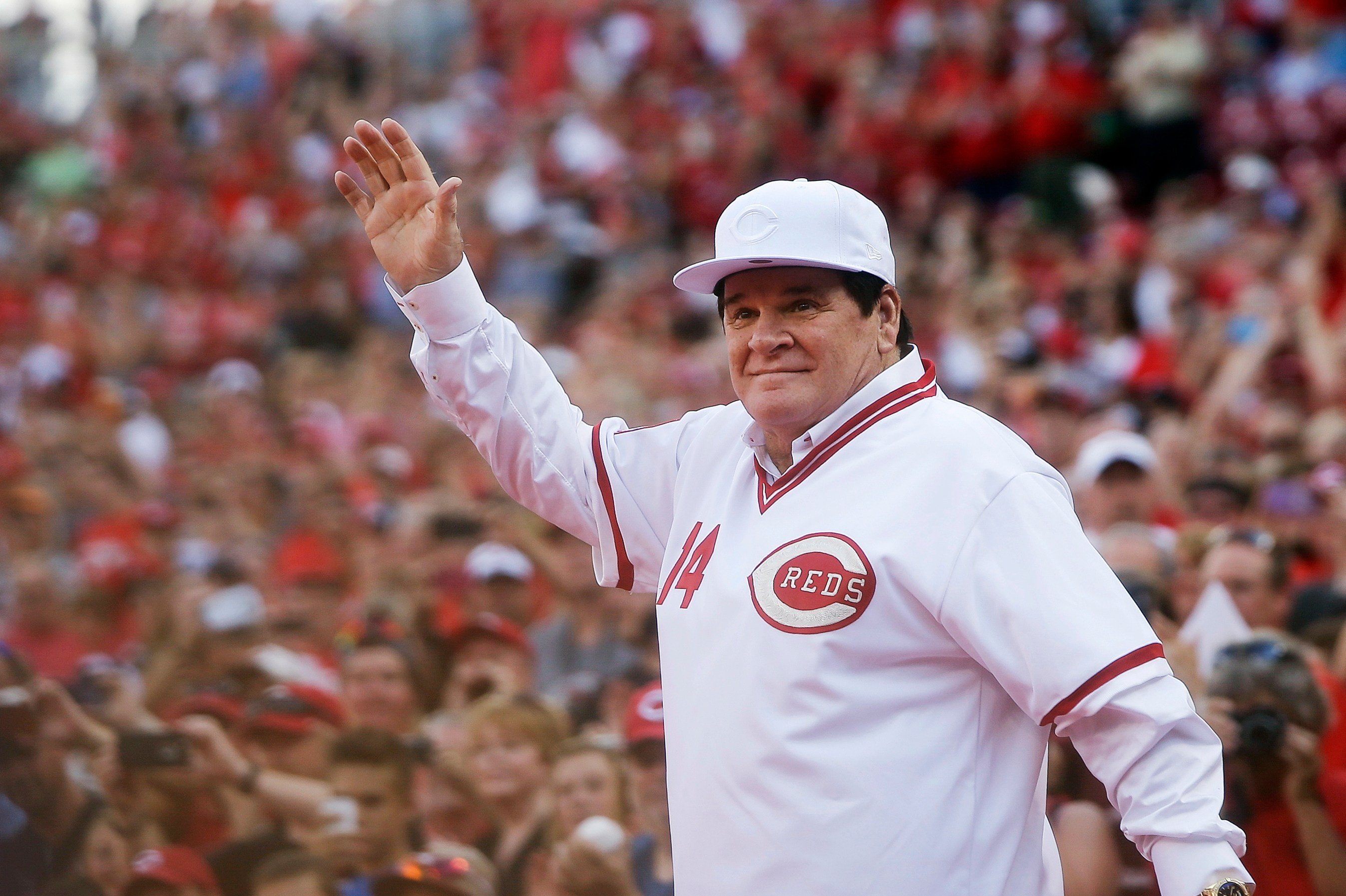
President Trump on Thursday issued a posthumous pardon for Pete Rose, the all-time hits leader whose career was overshadowed by a permanent ban from Major League Baseball for gambling. The president announced the move on Truth Social, calling Rose "a true Baseball SUPERSTAR & LEGEND" and arguing that his record of 4,256 career hits "will never be broken."
The pardon, which Trump had been considering for nearly two years, specifically addresses Rose's 1990 federal conviction for tax evasion, for which he served five months in prison. The president did not specify the scope of the pardon beyond that, but his statement suggested a broader grievance with how Rose was treated by the sport's establishment.
"He was treated terribly by Major League Baseball in not allowing him to go into the Baseball Hall of Fame," Trump wrote, adding, "Politics, I guess!"
Rose, who died in September 2024 at age 83, was permanently banned from baseball in August 1989 after an investigation concluded he had bet on games, including those of his own team, the Cincinnati Reds. He never bet against the Reds, but the ban kept him off the Hall of Fame ballot during his lifetime.
Trump first floated the idea of a pardon in March 2025, writing on Truth Social that MLB "didn't have the courage or decency to put the late, great, Pete Rose, also known as 'Charlie Hustle,' into the Baseball Hall of Fame." He added, "Now he is dead, will never experience the thrill of being selected, even though he was a FAR BETTER PLAYER than most of those who made it, and can only be named posthumously. WHAT A SHAME."
Last May, MLB reinstated Rose posthumously, a move that came after Trump spoke directly with the commissioner about the case. The reinstatement cleared the way for Rose to be considered for the Hall of Fame, but the pardon adds a legal dimension to his legacy.
Earlier this month, during an impromptu press briefing, Trump said "it's fair to pardon Pete Rose," describing him as "very mistreated." He acknowledged the gambling issue, saying, "He was gambling. He shouldn't have done it. But he went through 40 years of hell, and they never. And they should have given him a pardon. They should have given him into the Baseball Hall of Fame a long time ago."
The pardon comes as Trump continues to wield executive clemency in high-profile cases, often drawing attention to figures he believes were unfairly treated. Rose's case has long been a flashpoint for debates about sports integrity, legal accountability, and second chances.
While the pardon clears Rose's federal record, it does not affect the MLB ban, which remains a separate matter. The Hall of Fame's veterans committee could still consider Rose in future cycles, but any decision would be independent of the presidential action.
Rose's legacy remains complicated: a 17-time All-Star, three-time World Series champion, and the game's hit king, yet also a man who spent decades fighting allegations and bans. For Trump, the pardon is a symbolic gesture aimed at righting what he sees as a historical wrong.