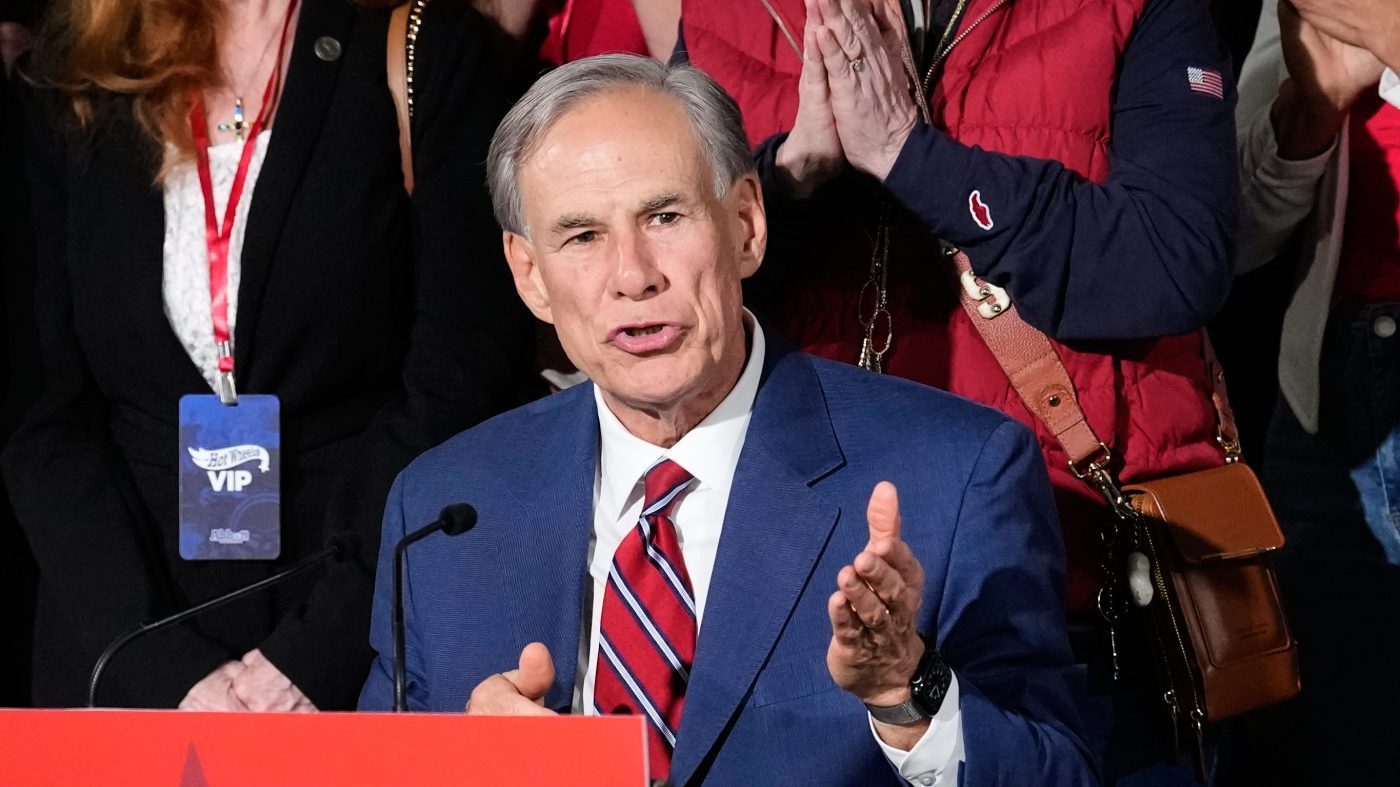
Former President Donald Trump took aim at Texas Gov. Greg Abbott late Tuesday, attributing the three-term Republican's upset defeat to a late-term shift in political identity. In a post on Truth Social, Trump wrote that Abbott would have won if he hadn't "become a RINO in the last six months of his Political Life," adding, "He went back to his original formula, and it wasn't pretty!"
Abbott, who had served as governor since 2015, lost to Democratic state Rep. Gina Hinojosa by a margin of 7.4 points, according to Decision Desk HQ projections. The loss ends his bid to become the longest-serving chief executive in Texas history.
During his tenure, Abbott presided over rapid population and economic growth, but Hinojosa turned that into a liability, hammering him on the proliferation of data centers. In August, Abbott announced a moratorium on new data center construction pending a state audit, a move Trump called "a mistake" at the time.
Despite the late pivot, Abbott remained a staunch ally of the president on most issues. He campaigned on claims that his opponent supported Sharia law, open borders, and gender surgeries for minors. He also signed one of the nation's most restrictive abortion bans.
Trump's criticism of Abbott is part of a broader pattern of attacking Texas Republicans he deems insufficiently loyal. He has previously labeled Karl Rove and outgoing Sen. John Cornyn as RINOs, and he backed Ken Paxton in the Senate primary. Paxton lost to Democrat James Talarico on Tuesday.
The president also clashed with Rove after the former Bush adviser endorsed a Democrat in the Texas railroad commissioner race, a contest that ultimately flipped to the Democrat following a racist post by the GOP candidate.
Tuesday's results marked a historic shift: Democrats had not won a statewide race in Texas since the 1990s, and had not swept all statewide offices in a single election since the 1980s. According to DDHQ, every Democratic statewide candidate won by at least 4 points.
The Democratic sweep of Congress and the capture of the Senate majority reflect a broader rebuke of Trump's agenda, though the president has sought to blame the Iran war for the losses. The Texas results, however, suggest a realignment in a state long considered a Republican stronghold.
In the aftermath, some GOP strategists are pointing to the existential reckoning facing the party as it looks toward 2028, with Trump's endorsement power now under question after several high-profile losses in Texas and elsewhere.