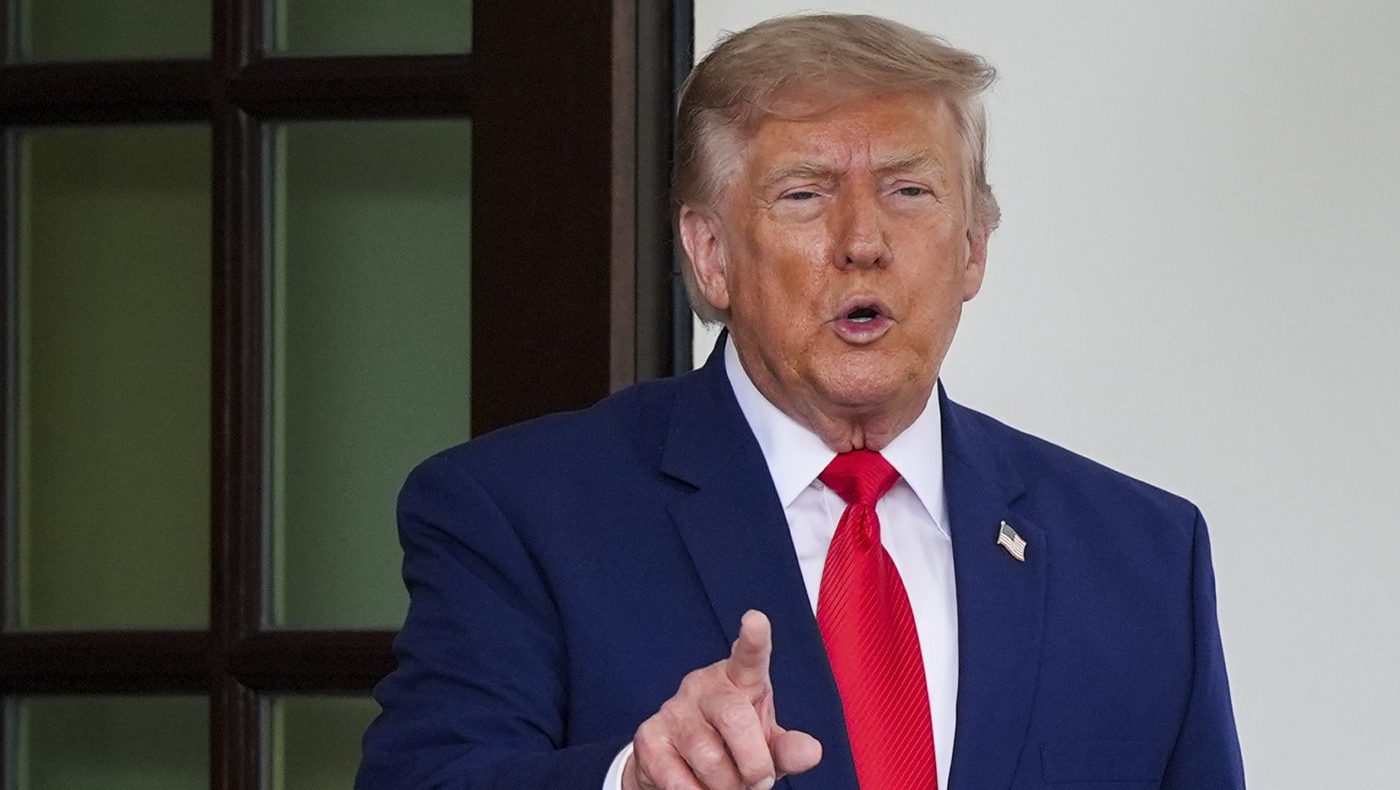
President Donald Trump on Tuesday appeared to soften his previous allegations that China meddled in U.S. elections, characterizing the relationship as a reciprocal exchange of interference. Speaking in the Oval Office alongside Lebanese President Joseph Aoun, Trump said, “It’s not a one-way street.”
“Well, we’re going to talk to them about it. It took place a long time ago. I think China is maybe a little bit different today than it was then,” Trump remarked. He added, “But look, they do things and we do things to them. I’ll be honest, we do things to them, too. It’s not a one-way street. But we’ll be talking to them.”
The remarks mark a notable shift from Trump’s primetime address last week, where he accused China of election interference and amplified unsubstantiated claims of widespread voter fraud in the U.S. Critics noted that Trump's speech omitted key intelligence findings that detailed the scope of foreign meddling.
China has consistently denied any involvement in U.S. elections. “The relevant allegations by the U.S. are entirely fabricated and aimed at vilifying China,” said Lin Jian, a spokesperson for China’s Foreign Ministry, last week. “We have no interest in interfering in US elections and have never done so.”
The president’s downplaying of the issue comes as he prepares to host Chinese President Xi Jinping at the White House for a state visit in September. Trump himself visited China for an elaborate state visit in May, and both sides have touted a reset in relations after a rocky period marked by trade tensions.
Despite the diplomatic fanfare, few substantive agreements emerged from those meetings. The two nations remain in a fragile truce following a trade war that erupted early in Trump’s second term. The dynamic has fueled skepticism among lawmakers, some of whom have questioned the administration's tariff policies and broader trade strategy.
Trump’s latest comments risk undercutting his earlier强硬 stance on election security. They also come amid ongoing scrutiny of his administration’s handling of foreign interference—a topic that has drawn sharp partisan divides. Some Democrats have accused the president of using election interference claims to distract from domestic issues, while others argue his administration has been inconsistent in addressing threats.
The White House has not clarified whether Trump’s remarks signal a shift in policy or simply a rhetorical pivot ahead of high-stakes talks with Beijing. With the September summit approaching, the president’s willingness to characterize interference as a two-way street may complicate efforts to press China on other fronts, including trade and regional security.