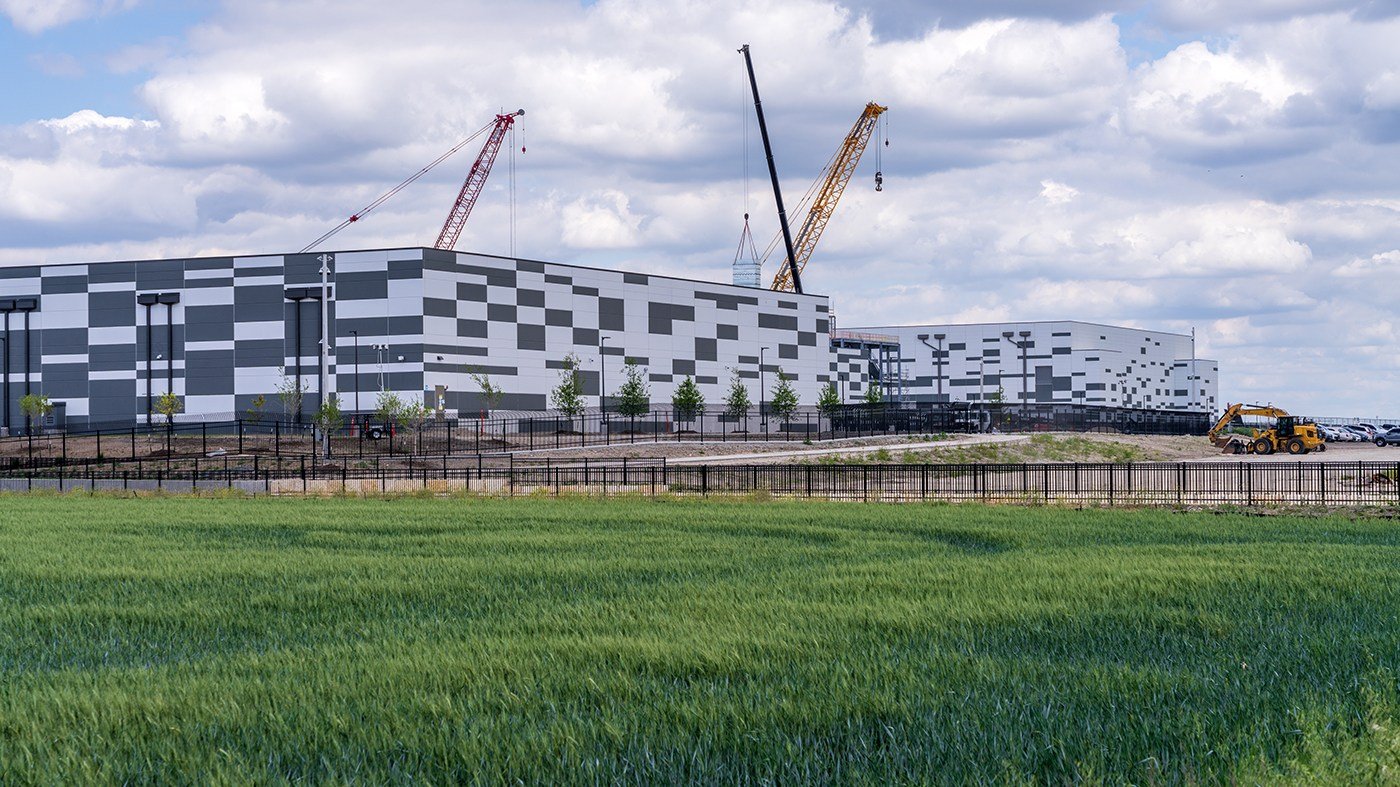
President Trump and the artificial intelligence industry are mounting a coordinated push to counter the growing political backlash against data centers, as public opposition to the server farms spreads across party lines. The effort, which includes a new multimillion-dollar advocacy campaign and a rebuke of opponents, comes as polls show a majority of Americans are skeptical of the infrastructure behind the AI boom.
On Monday, Trump took an uncompromising stance, declaring on Truth Social that communities should "let Data Reign" and accusing opponents of wanting to be "backwards and poor." The president's remarks marked a sharp escalation from his previous, more measured comments, and drew immediate criticism from some Republicans, including Rep. Tim Burchett (R-Tenn.), who responded, "I guess I'm backwards and poor." Rep. Thomas Massie (R-Ky.) also pushed back, saying data centers should not be allowed "without any kind of regulation at the local level."
The push also includes a new campaign by Build American AI, an advocacy group that launched a multimillion-dollar effort Monday to build support for "commonsense" data center policies, initially focusing on Kansas, Ohio, and Wisconsin. Additionally, a group of data center developers unveiled a nonprofit on Wednesday to highlight the benefits of AI infrastructure.
The urgency of the effort is clear: a recent Economist/YouGov poll found that 63 percent of Americans would oppose a new data center in their community, and 51 percent believe data centers are bad for the country. Opposition is not limited to Democrats—52 percent of Republicans also oppose nearby construction, and 39 percent view the infrastructure negatively.
Brendan Steinhauser, a GOP strategist and head of the Alliance for Secure AI, said the industry is "losing" on this issue "pretty much all year," adding that "The American people are skeptical of AI, skeptical of Big Tech, and the companies are trying to reverse that trend and it's going to be very difficult." He noted that Trump is caught between a base that is increasingly wary of data centers and the "moneyed interests in Big Tech" that fund the party and White House projects.
Trump has long championed the AI buildout, even as other Republicans have distanced themselves. When Texas Gov. Greg Abbott announced a temporary moratorium on data centers last month, Trump called it a "mistake." But he has also left room for GOP candidates to maneuver ahead of the midterms, where data centers have become a central issue in swing states like Michigan, Pennsylvania, and Wisconsin.
Cooper Teboe, a Democratic strategist based in Silicon Valley, said Trump is "out of touch" and "genuinely seems to not understand why these things are such an issue with voters." He warned that going "all in on a 90-10 issue" 60 days before the midterms is risky.
White House spokesperson Davis Ingle defended the president's approach, saying in a statement that Trump's "bold leadership is turning data centers into engines of growth and opportunity for communities across the country that want them." Ingle added that by requiring data centers to pay for their own power, water, and utilities, the administration has ensured that "the American people never foot the bill for private companies' profits."
The AI industry's charm offensive comes as the political climate around data centers has become increasingly toxic. The new campaigns aim to highlight economic benefits, such as job creation and tax revenue, while countering concerns about energy use, water consumption, and environmental impact. As the debate intensifies, the industry is betting that public opinion can be shifted with targeted messaging and local engagement.
Related coverage: Commerce secretary's water claims contradicted by data center realities, and Senate GOP leader concedes majority could be lost.