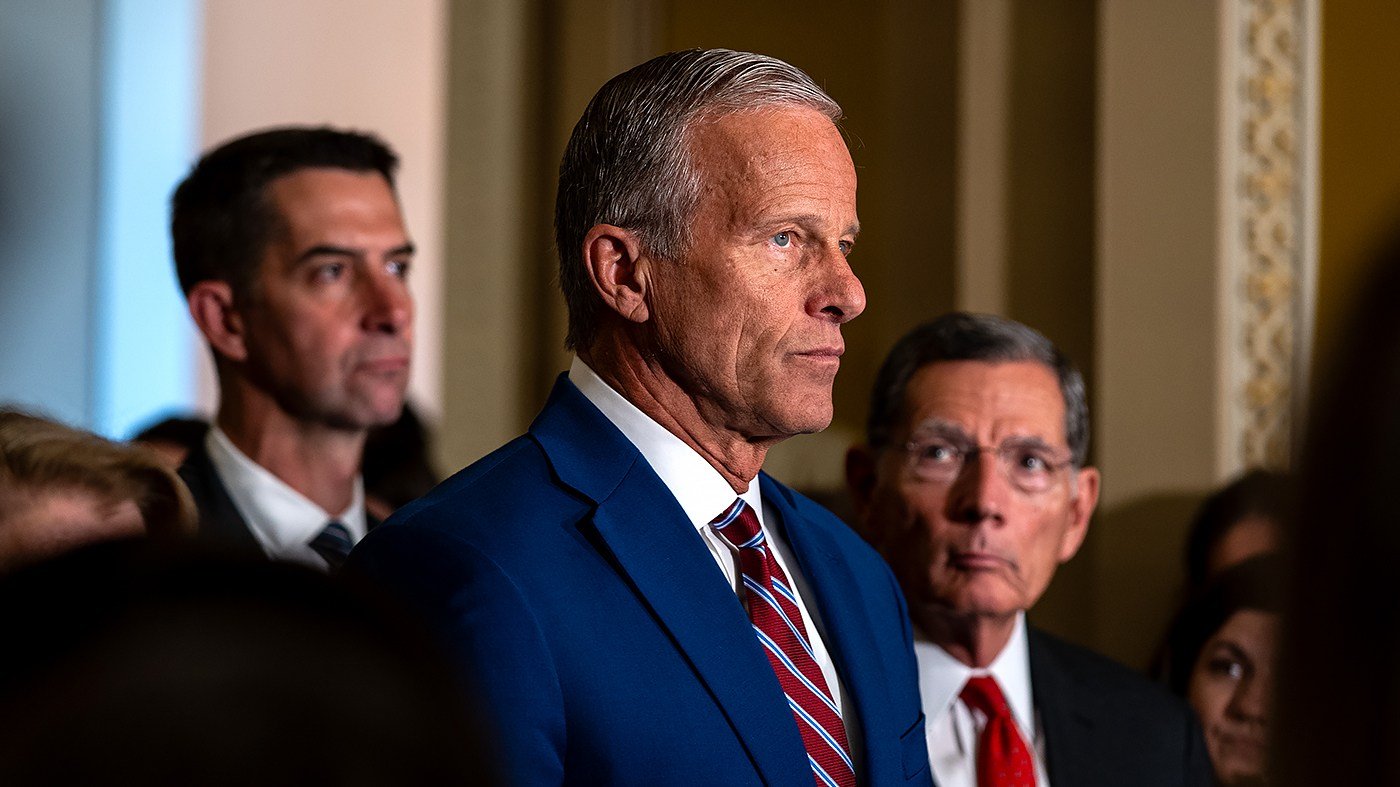
Senate Majority Leader John Thune (R-S.D.) is publicly acknowledging that Republicans could lose control of the Senate this November, as economic pressures and President Trump's sagging approval ratings create a volatile political climate.
In an interview with KELOLAND News in South Dakota, Thune said he is worried about the party's prospects, describing himself as "a realist" who refuses to sugarcoat the situation. "I worry about that, for sure," he said. "I'm a realist and I just think you — I don't ever try and sugarcoat things. I think it's a competitive environment right now."
Despite the grim outlook, Thune pointed to the strength of the GOP's candidate recruitment in key battlegrounds, highlighting Sen. Susan Collins (R-Maine) and former Rep. Mike Rogers (R-Mich.) as examples. "I think we got the highest-quality candidates," he said.
Thune has long cautioned colleagues that the president's party typically faces headwinds in midterm elections. In December, he noted that opposition voters tend to be more motivated, citing a special election in Tennessee where a Democrat outperformed expectations. "In a special election or off-year elections the turnout models are significantly different than they would be in an even-numbered year," he said at the time.
The battle for the Senate majority is now essentially a toss-up. Decision Desk HQ last week gave Republicans a 52 percent chance of retaining control, with Democrats at 48 percent—the closest the two parties have been since June. The Cook Political Report recently moved Iowa and Texas into its "toss-up" category, signaling that even traditionally safe red seats are now in play.
Thune acknowledged that the ongoing conflict with Iran and its impact on gas prices could weigh heavily on voters. "The military objectives have been very successful in my view," he said, but he expressed concern about the economic fallout, particularly regarding the Strait of Hormuz. "The challenge we have right now is Strait of Hormuz and the economic impact that's having on gas prices in this country, and that's where keeping it open and making sure that the Iranians can't restrict or tax or toll in international waterway is really important," he explained.
He also hinted at frustration with Trump's trade policies, particularly the tariff war with Canada, a major trading partner for South Dakota. Thune has said he is "not a huge fan of tariffs" but has largely stayed quiet out of deference to the president. Trump recently threatened 50-percent tariffs on $20 billion in Canadian goods. South Dakota exports $846 million in goods to Canada and imports $554 million annually, according to the Canadian government.
Thune and other Senate Republicans are also pushing back on Trump's plan to import 300,000 metric tons of foreign beef to lower prices, a move they argue would hurt domestic ranchers. "He's trying to lower beef prices, which I think we're all supportive of. I just don't think this is the way to do it," Thune said. "We have a lot of beef producers here in South Dakota; they produce the highest-quality beef in the world, and we're trying to build our herds back up."
With the election just months away, Thune's candid assessment underscores the anxiety among Senate Republicans, even as they project confidence in their candidates. The coming months will test whether the party can overcome the political drag of an unpopular president and economic discontent.