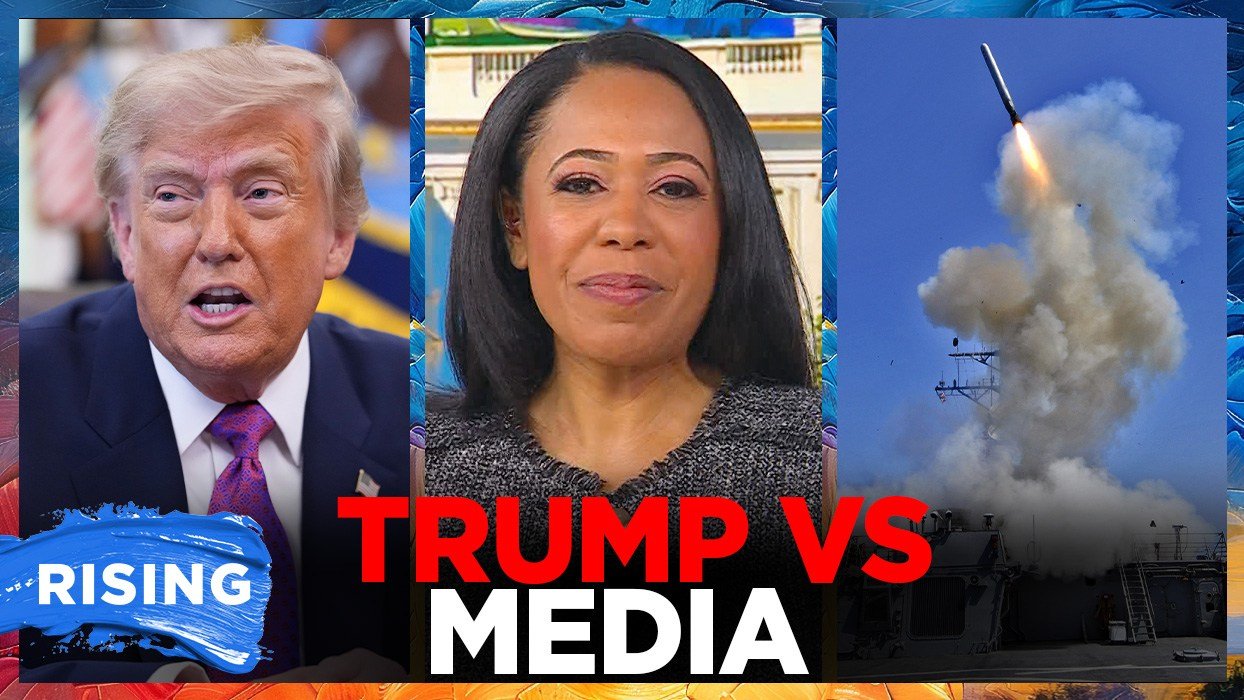
President Trump has escalated his attacks on news organizations that have reported on the strain the Iran war has placed on American weapons stockpiles, labeling them “treasonous” and asserting they are rooting for a U.S. defeat to deny him a political victory.
In a series of posts on Truth Social, Trump wrote: “The people and Media Outlets that keep harping on the fact that we have no ammunition (And they are 100% wrong!), are actually treasonous. They do it because they would rather see the United States LOSE a War that we’re easily WINNING, than see me WIN!”
He continued: “For the treasonous SCUM that refuses to accurately report on our Military Operation in Iran, we have virtually unlimited amounts of Mid to High Grade Ammunition, far more than we could ever use for this, or for any other War.”
However, reporting from multiple outlets paints a starkly different picture. According to an analysis by the Center for Strategic and International Studies, by late July the U.S. had an estimated 759 to 827 Patriot interceptors remaining, down from roughly 2,330 before the conflict. The Washington Post reported that senior military officials warned Defense Secretary Pete Hegseth that continuing the current pace of operations could become unsustainable, potentially limiting America’s ability to respond to threats elsewhere, including at home.
Reports also indicate that some military leaders issued “non-concurs,” formally recording their disagreement while still complying with orders. The Navy is reportedly under significant strain, with its top admiral warning that the service cannot sustain current support levels without a clear end date.
The turmoil extends to the civilian leadership. Army Secretary Daniel P. Driscoll resigned this week after repeated clashes with Hegseth over the firing or forced departure of more than a dozen senior military officers and generals. Trump has since tapped Adam Telle as acting Army secretary, a move that underscores the ongoing leadership churn.
The administration initially framed the war as a limited operation, with officials suggesting a timeline of roughly six weeks. The conflict is now in its seventh month, raising questions about the administration’s strategy and endgame.
Many Americans opposed the decision to go to war, which was launched without congressional approval. While no one wants to see the United States fail or American service members placed in greater danger, the public should not be expected to accept the administration’s assurances without scrutiny. Concerns about weapons, readiness, deployments, and an exit strategy continue to mount.
Supporting the troops does not require blind faith in the mission. If the administration genuinely seeks to end this conflict, it owes the American people more than all-caps social media posts. It must provide an objective assessment and a credible exit strategy.