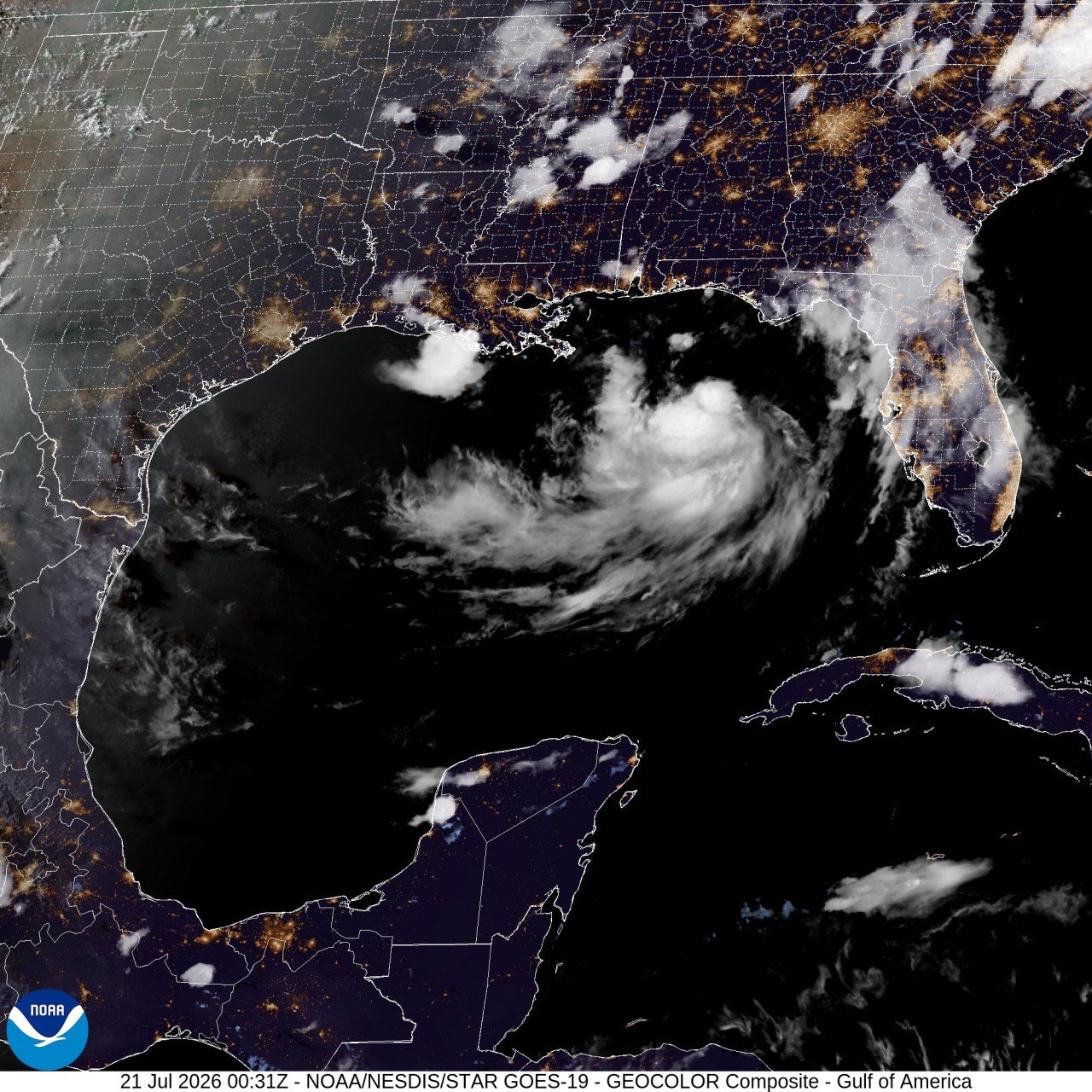
Tropical Storm Bertha intensified overnight in the Gulf of Mexico, churning slowly toward the northern Gulf Coast and prompting tropical storm warnings and storm surge watches from the Florida Panhandle to Louisiana, according to the National Hurricane Center.
As of 1 a.m. Tuesday, the storm was located about 125 miles south of Panama City, Florida, and 200 miles southeast of Mobile, Alabama, moving northwest at just 2 mph. Maximum sustained winds had increased to 50 mph, up 10 mph from Monday evening when Bertha first formed.

A tropical storm warning is now in effect from the Florida-Alabama border westward to the Jefferson and Plaquemines parish line in Louisiana, with forecasters warning conditions could arrive within 36 hours. A storm surge watch has also been issued from the Alabama-Florida line to the mouth of the Mississippi River, signaling a risk of life-threatening coastal inundation within the next two days.
Bertha is the second named storm of the Atlantic hurricane season, following Tropical Storm Arthur, which drenched parts of the southeastern U.S. in June. The system is expected to linger near or along the northern Gulf Coast early this week, dumping heavy rain across Florida, Alabama, Mississippi, and Louisiana before pushing westward toward Texas.
Forecasters warn that storm surges of up to 4 feet are possible along portions of the Louisiana, Alabama, and Florida coasts. Bertha could also spin off isolated tornadoes over Florida's Big Bend region. Flash flooding remains a concern through Friday from western Florida to middle Texas, with rainfall totals of 3 to 5 inches expected along the Louisiana coast, and higher amounts in some spots.
Local officials are already taking precautions. In Orange Beach, Alabama, red flags warned swimmers of dangerous surf and rip currents. In Escambia County, Florida, emergency management crews offered sand to residents in flood-prone areas for sandbags.
Meanwhile, in the eastern Pacific, Hurricane Fausto formed far from Mexico's Baja California peninsula and posed no immediate threat to land. The storm had maximum sustained winds of 75 mph and was moving west-northwest at 9 mph, well offshore. Swells from Fausto could still create dangerous surf and rip currents along the Baja coast.
For context, the storm arrives amid broader political dynamics, including debates over Florida's execution of a 74-year-old inmate and the ongoing reshuffling of governor races, as the Cook Report shifts four contests toward Democrats.