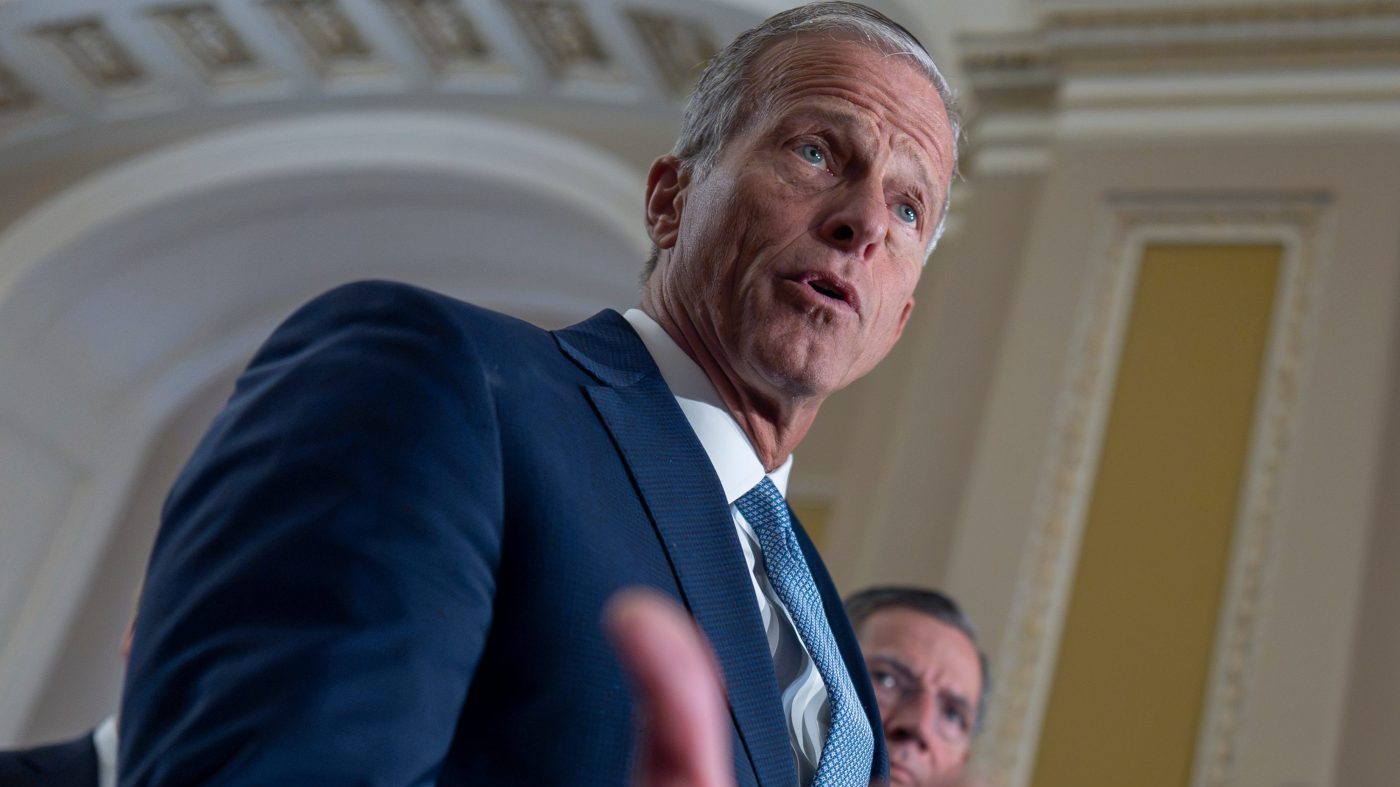
Senate Majority Leader John Thune (R-S.D.) acknowledged there is currently no viable route to pass legislation making daylight saving time permanent, even as President Trump intensifies pressure on Republican senators to act before the upcoming election.
"The president feels strongly on it like he does a lot of issues," Thune told Politico. "It's something we're having conversations about but there's no clear path forward or consensus on it yet."

Trump has elevated the Sunshine Protection Act—which passed the House in July by a 308–117 vote—into a top priority with less than a month before Election Day. In a Truth Social post on Friday, he called the twice-yearly clock changes "ridiculous," claiming they "cost our Country a fortune" and are "bad for Crime, stress on people, Sports, and just about everything else you can imagine." He added that most Americans prefer the extra evening sunlight over morning light.
The president has also taken aim at Sen. Tom Cotton (R-Ark.), who opposes the measure. Cotton argues that similar attempts have been tried before and were repealed after the public experienced the drawbacks of late-winter sunrises in many regions. Trump, however, accused Cotton of blocking the bill "for reasons unknown" and went as far as posting Cotton's personal cellphone number on his Truth Social account—which has over 13 million followers—urging constituents to call the Arkansas Republican and demand he drop his resistance.
"Almost everybody wants 'The Sunshine Protection Act' to pass, except for Tom Cotton. To the Great People of Arkansas, please let your Senator know it would be a GREAT Bipartisan WIN for the United States Senate, and for America, itself," Trump posted Saturday.
The legislation would allow states to adopt permanent daylight saving time, a move that has strong support in states like Florida. Sen. Rick Scott (R-Fla.) is pushing for a vote during the lame-duck session scheduled for November and December. "I've got my Sunshine Protection Act. I'm working on a vote on that. We're going to have a vote on that. It [lets] states make their own decisions," he told The Hill.
But the bill faces broader opposition within the Senate GOP conference than just Cotton. Sen. Roger Wicker (R-Miss.) noted Monday that "there's more opposition to it than the president realizes," citing safety concerns in northern and rural states where children board school buses in the early morning darkness. Thune himself voted against making daylight saving time permanent when it came before the Senate Commerce Committee. "I'm from a northern clime," he told reporters earlier this year. "I voted against it in committee."
The divide highlights a rare rift between Trump and Senate Republicans on a policy that touches daily life across the country. While the president frames the measure as a bipartisan win, the legislative math in the Senate remains uncertain, and the clock may run out before any vote occurs.
For now, the issue appears stalled, with no clear consensus emerging among GOP lawmakers. As the election approaches, the question of whether Americans will ever stop changing their clocks remains unresolved.