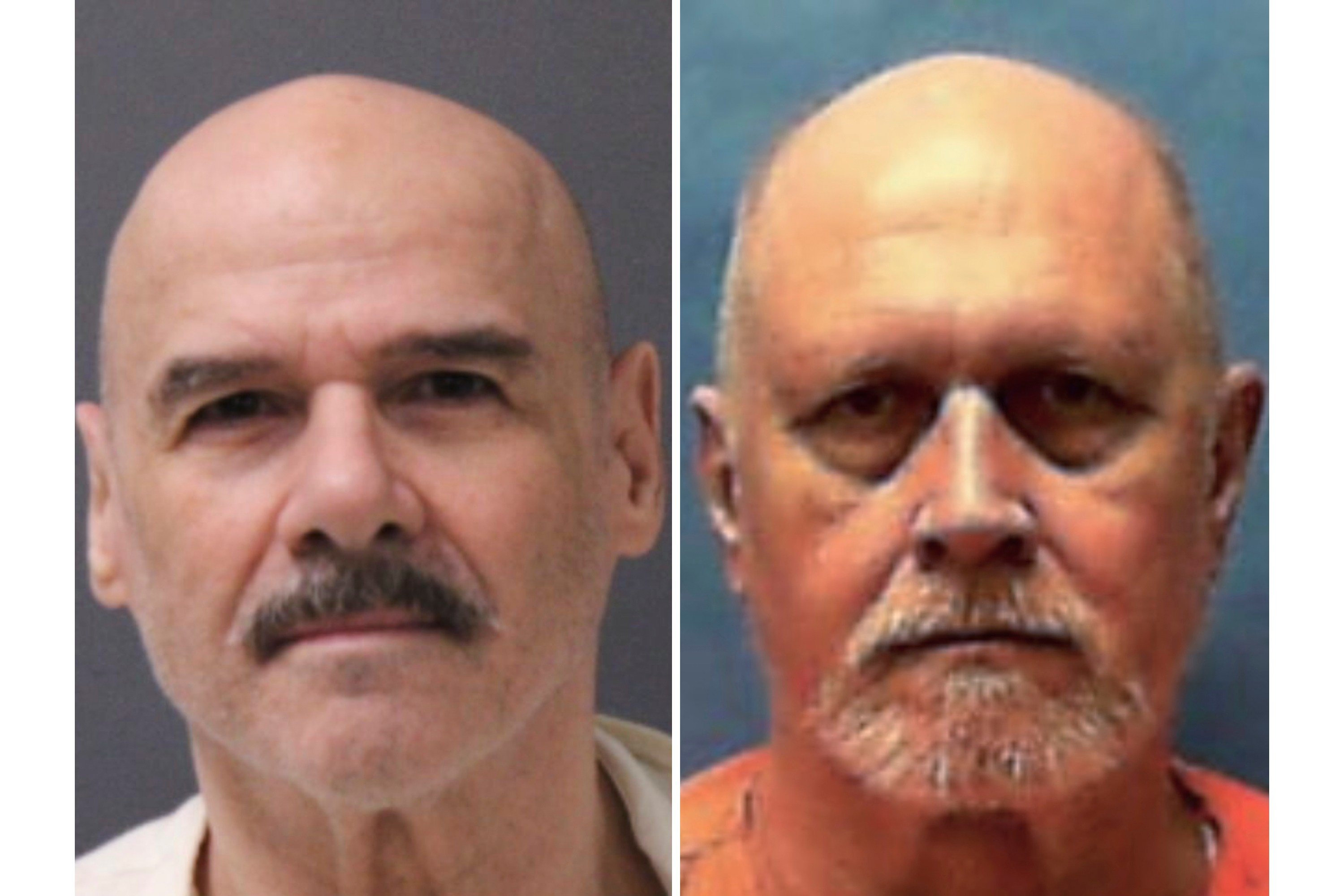
HUNTSVILLE, Texas — The execution of Reinaldo Dennes on Thursday took more than an hour as prison staff repeatedly struggled to insert intravenous lines, and the inmate voiced intense discomfort once the lethal dose began flowing. The prolonged procedure has intensified scrutiny of capital punishment practices in the United States, particularly after a botched execution in Tennessee last September.
Dennes, convicted of capital murder in the 1996 shooting death of diamond dealer Janos Szucs in Houston, was pronounced dead at 7:08 p.m. local time at the state penitentiary in Huntsville. The entire process, from strapping him to the gurney to the final pronouncement, spanned 63 minutes.

According to witnesses, Dennes initially told the warden, "Go, warden!" but almost immediately began exclaiming about pain, shouting "The pain! Go! Go!" and imploring God to "take this pain." He repeatedly cried out "Let me go, father," and later complained that his right leg was "killing me," describing it as a cramp. He also uttered profanities and groaned loudly before eventually falling into a series of snoring sounds that gradually quieted, followed by shallow breathing that ceased altogether.
Prison spokesperson Amanda Hernandez defended the execution team's actions, stating that all procedures were followed appropriately. She acknowledged that multiple attempts were made to find a suitable vein before the needles were ultimately inserted into Dennes' left foot and the left side of his neck. Hernandez did not specify how many attempts failed but said the chosen sites complied with state protocols.
Hernandez also suggested that Dennes may have exaggerated or faked his pain, noting that he began complaining before the drugs had started flowing and mentioned pain in locations where no IV was placed. When asked directly if he was faking, she replied, "I think, yeah, there were allegations. … There was nothing abnormal on our part." She added that the situation was not unprecedented, saying, "This isn't the first time we had to insert IVs into other locations. It's also not the first time we've had an inmate make allegations of pain immediately."
The execution comes amid renewed debate over lethal injection methods, following the failed execution of Christa Pike in Tennessee, who survived two doses of pentobarbital that her lawyers argue did not enter her bloodstream properly and instead pooled in her arms, causing burns and blisters.
Dennes' victim's family expressed relief. Janice Copeland, whose husband David was a security guard shot during the robbery and died five years ago, said, "David always felt Reinaldo would outlive him. Unfortunately he was right. Finally after 30 years, justice has been served."
Earlier on Thursday, Florida carried out its own execution of Thomas Mitchell Overton, 71, convicted of murdering a pregnant woman and her husband during a 1991 home invasion. Overton denied the crimes in his final statement, saying, "I never killed anyone." He was pronounced dead at 6:19 p.m. after a three-drug injection.
Florida has now conducted 20 executions this year under Republican Governor Ron DeSantis, who has aggressively used the death penalty and signed warrants leading to a record number of executions. DeSantis, who leaves office in January, has said he wants justice for families who wait decades. Two more executions are scheduled in Florida in December.
Texas holds the record for executions in a single year, with 40 in 2000. The executions of two men in their 70s have also highlighted the aging of the U.S. death row population.
In Florida, Overton's victims, Susan and Michael MacIvor, were found strangled in their Tavernier home. Susan, eight months pregnant, had been raped, and the medical examiner determined her unborn son survived for about half an hour after her death. DNA evidence was collected but initially did not match any database; Overton, who had worked at a gas station, was later linked to the crime.
The back-to-back executions in Texas and Florida underscore the ongoing national debate over capital punishment, with critics pointing to botched procedures and the increasing difficulty of carrying out executions on an aging death row population.