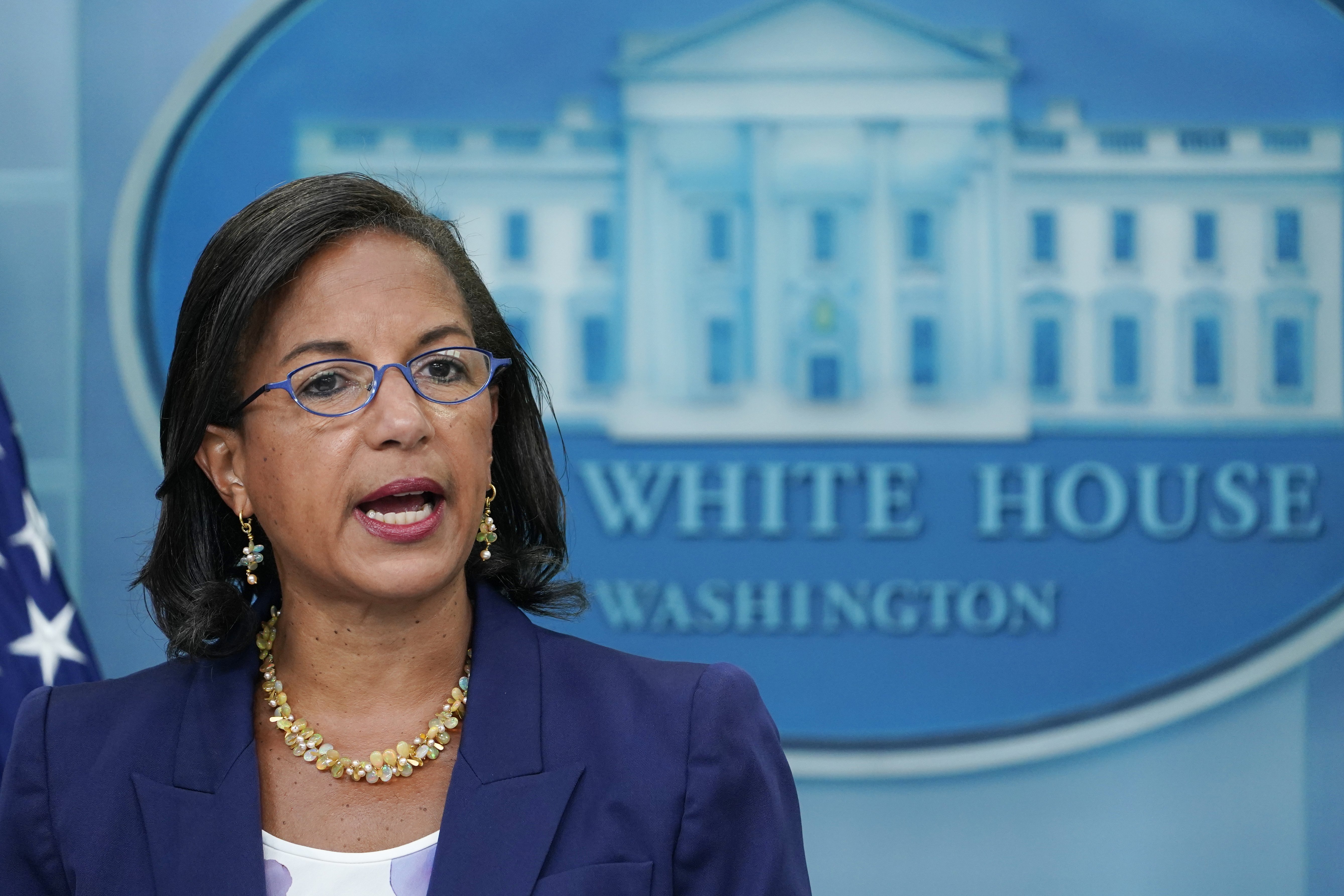
Former National Security Advisor Susan Rice unleashed a blistering critique of President Trump's newly signed 14-point memorandum of understanding with Iran, calling it a “jaw-dropping, horrific surrender document” that amounts to hundreds of billions in reparations. Writing on X Thursday, Rice, who also served as U.S. Ambassador to the UN and director of the Domestic Policy Council under President Obama, described the agreement as “the biggest national security blunder in decades” and the predictable result of what she termed incompetent negotiation and a “foolhardy strategic catastrophe” born of the administration's decision to start and pursue a disastrous war.
Bipartisan Backlash Mounts
Rice's condemnation aligns with a chorus of Republican and Democratic lawmakers who have raised alarms about the deal's provisions, particularly those that would unlock up to $300 billion for Iran's reconstruction. Both Reuters and the Wall Street Journal have reported that international companies have already committed to backing more than half the value of a private fund tied to the accord. Senator Ted Cruz (R-TX) declared Wednesday, “It is not remotely in America’s interest for us to pay to rebuild that capacity that we just took out,” while Senator Bill Cassidy (R-LA) predicted the agreement “will go down as a tremendous foreign policy blunder.” Cassidy, who has also been vocal on other national security issues, recently warned that Trump's DNI block risks lives as FISA renewal stalls.
Former President Barack Obama, who negotiated the 2015 Joint Comprehensive Plan of Action (JCPOA), also criticized the Trump deal before its full text was released, noting that Iran's core concessions—including a commitment not to pursue nuclear weapons—mirror those already agreed to under the JCPOA. The comparison has fueled charges that the Trump administration essentially traded a diplomatic framework for a military one without securing fundamentally better terms.
Administration Defends the Accord
Defense Secretary Pete Hegseth pushed back against the criticism, arguing that the deal was forged from a position of strength. “JCPOA came from a bunch of begging and talking. This agreement came after months of bombing and a blockade that was impenetrable,” Hegseth told reporters in Brussels at the NATO Defense Ministerial. He stressed that Iran was forced to the table and that the administration's red line remains clear: “Iran cannot have a nuclear weapon. Full stop.” Hegseth added that the Pentagon is prepared to “recommence” military operations if Tehran fails to comply with the deal's timeline, including giving up nuclear material and closing facilities.
The defense secretary's remarks echo earlier warnings from GOP hawks who have described the MOU as a “JCPOA-Plus” blunder, a sentiment captured in recent reporting on GOP senators blasting Trump's Iran strait deal. The administration's stance has also sparked fury among conservative critics who see the reconstruction payments as a reward for aggression, with some labeling the entire approach a surrender. Trump Jr. has even accused Cruz of lying over the Iran reconstruction deal, highlighting the internal GOP fractures.
What's at Stake
The 14-point MOU kicks off a two-month negotiation window, during which Iran is expected to demonstrate compliance on nuclear disarmament in exchange for sanctions relief and reconstruction aid. Supporters argue the deal avoids a prolonged military campaign and provides a path to stability, while detractors warn it repeats the mistakes of the JCPOA by offering concessions without verifiable, irreversible steps. With the 2026 midterm elections looming, the Iran deal is shaping up to be a defining foreign policy flashpoint, testing the administration's ability to hold together a coalition that ranges from isolationist populists to interventionist hawks.
As the debate intensifies, Rice's sharp rebuke underscores the high stakes: a former top Obama official labeling a Trump agreement a “national security blunder” in terms usually reserved for the most catastrophic decisions. Whether the deal survives the two-month window or collapses under bipartisan pressure will depend on the administration's willingness to adjust terms—and its capacity to sell the accord as a victory rather than a retreat.