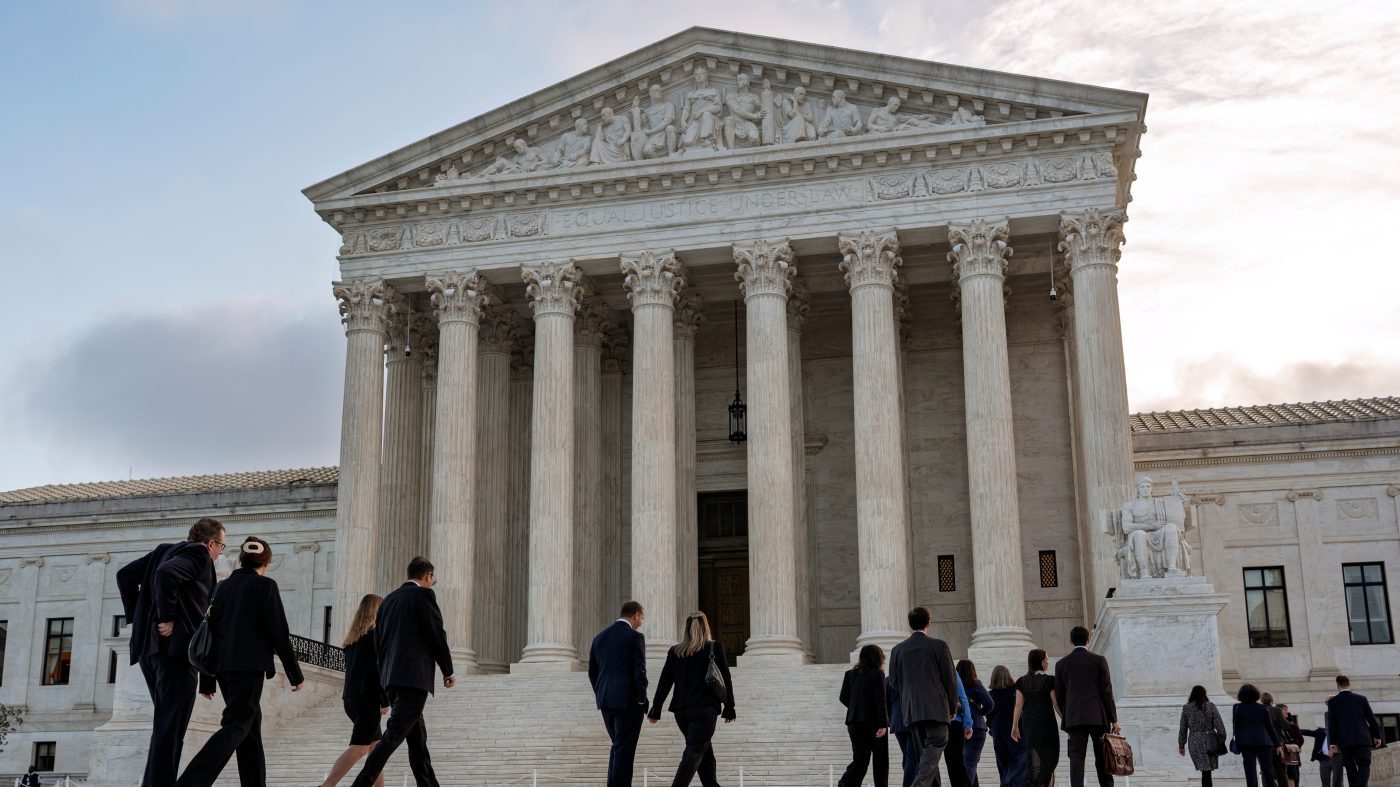
The Supreme Court on Wednesday takes up a dispute over the reach of a 1988 privacy law, a case with significant implications for how digital tracking tools are litigated. At the center is whether the Video Privacy Protection Act (VPPA) shields consumers who subscribe to any of a company's offerings or only those who sign up for audiovisual content.
The case stems from a class-action suit filed in 2022 by Michael Salazar against Paramount Global. Salazar subscribed to a 247Sports.com newsletter, a college sports and recruiting site that sends out dozens of daily email digests. He alleges Paramount violated the VPPA by embedding a Facebook tracking pixel on the site, which allowed his data—including video viewing history—to be shared without his consent, later used for targeted advertising.

The VPPA, enacted after the leak of failed Supreme Court nominee Robert Bork's video rental history, makes a “video tape service provider” liable for knowingly disclosing a consumer's personally identifiable information without written consent. The key question is whether Salazar qualifies as a “consumer,” defined under the law as “any renter, purchaser, or subscriber of goods or services from a video tape service provider.”
Salazar argues he does, while Paramount contends he does not. A federal judge in Tennessee dismissed the complaint, ruling that Salazar's newsletter subscription did not make him a “consumer” because the newsletter was not “audio visual materials.” A divided panel of the 6th U.S. Circuit Court of Appeals upheld that decision.
Salazar appealed, urging the high court to resolve a split among circuits over how to interpret the statute. His lawyer, Joshua Hammack, wrote in a brief: “There is simply no basis to rewrite the VPPA's definition of 'consumer' to impose a limitation that appears nowhere in the text.”
Paramount's lawyers countered that the term should be read narrowly. They warned that accepting Salazar's broad interpretation could open the floodgates to litigation. “Salazar's contrary reading would transform a 1988 video-rental statute into an unworkable internet-privacy regime of broad yet incoherent scope backed by harsh penalties,” they wrote. “Statutory protection for viewers of free video content would turn on the happenstance of where they purchased a chicken sandwich or recliner years earlier.”
The outcome could influence how companies deploy tracking pixels and other data-collection tools on websites, particularly those that offer both editorial content and video. The decision, expected by next summer, will also test the limits of applying older privacy statutes to modern digital practices.
This case arrives as the Supreme Court has been increasingly asked to weigh in on technology and privacy issues. In a separate matter, the Court recently faced a new test over assault weapons, and observers note the conservative majority's approach to such questions remains closely watched. The VPPA dispute also intersects with broader debates over judicial neutrality and the Court's record.
Legal experts say the ruling could set a precedent for how courts interpret “consumer” in other privacy statutes, potentially affecting everything from email newsletters to streaming services. As the justices deliberate, the case underscores the ongoing tension between protecting personal data and enabling business uses of online behavior.