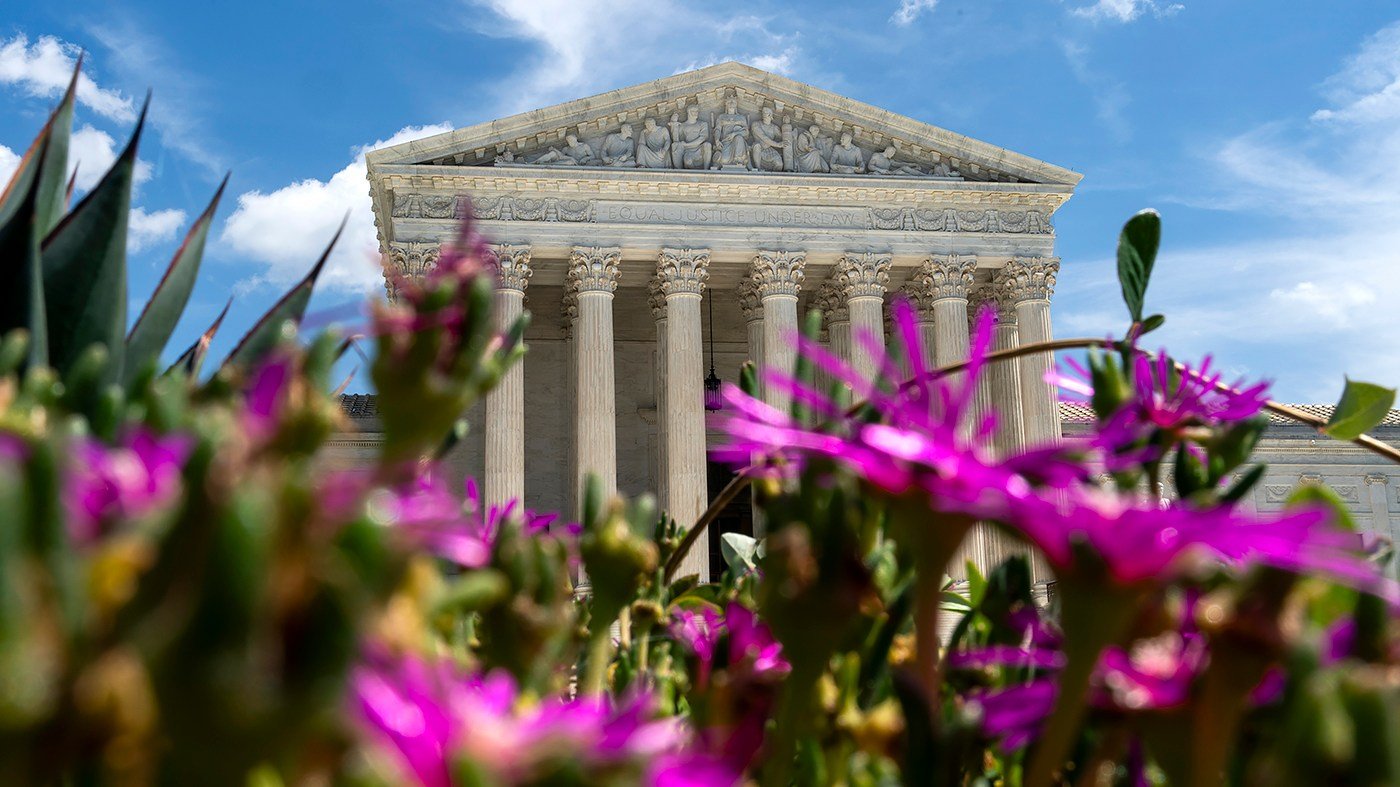
The Supreme Court on Monday cleared the way for the White House ballroom construction to proceed, handing the Trump administration a significant legal victory. In a 5-4 decision, the Court lifted a lower court's injunction that had halted above-ground work on the project, which the president has framed as essential to national security.
The ruling effectively blocks a lower court's order that would have required Congress to sign off before construction could continue. The majority opinion, unsigned, held that the National Trust for Historic Preservation, the group challenging the project, likely lacks standing to sue—meaning its members' objections do not constitute a concrete injury. The Court wrote, "This Court has not found standing in circumstances like these before. To the contrary, we have repeatedly held that mere offense, disagreement, or distaste does not qualify."
A Split Along Ideological Lines
The Court's five conservative justices—Clarence Thomas, Samuel Alito, Neil Gorsuch, Amy Coney Barrett, and Brett Kavanaugh—sided with the administration. All three of Trump's appointees were in the majority. Chief Justice John Roberts, however, joined the Court's three liberal justices—Sonia Sotomayor, Elena Kagan, and Ketanji Brown Jackson—in dissent.
In his dissent, Roberts argued that the preservationist group's concerns were sufficient to grant it access to federal court. He wrote, "In failing to appreciate as much, the Court misconceives the plaintiff's injury, allowing the Executive's likely infringement of the Legislature's power of the purse and authority to regulate federal property in the District of Columbia to continue. Today's decision is no victory for the separation of powers." He also emphasized that "The White House is not just any building."
Construction Proceeds at Full Pace
The decision is not a final judgment on the legality of the ballroom, and the case could return to the Supreme Court. But for now, construction can proceed unimpeded. Court records indicate that a 250-person crew is working on the project 20 hours a day, seven days a week. The ballroom, a 90,000-square-foot structure, is being built on the site of the former East Wing, which Trump tore down last fall.
The Trump administration has argued that the project already has the necessary approvals because it is funded with private money. Solicitor General D. John Sauer told the justices that allowing the group's challenge "would open the courthouse doors to any of the millions of people who visit government buildings, historic sites or parks and happen to think that they dislike something they see."
National Security and Project Progress
As the case has progressed, the administration has increasingly leaned on national security concerns. It claims that halting construction would endanger the president, pointing to recent threats, including an alleged plot to disrupt a White House UFC fight, the shooting at the White House Correspondents' Association dinner, and the assassination attempts at Trump's Butler, Pa., rally and near his Florida golf course. The Justice Department has characterized these as assassination attempts.
The administration also argues that the project is too far along to stop. According to Supreme Court filings, the ballroom is 65 percent complete, with a concrete-and-steel structure already rising five stories deep and 70 feet high.
The National Trust for Historic Preservation, however, insists that Trump is merely a tenant of the White House and lacks authority for major renovations. The group won in lower courts, which agreed that Congress needed to approve the project first. In its filings, the group argued, "If Petitioners believe there is a pressing need for a ballroom, nothing prevents them from asking Congress for one—today, tomorrow, or any time in the future. But Petitioners' efforts to foil judicial review and arrogate Congress's exclusive powers should not be rewarded."
The decision adds to the Supreme Court's growing emergency docket, which has become a key arena for disputes involving the Trump administration. The Court's willingness to intervene in such cases, as seen in Judge Talwani's injunctions, reflects a broader trend. The ballroom project is part of a broader overhaul of federal properties in Washington, D.C., overseen by a planning panel that Trump recently tapped an OMB counsel to lead, as reported in this related story.