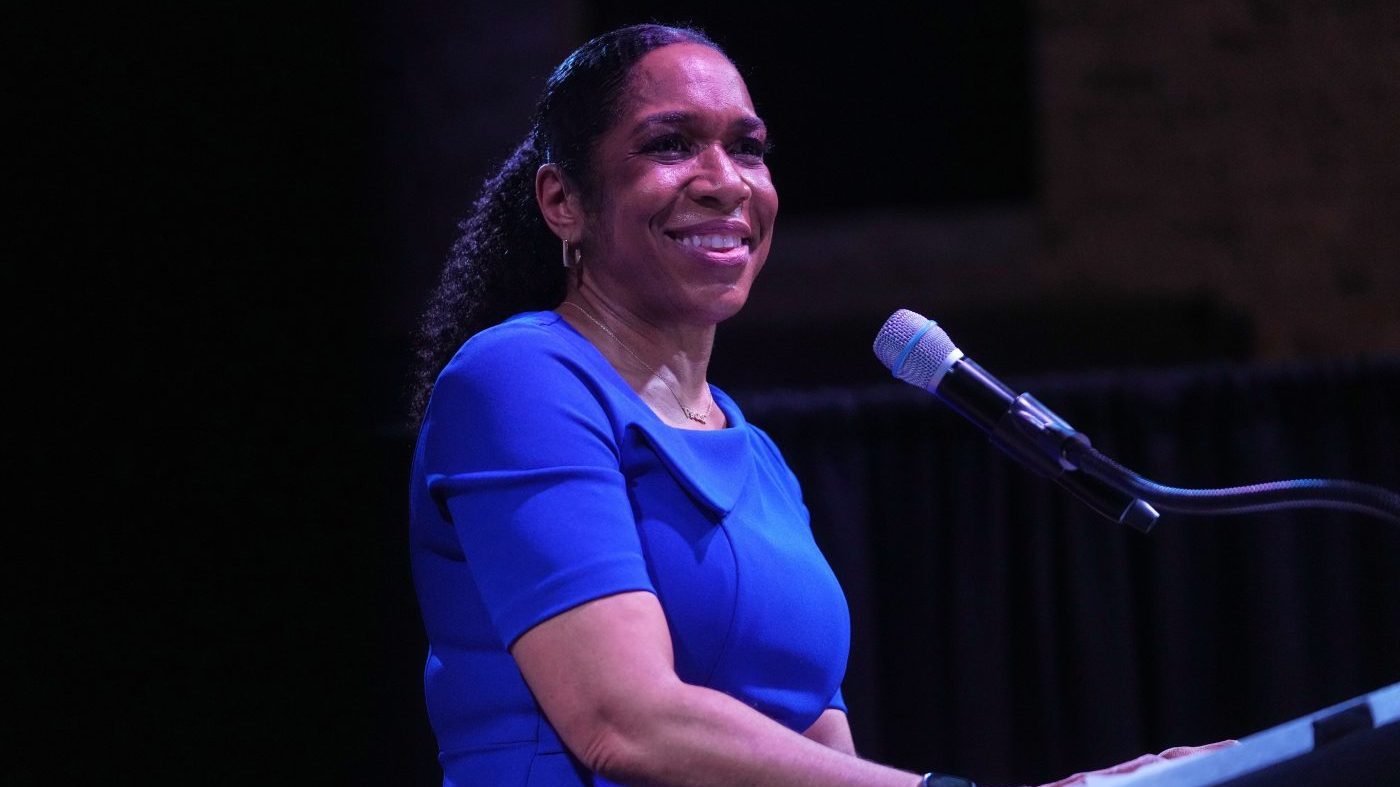
Democrat Juliana Stratton, Illinois's lieutenant governor, is projected to win the state's open U.S. Senate seat, according to Decision Desk HQ. The victory hands Democrats a reliable hold in a state they have dominated for years, and it makes Stratton the sixth Black woman ever elected to the Senate.
Stratton's win was widely anticipated in the solidly Democratic state, as she faced Republican Don Tracy, who ran a largely self-funded campaign without significant backing from national GOP committees. The seat became available after longtime Sen. Dick Durbin (D) announced his retirement, setting up a competitive primary that Stratton won in March with crucial support from Gov. JB Pritzker (D). Pritzker poured $10 million into a political action committee backing Stratton, a move seen as part of his own calculations for a potential presidential run.
Stratton, 61, has served as lieutenant governor alongside Pritzker since 2019. Before that, she spent one term in the Illinois House representing a Chicago-area district. Her career began in law, and she later worked with criminal justice organizations in Chicago, shaping her focus on issues like early childhood education, reproductive healthcare, and criminal justice reform.
She is considered one of the more progressive Senate candidates this cycle, advocating for Medicare for All, a $25 minimum wage, and abolishing Immigration and Customs Enforcement (ICE). She has also said she would not support Sen. Chuck Schumer (D-N.Y.) for Democratic leader, and she has pledged to reject corporate PAC money in her Senate campaign.
Her candidacy drew endorsements from several Democratic senators, including Durbin, her future colleague Tammy Duckworth (D-Ill.), and others like Elizabeth Warren (D-Mass.) and Tammy Baldwin (D-Wis.). These endorsements helped solidify her standing in the primary and general election.
Stratton's victory is part of a broader Democratic wave that has reshaped Washington, as the party captured both chambers of Congress in a historic midterm rebuke. Her win also aligns with the Democratic sweep that has given the party unified control of the federal government.
In Illinois, Stratton's win is a personal milestone, but it also carries national implications. Her progressive platform and willingness to challenge party leadership signal a new generation of Democratic senators. She has already indicated she will be a vocal advocate for policies like abortion rights, which have become a central issue in recent elections.
Meanwhile, Republican Don Tracy's campaign struggled to gain traction, as national Republicans focused their resources on defending incumbents and competitive races elsewhere. Tracy, a businessman, largely financed his own bid but was unable to overcome the state's Democratic lean.
Stratton's entry into the Senate adds to the growing diversity of the chamber, and her victory is being celebrated by progressive groups. She is expected to take office in January, joining a Democratic caucus that has already declared its win a generational remake of the Senate.